How is South Korean President Lee Jae Myung Promoting Balanced Regional Development for Sustainable Growth?
Click to start listening
Synopsis
In a recent address, South Korean President Lee Jae Myung highlighted the critical need for balanced regional development as a strategy for sustainable growth in the nation. His remarks come as he commits to targeted strategies that aim to foster new growth engines across various regions of South Korea. Discover more about this vital approach.
Key Takeaways
- Balanced regional development is critical for South Korea's future.
- President Lee advocates for customized strategies to address regional disparities.
- The concentration of resources in Seoul is unsustainable.
- Specific regions will be targeted for development.
- Political interests pose a challenge to effective regional growth.
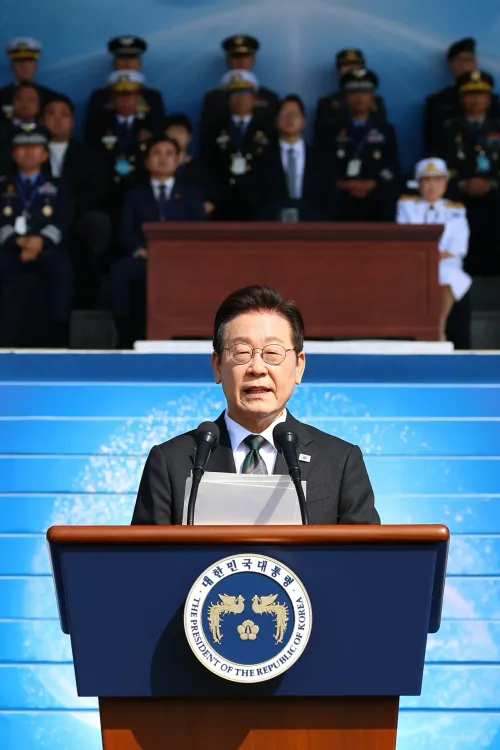
Seoul, Dec 8 (NationPress) South Korean President Lee Jae Myung emphasized on Monday that equitable regional development is crucial for the sustainable advancement of South Korea. He committed to implementing tailored strategies aimed at cultivating new growth drivers throughout the country.
Lee expressed these views during a policy briefing by the Presidential Committee for Decentralization and Balanced Development at the presidential office.
"Enhancing decentralization, equitable development, and local autonomy has become an indispensable national survival strategy for the Republic of Korea's sustainable progress," he stated, as reported by Yonhap News Agency.
He pointed out that the government's historical pattern of funneling resources into the Seoul metropolitan area has reached its threshold, highlighting the necessity for region-specific approaches to cultivate new growth engines.
"The growth strategy that focused on the metropolitan area yielded notable successes in the past; however, the overwhelming concentration in the capital region has reached a stage where it hampers the nation's growth potential," he noted.
During the briefing, the committee shared plans to implement a customized development strategy for five regional hubs— the Seoul metropolitan, southeast, northeast, central, and western regions— in addition to three special self-governing provinces: Jeju, Gangwon, and North Jeolla.
This briefing precedes a series of policy discussions that Lee will hold with ministries and public institutions, starting with the Ministry of Economy and Finance on Thursday.
On December 5, President Lee Jae Myung underscored the necessity for balanced regional development as a "survival strategy" for South Korea, asserting that the concentration of development in the capital has negatively impacted wider national growth.
Speaking at a town hall meeting in Cheonan, located 90 kilometers south of Seoul, he emphasized the significance of regional hubs for development.
"Equitable regional growth is vital as a survival strategy for the Republic of Korea," Lee commented, referring to South Korea's official designation. "The concentration in the expansive capital area has become a significant factor in critically undermining national growth and development."
"If the concentration in the capital intensifies, it will become impossible not just for growth and development, but even for maintaining the current situation."
Lee also expressed discontent regarding the high housing costs in the capital and surrounding areas, attributing them to structural issues that cannot be easily addressed through policy measures.
He urged ongoing efforts to expedite the relocation of government offices to areas outside the capital and advocated for the establishment of an administrative capital.
Lee identified political conflicts of interest as a key barrier to regional development, suggesting integration efforts between South Chungcheong Province and the central city of Daejeon.
Point of View
I recognize the urgency of President Lee's call for balanced regional development. This strategy not only addresses the growing concerns of economic disparity but also positions South Korea for sustainable growth. The focus on decentralization reflects a commitment to national unity and equitable opportunities for all regions.
NationPress
11/12/2025
Frequently Asked Questions
Why is regional development important for South Korea?
Regional development promotes economic equality and ensures that all areas of the country can contribute to and benefit from national growth, ultimately leading to a more sustainable future.
What strategies is President Lee proposing?
President Lee is advocating for customized strategies tailored to specific regions to foster new growth engines and reduce the over-concentration of resources in the Seoul metropolitan area.
How has the concentration of resources affected growth?
Excessive concentration of resources in the capital region has limited opportunities for other areas, thereby undermining the overall growth potential of the nation.
What regions are targeted for development?
The targeted regions include the Seoul metropolitan area, southeast, northeast, central, and western regions, along with special self-governing provinces like Jeju, Gangwon, and North Jeolla.
What are the challenges to regional development?
Challenges include political conflicts of interest and high housing prices driven by structural issues, which hinder effective policy implementation.