South Korea's Gender Minister Apologizes to Former Sex Workers Near U.S. Bases
Synopsis
In a historic move, South Korea's Gender Equality Minister, Won Min-kyong, apologized to former sex workers exploited near U.S. military bases, marking the government's first formal acknowledgment of these violations. This apology comes alongside new legislation aimed at protecting victims' rights.
Key Takeaways
Historic Apology: South Korea's Gender Minister issued the first formal apology to former sex workers.
Legal Changes: New legislation aims to protect victims of wartime sexual slavery.
Compensation: The Supreme Court mandated compensation for victims.
Social Norms: The amendment seeks to rectify historical inaccuracies and respect for victims.
Implementation: The new law will be enacted three months post-promulgation.
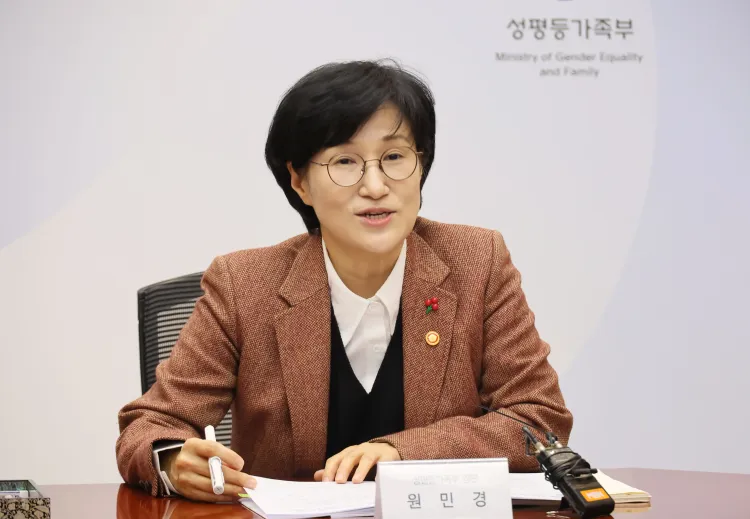
Seoul, March 7 (NationPress) - South Korea's Minister of Gender Equality, Won Min-kyong, extended an official apology on Saturday to former sex workers whose rights were compromised in the now-closed brothels situated near American military installations. This marks the first formal acknowledgment from the government regarding these injustices.
As the minister responsible for gender equality and women's rights, I offer my heartfelt apologies to the victims for the state's actions that violated their human rights at Gijichon,” stated Won in a message commemorating International Women's Day, observed on Sunday.
“We are committed to ensuring that the history of the human rights violations endured by these victims is not erased and that they can live with dignity, fully restoring their honor,” she continued.
This apology comes more than three and a half years after the Supreme Court ordered the state to compensate 95 former sex workers from these establishments, with amounts ranging from 3 million to 7 million won (approximately US$2,086-$4,866). These brothels, known as “base villages” or “Gijichon” in Korean, were located around U.S. military bases, as reported by Yonhap news agency.
The victims initiated legal proceedings in 2014, asserting that the government facilitated these practices by designating such areas and enabling these establishments to function, effectively endorsing prostitution.
Additionally, the National Assembly passed a bill last month aimed at penalizing the dissemination of false information regarding victims of sexual slavery perpetrated by Japan during World War II, which could result in up to five years of imprisonment for offenders, according to the gender ministry.
This legislative amendment to protect victims of wartime sexual slavery was ratified during a plenary session.
Under this new law, individuals spreading misinformation through various media platforms, including newspapers, broadcasts, exhibitions, and rallies, may face up to five years in prison or a fine of up to 50 million won (about US$34,100).
However, exemptions apply for actions taken for artistic, academic, research, or journalistic purposes, which are considered legitimate expressions of free speech.
The revised legislation also mandates authorities to periodically review statues and symbols honoring the victims.
“This amendment will provide an opportunity to firmly establish social norms to rectify historical inaccuracies and address any disrespect towards the victims,” stated Gender Minister Won Min-kyong.
The updated law is set to take effect three months following its promulgation.
Point of View
The apology from South Korea's Gender Minister represents a significant step toward addressing historical injustices faced by former sex workers. It emphasizes the government's commitment to acknowledging past violations and ensuring that such human rights abuses are not forgotten. The accompanying legislative changes signal a broader effort to protect victims and uphold their dignity.
NationPress
27 Oct 2026
Frequently Asked Questions
Why did the Gender Minister apologize?
The Gender Minister apologized to former sex workers whose rights were violated in brothels near U.S. military bases, marking the first official acknowledgment of these injustices by the government.
What prompted the apology?
The apology was prompted by a Supreme Court ruling that ordered the government to compensate victims for their suffering and the systemic actions that allowed these brothels to operate.
What legislation was passed alongside the apology?
The National Assembly passed a bill to penalize the spread of misinformation regarding victims of wartime sexual slavery, aiming to protect their rights and dignity.
What are the penalties for spreading misinformation under the new law?
Individuals found guilty of spreading misinformation may face up to five years in prison or a fine of up to 50 million won (approximately US$34,100).
When will the new law take effect?
The revised law is scheduled to take effect three months after its promulgation.