SpaceX wins FCC nod for 1 million AI data centre satellites

Synopsis
The US has approved, for the first time, a constellation of data centres in orbit — and it's enormous. SpaceX can deploy up to 1 million AI computing satellites under its Starmind plan, with full rollout by 2040. Astronomers warn the night sky, radio astronomy and orbital safety could pay the price.
Key Takeaways
The FCC authorised SpaceX to deploy up to 1 million satellites as orbital data centres on 26 November 2026 .
The FCC called the Starmind network the first US authorisation for a constellation of data centres in space.
FCC Chairman Brendan Carr linked the move to US leadership in AI and super intelligence.
The American Astronomical Society said it was “disheartened and dismayed”, citing brightness, radio, infrared, collision and pollution concerns.
Per the AAS, deployment must begin by 2033 , reach 1,00,000 satellites by 2035 and be complete by 2040 .
The US Federal Communications Commission (FCC) has authorised SpaceX to deploy up to 1 million satellites designed to work as data centres in space, the regulator said on 26 November 2026 in Washington. The FCC called it the first US authorisation for a constellation of orbital data centres. The American Astronomical Society (AAS) said it was “disheartened and dismayed”, warning the network could disrupt research and alter the night sky.
The approval permits deployment of the network. It does not mean any of the satellites have been launched yet.
What the Starmind Network Will Do
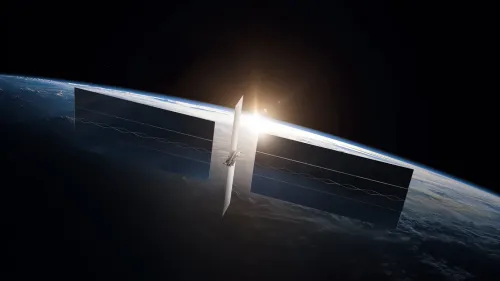
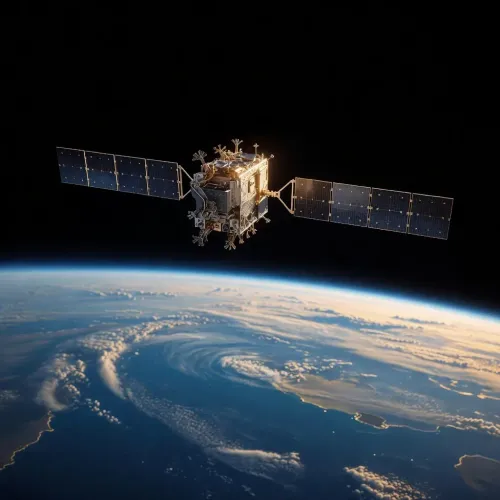
According to the FCC, the proposed Starmind network would process data in orbit for use on Earth, meeting rising demand for artificial intelligence computing. The satellites would communicate mainly through optical links, with radio links serving as backup and for emergency communications.
The regulator said the system was consistent with its orbital debris rules. It added that it was reviewing other proposals for orbital data centres and intended to decide on them promptly under its regular procedures.
What the FCC Chairman Said
FCC Chairman Brendan Carr framed the decision as part of a wider national push on advanced computing. “America is leading the world into the era of super intelligence. Under President Trump's leadership, the United States is moving decisively to ensure that this breakthrough technology creates opportunity, drives investment, and delivers lasting benefits for the American people,” he said.
“The FCC supercharges that effort today by granting, for the first time ever, authorisation to deploy 1 million orbital compute modules for data centres in space. This action opens a bold new frontier for the computing infrastructure needed to power America's leadership and growth,” Carr added.
He also said, “Compute campuses or data centres are essential to sustaining America's leadership in SI. By moving compute capacity beyond Earth, SpaceX and the many competitors working on their own orbital data centres are meeting the moment.” He described the project as “the kind of American ingenuity that can unite our strengths in space and advanced technology, reinforce our economic leadership, and expand prosperity here at home.”
Why Astronomers Are Objecting
The AAS said larger and more numerous satellites could stay bright for longer periods, interfering with observations. It warned that radio emissions and heat from the onboard computing equipment could also affect radio and infrared astronomy.
The society further raised concerns about collisions in orbit and pollution from launches and atmospheric reentry. In a media statement, it said the constellation “would significantly undermine (i) decades of federal investment in astronomical facilities and (ii) the ability of astronomers and the public to enjoy and study the night sky.”
Notably, the AAS acknowledged that SpaceX had earlier modified its Starlink satellite designs to reduce their impact on astronomy. Those changes helped but did not eliminate the problems, the society said, describing the million-satellite plan as a fundamentally different undertaking.
Deployment Timeline and What Comes Next
According to the society's account of the authorisation, SpaceX must begin deployment by 2033, have 1,00,000 satellites in orbit by 2035 and complete the full constellation by 2040.
The AAS had petitioned the FCC in March to reject the application. It said it hoped SpaceX would keep working with the National Science Foundation, but flagged concern that the licence contains no formal coordination requirements.
With the FCC signalling quick decisions on rival orbital data centre proposals, the contest over who controls low Earth orbit — and at what cost to science — is only beginning.
Point of View
And it has done so with a licence that, by the astronomers' account, lacks formal coordination requirements with the scientific community. One million satellites is not an incremental step beyond Starlink — it is a different order of magnitude, and design tweaks that only partly fixed Starlink's problems offer little reassurance here. For India, which is building its own space and AI ambitions, the precedent matters: orbit is finite, and first movers with regulatory backing will shape who gets access. The FCC's promise of quick decisions on rival proposals suggests the crowding of the sky is set to accelerate, not slow.
NationPress
26 Nov 2026
Frequently Asked Questions
What has the FCC approved for SpaceX?
The FCC has authorised SpaceX to deploy up to 1 million satellites that would function as data centres in space under the Starmind network. The regulator described it as the first US authorisation for an orbital data centre constellation.
Have the SpaceX Starmind satellites been launched?
No. The authorisation only permits deployment; it does not mean any of the satellites have been launched yet.
Why are astronomers against SpaceX's million-satellite plan?
The American Astronomical Society warns the satellites could stay bright longer and interfere with observations, while radio emissions and heat could affect radio and infrared astronomy. It also flagged risks of orbital collisions and pollution from launches and reentry.
When must SpaceX deploy the Starmind constellation?
According to the AAS's account of the authorisation, SpaceX must begin deployment by 2033, have 1,00,000 satellites in orbit by 2035 and complete the full constellation by 2040.
Will other companies get approval for orbital data centres?
The FCC said it is reviewing other proposals for orbital data centres and intends to decide on them promptly under its regular procedures.