Will Sri Lanka Restore Damaged Elephant Fences Within a Week?
Synopsis
Sri Lanka's Environment Minister has mandated the restoration of elephant fences damaged by Cyclone Ditwah within a week. This initiative is part of a broader recovery strategy aimed at addressing the serious Human-Elephant Conflict and rebuilding homes for affected families.
Key Takeaways
Immediate restoration of elephant fences is underway.
The government aims to rebuild approximately 25,000 homes nationally.
The Human-Elephant Conflict remains a significant concern.
Extensive damage assessments are ongoing.
Support from India for housing projects in hill-country areas.
Colombo, Jan 11 (NationPress) The Minister of Environment in Sri Lanka, Dammika Patabendi, has instructed local authorities to repair the elephant fences that were compromised by Cyclone Ditwah within a period of one week.
On Sunday, the ministry reported that this directive was given during a progress evaluation meeting on Saturday concerning the repairs of fences significantly impacted by last month's cyclone, according to Xinhua news agency.
Reports indicate that extensive destruction has occurred in multiple regions experiencing the Human-Elephant Conflict (HEC).
HEC is a critical issue in specific parts of Sri Lanka. Official statistics reveal that there were 438 elephant fatalities and 158 human casualties in 2025.
On the previous Friday, the government initiated a substantial housing reconstruction and compensation scheme for families impacted by Cyclone Ditwah, as stated by the President's Media Division (PMD).
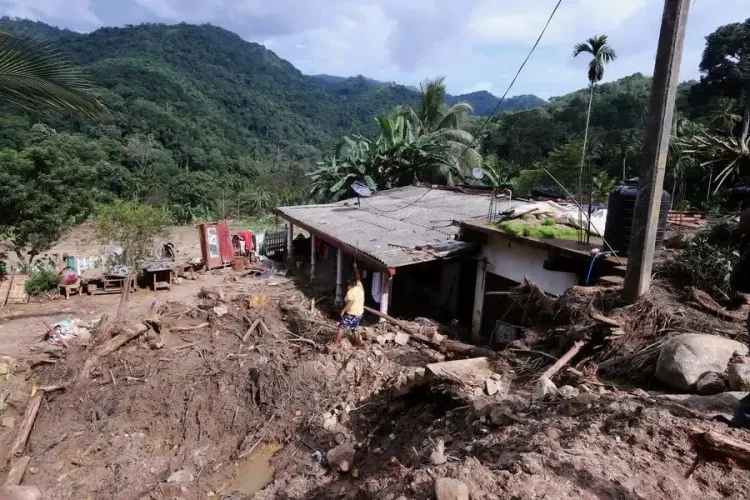
The PMD noted that this initiative, part of the government's 'Rebuilding Sri Lanka' program, commenced in the Anuradhapura and Kurunegala districts, with new housing projects launched in Galnewa, Rajanganaya, Nikaweratiya, and Rideegama. The program aims to assist communities that suffered extensive damage during the cyclone.
During the inauguration ceremony, President Anura Kumara Dissanayake remarked that initial assessments suggest that between 20,000 and 25,000 homes will require rebuilding nationwide. He further stated that approximately 6,000 houses were utterly destroyed, while an estimated 17,000 to 18,000 more were partially affected or located in hazardous zones. Authorities are expected to complete a comprehensive damage assessment in the upcoming weeks.
The President mentioned that the reconstruction efforts will coincide with ongoing national housing initiatives financed through the 2026 budget, which include plans to construct 31,000 homes for low-income families, communities displaced by conflict, and estate-sector workers, with additional support from India for housing projects in hill-country areas.
The economic repercussions of Cyclone Ditwah have led to a staggering loss of $4.1 billion for Sri Lanka.
Point of View
It is imperative to recognize the urgency of the Sri Lankan government's response to the damages inflicted by Cyclone Ditwah. The dual focus on restoring wildlife safety and providing housing solutions demonstrates a comprehensive approach to disaster recovery.
NationPress
24 Sept 2026
Frequently Asked Questions
What is the Human-Elephant Conflict?
The Human-Elephant Conflict (HEC) refers to the interactions between humans and elephants that can lead to damage to crops, property, and even loss of life. It is a serious problem in various regions of Sri Lanka.
What measures is the Sri Lankan government taking for recovery?
The government has initiated a major reconstruction program aimed at restoring homes and infrastructure damaged by Cyclone Ditwah, with plans to rebuild thousands of homes and repair wildlife fences.
What are the economic impacts of Cyclone Ditwah?
The economic losses due to Cyclone Ditwah have been estimated at $4.1 billion, affecting various sectors and communities across Sri Lanka.