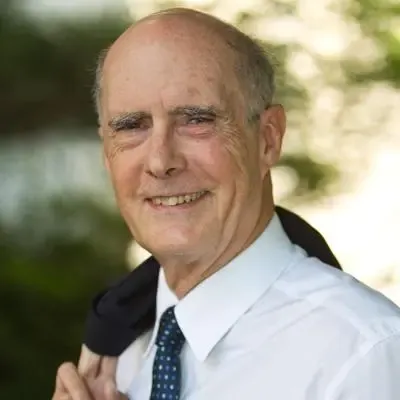
Strobe Talbott dies at 80: US point man on India after Pokhran
Synopsis
The American diplomat who sat across from Jaswant Singh 14 times after Pokhran has died at 80. Strobe Talbott helped turn post-test sanctions into Clinton's landmark 2000 visit — yet later voiced 'profound and persistent concerns' about the very nuclear deal his diplomacy helped make possible.
Key Takeaways
Strobe Talbott , former US deputy secretary of state, has died at 80 at his home in East Hampton, New York , after a long illness.
He met India's Jaswant Singh 14 times in seven countries between June 1998 and September 2000 after the Pokhran tests.
The dialogue helped pave the way for Bill Clinton's India visit in March 2000 , the first by a US president since January 1978 .
Talbott voiced “profound and persistent concerns” about the India-US civil nuclear deal in March 2006 .
He led the Brookings Institution from July 2002 to October 2017 .
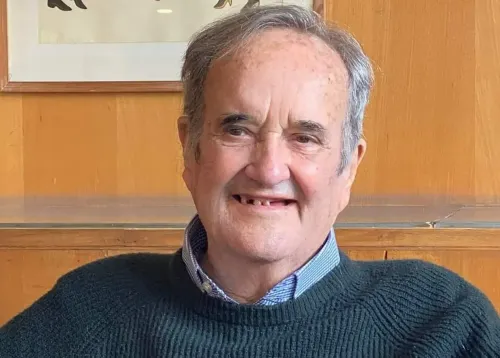
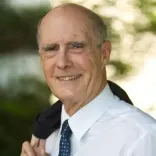
Strobe Talbott, the former US deputy secretary of state who led Washington's diplomatic dialogue with India after the 1998 Pokhran nuclear tests, has died at his home in East Hampton, New York. He was 80. His years of talks with India's Jaswant Singh are widely credited with helping lay the foundation for the closer India-US partnership that followed.
His son Devin confirmed that Talbott died after a long illness, according to The Washington Post. After leaving government, Talbott served for 15 years as president of the Brookings Institution, one of Washington's most influential think tanks.
The Talbott-Jaswant Singh Dialogue
In India, Talbott is remembered chiefly for his sustained engagement with Jaswant Singh in the tense period after the Pokhran tests. Between June 1998 and September 2000, the two men met 14 times in seven countries across three continents, according to Brookings Institution Press.
The publisher released Talbott's own account of those talks, Engaging India: Diplomacy, Democracy, and the Bomb, in 2004. Notably, the discussions moved beyond nuclear security and nonproliferation to cover economic and strategic cooperation, extending well past the immediate dispute.
That wider agenda helped prepare the ground for President Bill Clinton's visit to India in March 2000. During the trip, Clinton addressed Parliament. It was the first visit by a sitting US president since Jimmy Carter travelled to India in January 1978.
From Engagement to Strategic Partnership
Singh later described the talks as an important foundation for the relationship that followed. At an event in Washington in November 2006, he connected the dialogue and Clinton's visit to the 2004 Next Steps in Strategic Partnership.
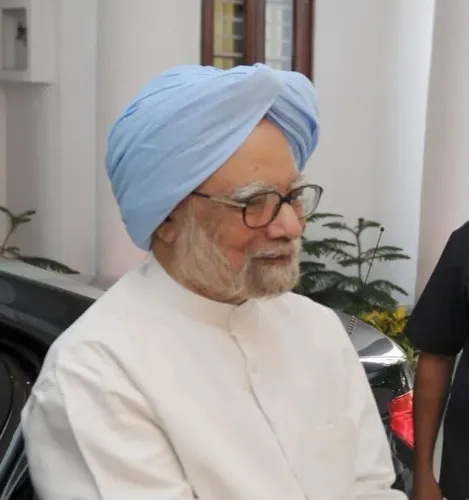
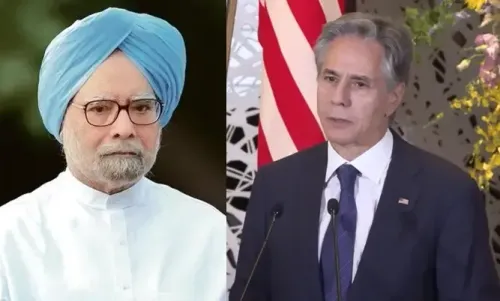
According to Singh, that framework in turn underpinned the July 2005 nuclear initiative announced by Prime Minister Manmohan Singh and President George W. Bush. Recalling how the United States had helped India build connections with the wider world, Singh told Talbott: “You led us across the bridge.”
A Critic of the Civil Nuclear Deal
Talbott's role in improving ties did not make him an uncritical supporter of the civil nuclear agreement that followed. “I have some profound and persistent concerns about the deal,” he told the Council on Foreign Relations in March 2006.
He argued that the arrangement would weaken the international nonproliferation system by giving India exceptional treatment that other countries might also seek. His objection focused on the deal's implications for nuclear rules, even as both governments presented it as a major advance in bilateral relations.
At the 2006 discussion with Singh, Talbott also recalled the US Senate's rejection of the Comprehensive Nuclear-Test-Ban Treaty in 1999. He called it “a black day for the cause of nonproliferation” and said it had undermined Washington's efforts to persuade India to join the treaty.
A Career in Journalism and Diplomacy
Born in Dayton, Ohio, in 1946, Talbott studied at Yale and Oxford. Before entering government, he spent 21 years at Time magazine, covering Eastern Europe, the State Department and the White House, before becoming Washington bureau chief and a foreign affairs columnist. He also translated and edited two volumes of former Soviet leader Nikita Khrushchev's memoirs.
Talbott joined the Clinton administration in 1993 as ambassador-at-large and special adviser on the newly independent states of the former Soviet Union. He served as deputy secretary of state from February 1994 to January 2001.
After government service, he became founding director of the Yale Center for the Study of Globalization. He led Brookings from July 2002 to October 2017 and chaired the State Department's Foreign Affairs Policy Board under Secretaries Hillary Clinton and John Kerry.
He is survived by his wife, author Barbara Lazear Ascher, and sons Devin and Adrian, according to The Washington Post. His death closes a chapter on one of the most consequential diplomatic channels in modern India-US history, one whose legacy remains embedded in the partnership the two countries continue to build.
Point of View
Patient engagement could convert a sanctions crisis into a strategic opening — a lesson relevant as India navigates today's friction with Washington. Yet his nonproliferation objections were not anti-India; they were a principled worry about rule-making, and his candour on the US Senate's CTBT failure exposed Washington's own credibility gap. India gained from both his advocacy and his scepticism, because each forced clearer arguments.
NationPress
27 Nov 2026
Frequently Asked Questions
Who was Strobe Talbott?
Strobe Talbott was a former US deputy secretary of state who served from February 1994 to January 2001 and later led the Brookings Institution for 15 years. He was best known in India for leading US talks with Jaswant Singh after the 1998 Pokhran nuclear tests.
How did Strobe Talbott die?
Talbott died at his home in East Hampton, New York, after a long illness, at the age of 80. His son Devin confirmed the death, according to The Washington Post.
What was the Talbott-Jaswant Singh dialogue?
It was a series of 14 meetings held in seven countries across three continents between June 1998 and September 2000. The talks covered nuclear security, nonproliferation and broader economic and strategic cooperation, paving the way for Bill Clinton's March 2000 visit to India.
Did Strobe Talbott support the India-US nuclear deal?
No, he expressed reservations about it. In March 2006 he told the Council on Foreign Relations he had “profound and persistent concerns”, arguing the deal's exceptional treatment of India could weaken the global nonproliferation system.
What book did Strobe Talbott write about India?
He wrote Engaging India: Diplomacy, Democracy, and the Bomb , published by Brookings Institution Press in 2004. The book is his account of the post-Pokhran negotiations with Jaswant Singh.