Did Veteran Journalist Mark Tully Pass Away?
Synopsis
The passing of Sir William Mark Tully, a legendary journalist and author, marks the end of an era. Known for his insightful reporting on major political events in India, Tully's legacy lives on through his writings and broadcasts. Join us as we remember his impactful career and contributions to journalism.
Key Takeaways
Mark Tully was a prominent voice in Indian journalism.
He reported on critical political events for over two decades.
Tully authored several influential books on India.
He received multiple honors for his contributions to journalism.
His legacy continues to inspire future generations of journalists.
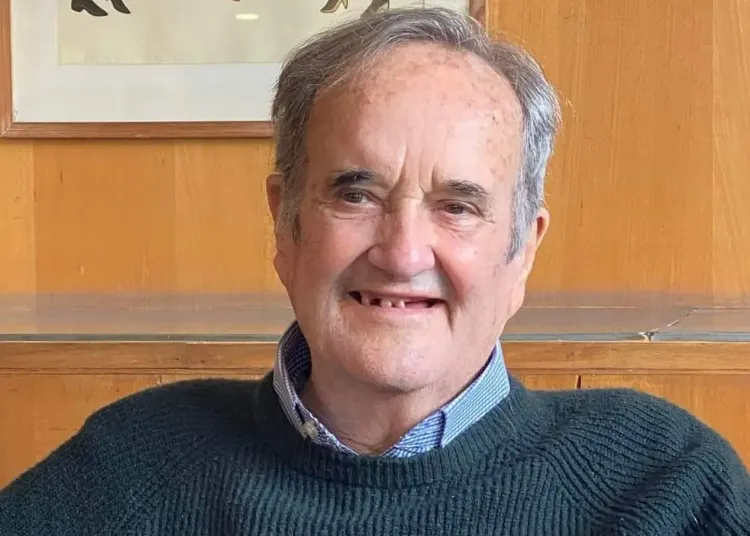
New Delhi, Jan 25 (NationPress) Sir William Mark Tully, a prominent journalist, broadcaster, and author, widely recognized for his distinctive voice in India during the late 20th century, has sadly passed away on Sunday at the age of 90.
Tully, who once worked for the BBC as a journalist covering India and South Asia, received accolades from both the Indian and British governments. He had been unwell for some time and was hospitalized in southern Delhi before his death.
Born in Tollygunge, Calcutta, on October 24, 1935, into a wealthy British business family, Tully began his education in India, including a boarding school in Darjeeling, before moving to the UK at the age of nine. Initially intending to pursue a career in the church after studying theology at Cambridge, he ultimately decided to follow a path in journalism, joining the BBC in 1964.
In 1965, Tully returned to India to serve as the BBC's India Correspondent. He quickly rose to become the bureau chief in New Delhi. Over his remarkable 22-year career, he reported on significant South Asian events, including the various conflicts between India and Pakistan, Operation Blue Star, the assassination of Indira Gandhi, the anti-Sikh riots, the Bhopal gas tragedy, the assassination of Rajiv Gandhi, and the demolition of the Babri Masjid.
After leaving the BBC in July 1994 due to a dispute with the then Director General, he continued to work as a freelance journalist and broadcaster based in New Delhi while still contributing to BBC programs until 2019.
Tully authored numerous books, starting with "Amritsar: Mrs Gandhi's Last Battle" (1985), co-written with his BBC colleague Satish Jacob. His other works include "Raj to Rajiv: 40 Years of Indian Independence" (1988), "No Full Stops in India" (1988), "India in Slow Motion" (2002), "India's Unending Journey" (2008), and "India: The Road Ahead" (2011).
His fictional contributions include "The Heart of India" (1995), which captures glimpses of Indian life, and "Upcountry Tales: Once Upon A Time In The Heart Of India" (2017).
In recognition of his contributions, he was made an Officer of the Order of the British Empire in 1985, knighted in 2002, awarded the Padma Shri in 1992, and received the Padma Bhushan in 2005.
Point of View
I believe that the legacy of Mark Tully serves as a reminder of the vital role journalism plays in shaping public discourse. His insightful reports not only informed but also engaged audiences, creating a deeper understanding of India's complex socio-political landscape. His passing is a significant moment for journalism in India.
NationPress
23 Sept 2026
Frequently Asked Questions
What notable events did Tully cover?
He reported on major incidents such as the India-Pakistan conflicts, Operation Blue Star, and the Bhopal gas tragedy.
What awards did Tully receive?
He was honored with the Padma Shri, Padma Bhushan, and was knighted in 2002.
What are some of Tully's notable works?
His notable works include 'Amritsar: Mrs Gandhi's Last Battle' and 'India in Slow Motion'.
When did Mark Tully pass away?
Mark Tully passed away on January 25, 2023.