Syria-Jordan joint security committee formed after deadly airstrikes on Daraa
Synopsis
Seven civilians — including three children — were killed when Jordan struck Syria's Daraa province, triggering a border closure and a diplomatic standoff. Within 48 hours, Damascus and Amman had agreed to a joint security committee and reopened the Nasib crossing, but the two sides still offer contradictory accounts of whether the strikes were coordinated — a fault line that will define whether the new committee holds.
Key Takeaways
Syria and Jordan agreed on 28 October 2026 to form a joint security committee to investigate Jordanian airstrikes on Daraa province .
The strikes on Monday evening killed 7 civilians , including 3 children , and injured 3 others .
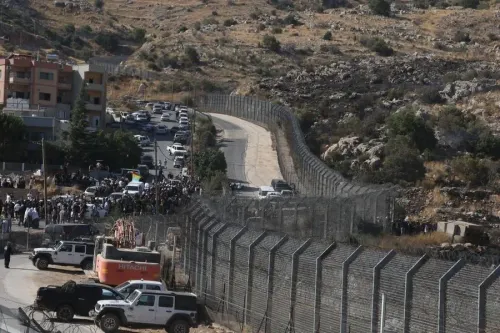
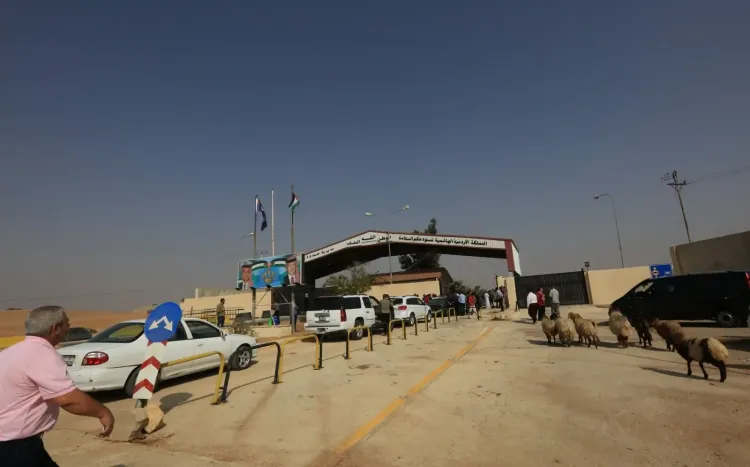
The Nasib border crossing was closed on Tuesday and reopened to normal passenger and commercial traffic on Wednesday morning .
Jordan said the strikes targeted Islamic State militants in retaliation for a church funeral attack in Karak governorate ; Syria denied any prior coordination was given.
Foreign Affairs Chief Asaad al-Shaibani and Foreign Minister Ayman Safadi held a phone call to reach the agreement, with Safadi expressing regret over civilian casualties.
Syria and Jordan agreed on Wednesday, 28 October 2026 to establish a joint security committee to investigate recent Jordanian airstrikes on southern Syria, even as the Nasib border crossing between the two countries reopened after a brief closure. The agreement signals an effort by Damascus and Amman to manage a sharp diplomatic rupture without allowing it to escalate into a broader bilateral crisis.
How the Agreement Was Reached
The deal was formalised during a telephone call between Syrian Foreign Affairs Chief Asaad al-Shaibani and Jordanian Foreign Minister Ayman Safadi, according to a joint statement carried by Syrian state news agency SANA early Wednesday. Both officials underscored the need for direct security coordination to combat terrorism and cross-border trafficking of drugs and arms, and reaffirmed their commitment to maintaining close bilateral ties.
During the conversation, Safadi expressed deep regret over the civilian casualties caused by the airstrikes and extended condolences to the families of the victims.
The Airstrikes and Their Toll
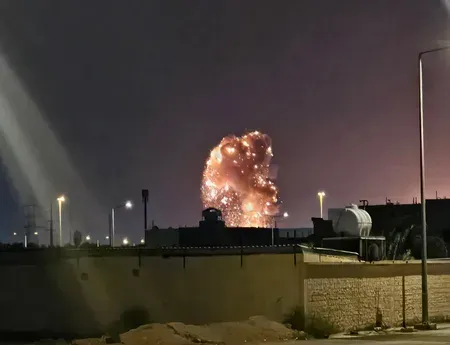
The Jordanian Air Force struck several locations in Syria's Daraa province on Monday evening, killing seven civilians — including three children — and injuring three others, according to Syrian accounts. The strikes triggered the temporary shutdown of the Nasib crossing on Tuesday, disrupting both passenger and commercial traffic. Normal operations at the crossing resumed on Wednesday morning, Syrian authorities confirmed.
Jordan's Justification and Syria's Objection
The Jordanian Armed Forces stated that the operation targeted Islamic State militants and was conducted in retaliation for a deadly attack during a church funeral in Karak governorate the previous Friday, alleging that those responsible were linked to militant organisations operating in southern Syria. Amman further claimed the strikes were carried out in coordination with Damascus.
The Syrian government, however, denied that any prior coordination had taken place and formally objected to military operations on Syrian territory without advance consultation. The contradictory accounts underscore the fragile trust between the two neighbours and explain the urgency behind the joint committee mechanism.
Broader Significance for Border Security
The Daraa province has long been a flashpoint for cross-border smuggling networks — particularly the so-called 'captagon corridor' — and sporadic militant activity, making it a persistent source of friction between Syria and Jordan. This is not the first time Amman has conducted strikes inside Syrian territory; previous operations targeted drug smugglers near the border. However, the killing of civilians in this round significantly raised the diplomatic stakes.
The formation of a joint security committee, if operationalised, could provide a structured channel to prevent unilateral military action from triggering a wider rift. Analysts note that both Damascus and Amman have strong economic incentives — including trade through the Nasib crossing — to keep the bilateral relationship functional despite deep political differences.
What Comes Next
The joint committee's terms of reference, composition, and timeline have not yet been publicly detailed. Its effectiveness will depend on whether Damascus and Amman can agree on a shared account of Monday's strikes and on protocols governing future counter-terrorism operations near the shared border. Regional observers will be watching closely to see whether the committee translates into meaningful operational coordination or remains a diplomatic gesture.
Point of View
Not a solution. Damascus and Amman are offering irreconcilable narratives — Jordan says it coordinated the strikes; Syria says it did not — and a committee cannot paper over that contradiction for long. The real issue is structural: Jordan faces genuine security pressure from militant and smuggling networks based in southern Syria, while the post-Assad Syrian government cannot politically accept unilateral foreign military action on its soil without appearing weak. Until there is a working real-time intelligence-sharing mechanism with binding protocols, the risk of another unilateral Jordanian strike — and another civilian death toll — remains high. The Nasib crossing's economic importance gives both sides an incentive to manage the fallout, but economic pragmatism has repeatedly failed to prevent security incidents in this corridor.
NationPress
28 Oct 2026
Frequently Asked Questions
Why did Jordan carry out airstrikes in southern Syria?
The Jordanian Armed Forces said the strikes targeted Islamic State militants in retaliation for a deadly attack during a church funeral in Karak governorate on the preceding Friday, alleging those responsible were linked to militant groups in southern Syria's Daraa province. Jordan also claimed the operation was conducted in coordination with Damascus, a claim the Syrian government denied.
How many people were killed in the Jordanian airstrikes on Daraa?
Seven civilians were killed, including three children, and three others were injured when Jordanian aircraft struck multiple locations in Syria's Daraa province on Monday evening, according to Syrian accounts.
What is the Nasib border crossing and why was it closed?
The Nasib crossing is the primary land border point between Syria and Jordan, handling passenger and commercial traffic. It was temporarily closed on Tuesday following the airstrikes and the diplomatic tensions they generated, before reopening to normal operations on Wednesday morning.
What is the joint security committee Syria and Jordan agreed to form?
The joint security committee is a bilateral mechanism agreed upon during a phone call between Syrian Foreign Affairs Chief Asaad al-Shaibani and Jordanian Foreign Minister Ayman Safadi on 28 October 2026. Its stated purpose is to investigate the circumstances of the recent airstrikes and strengthen coordination on counter-terrorism and cross-border smuggling, though its composition and operational details have not yet been publicly announced.
What is the broader context of tensions along the Syria-Jordan border?
The Daraa province has long been a corridor for drug and arms smuggling — including the trade in captagon — and has seen periodic militant activity, making it a recurring source of friction between Damascus and Amman. Jordan has previously conducted operations targeting smuggling networks near the border, but the civilian death toll in this latest round significantly escalated the diplomatic stakes between the two neighbours.