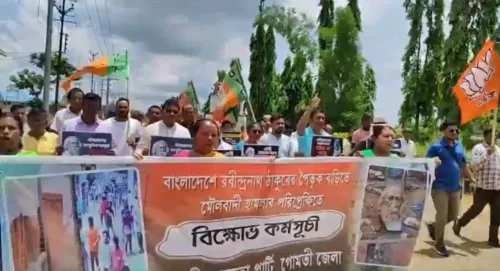
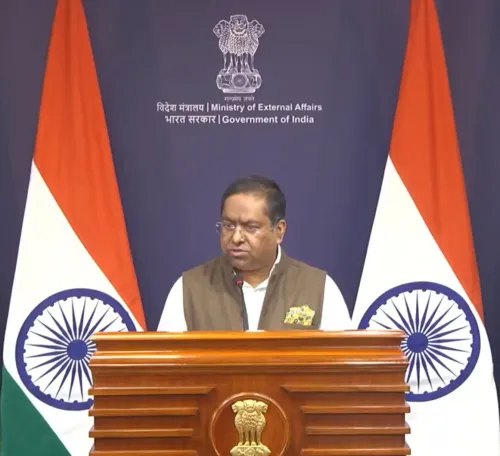
Tagore mural defaced at Khulna Railway Station in Bangladesh
Synopsis
Rabindranath Tagore's mural at Khulna Railway Station has been smeared with black ink — the second such attack on his image in Bangladesh within a month. Cultural activists suspect an organised group, drawing chilling parallels to how Pakistani rulers weaponised anti-Tagore sentiment in the 1960s. With 37 prominent citizens already raising the alarm after the Dhaka incident, Bangladesh now faces a widening assault on its secular cultural foundations.
Key Takeaways
A mural of Rabindranath Tagore at Khulna Railway Station , Bangladesh, was defaced with black ink by unidentified miscreants.
It is the second such attack in under a month; a Tagore mural at the Bangladesh Shilpakala Academy in Dhaka was similarly defaced last month.
Khulna City Corporation (KCC) had commissioned the murals ahead of Prime Minister Tarique Rahman's visit to the city.
Of all portraits on the wall — including Kazi Nazrul Islam, Khaleda Zia and Ziaur Rahman — only Tagore's was targeted.
At least 37 prominent Bangladeshi citizens warned after the Dhaka incident that such acts risk emboldening religious extremists and deepening communal tensions.
Police at Khulna Sadar Police Station have launched an investigation; no arrests have been reported.
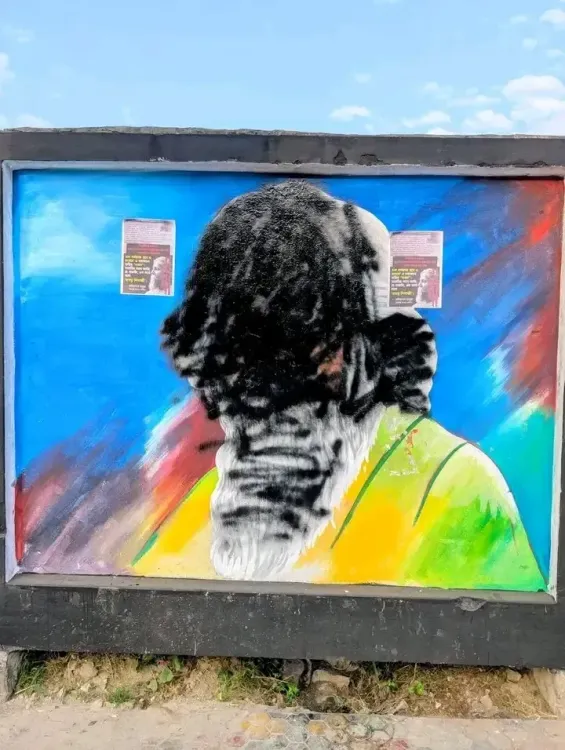
A mural of Nobel laureate Rabindranath Tagore on the boundary wall of Khulna Railway Station in Bangladesh was defaced with black ink by unidentified miscreants, according to local media reports dated 7 November 2026. The act of vandalism has triggered widespread outrage among residents and cultural figures, with activists suspecting the involvement of an organised group.
What Happened at Khulna
The mural was part of a series commissioned by the Khulna City Corporation (KCC) along a wall near Old Jessore Road, painted ahead of a scheduled visit by Prime Minister Tarique Rahman. The murals depicted the 2024 July uprising, the Sundarbans, the historic Sixty Dome Mosque, and the jute industry, while also honouring distinguished cultural and literary figures of the region — among them Tagore, Kazi Nazrul Islam, Fakir Lalon Shah, artist SM Sultan, former Prime Minister Khaleda Zia, former President Ziaur Rahman, and poet Michael Madhusudan Dutt. Of all the portraits on the wall, only Tagore's was found smeared with black ink.
Officer-in-Charge of Khulna Sadar Police Station Lokman Hossain confirmed that police received information about the defacement on Friday afternoon and launched an investigation. He noted that all businesses along the road had been closed that day, complicating efforts to establish the timeline or identify the perpetrators.
Official Condemnation
KCC Administrator Nazrul Islam Manju expressed sharp condemnation, saying: 'By defacing the portrait, they have exposed their narrow-mindedness and sick mentality.' Cultural activist and general secretary of Nattyalok, Shariful Islam Salim, suspected deliberate orchestration by an organised group. 'They have carried out similar acts in Dhaka as well. These incidents are being orchestrated deliberately. Those responsible must be identified and brought to justice. This may not stop with Rabindranath; they could target other eminent personalities too,' he was quoted as saying by The Daily Star.
Salim further noted that Tagore's literature and philosophy had shaped generations to uphold free thought, secularism, and human dignity, adding: 'Some young people are being misled into engaging in such disgraceful acts.' He called Tagore 'an inseparable part of Bangladesh's cultural identity' and urged citizens across all communities to raise a united voice against such acts.
A Disturbing Pattern
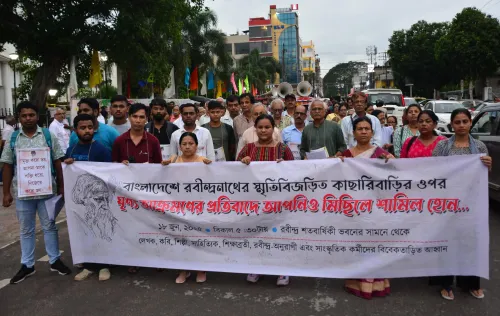
This is not an isolated incident. The Khulna defacement came nearly a month after a graffiti mural of Tagore outside the Bangladesh Shilpakala Academy in Dhaka was similarly smeared with black ink. Following that earlier incident, at least 37 prominent Bangladeshi citizens issued a joint statement expressing grave concern, warning that such acts risk emboldening religious extremists and deepening communal tensions across the country.
The signatories drew a pointed historical parallel, recalling how Pakistani rulers in the 1960s had politically portrayed Tagore as anti-Muslim — and comparing that campaign to the current wave of defacements. 'Language, literature, art and culture are indivisible common heritage of humanity,' the statement said, emphasising that no religious, geographical, or ideological differences should be used to divide cultural traditions.
Broader Significance
Tagore, who was born in undivided Bengal and whose work remains foundational to Bangladeshi national identity — including the country's national anthem, 'Amar Shonar Bangla' — has been a repeated target in what critics argue is a systematic attempt to erase secular cultural symbols. The pattern of incidents, analysts say, reflects heightened communal anxieties in a post-2024 political landscape. Investigators are yet to make any arrests in connection with either the Dhaka or Khulna incidents, and authorities have not publicly named any suspects.
Point of View
And Bangladesh's institutions need to treat it as one. The historical parallel invoked by civil society is apt: the 1960s anti-Tagore campaign by Pakistani rulers was a state-backed ideological project; what is unfolding now may be its grassroots echo. The selective targeting of Tagore's portrait — while images of Khaleda Zia and Ziaur Rahman on the same wall were left untouched — suggests a specifically anti-secular motive, not random vandalism. The absence of arrests after both incidents will only embolden further acts unless authorities demonstrate credible deterrence.
NationPress
7 Nov 2026
Frequently Asked Questions
What happened to the Tagore mural at Khulna Railway Station?
Unidentified miscreants defaced a mural of Nobel laureate Rabindranath Tagore on the boundary wall of Khulna Railway Station in Bangladesh by smearing it with black ink. The incident came to police attention on a Friday afternoon and an investigation has been launched.
Is this the first time a Tagore mural has been defaced in Bangladesh?
No. The Khulna incident is the second such attack in under a month. A graffiti mural of Tagore outside the Bangladesh Shilpakala Academy in Dhaka was similarly defaced with black ink just weeks earlier, prompting at least 37 prominent Bangladeshi citizens to issue a formal statement of concern.
Why was Tagore's portrait specifically targeted?
Investigators have not yet publicly named suspects or confirmed a motive. However, cultural activists suspect an organised group is behind both incidents, with one activist drawing a parallel to the 1960s campaign by Pakistani rulers that sought to portray Tagore as anti-Muslim. All other portraits on the same Khulna wall — including those of Kazi Nazrul Islam, Khaleda Zia, and Ziaur Rahman — were left untouched.
Who commissioned the murals in Khulna?
The Khulna City Corporation (KCC) commissioned the murals ahead of a scheduled visit by Prime Minister Tarique Rahman. The series depicted the 2024 July uprising, the Sundarbans, the Sixty Dome Mosque, and the jute industry, as well as prominent cultural and literary figures of the region.
What has been the response from authorities and civil society?
KCC Administrator Nazrul Islam Manju condemned the act, saying it exposed the perpetrators' 'narrow-mindedness and sick mentality.' Cultural activist Shariful Islam Salim urged authorities to identify and prosecute those responsible, warning they could target other eminent personalities next. Police have opened an investigation but no arrests have been reported.