37 eminent Bangladeshis warn of rising religious extremism after Tagore mural defaced
Synopsis
Thirty-seven prominent Bangladeshi citizens have publicly warned that their country is sliding toward religious extremism — pointing to a teacher targeted over niqab remarks and Rabindranath Tagore's mural smeared with black ink in Dhaka. The signatories draw an unsettling parallel with 1960s Pakistani propaganda that framed Tagore as anti-Muslim, suggesting the latest incidents are not spontaneous but politically engineered.
Key Takeaways
37 prominent Bangladeshi citizens issued a joint statement on 14 October 2026 warning of rising religious extremism.
Dhaka University teacher Tasneem Siraj Mahbub faces demands for punishment over alleged remarks on a student's niqab ; she has denied the allegations.
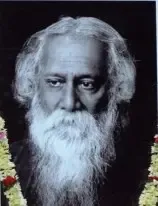
A Rabindranath Tagore mural at the Shilpakala Academy in Dhaka's Segunbagicha area was defaced with black ink on 9 October by a group under the Rashtra Sanglap Forum banner.
Police detained the group following the defacement; videos of the incident circulated widely on social media.
Signatories warned both incidents reflect a coordinated attempt to exploit religious sentiments, comparing it to 1960s Pakistani portrayals of Tagore as anti-Muslim.
At least 37 prominent Bangladeshi citizens have issued a joint statement warning of rising religious extremism in Bangladesh, citing two incidents that have alarmed civil society: demands to punish a Dhaka University teacher over alleged remarks on a student's attire, and the defacement of a Rabindranath Tagore mural in the capital Dhaka. The statement, released on Tuesday, 14 October 2026, called for impartial investigations into both incidents and punishment for those responsible, according to local media reports.
The Dhaka University Classroom Dispute
The first incident centres on a classroom altercation at Dhaka University's English department, where a master's student accused teacher Tasneem Siraj Mahbub of making remarks about students' attire and financial circumstances. In a social media post, the student alleged that Mahbub had told a classmate wearing a niqab (face veil) that she could leave her face, hands, and feet uncovered instead of observing purdah so strictly.
Following the exchange, the student and two others walked out of the classroom. The student subsequently lodged a written complaint with the university administration on behalf of a student organisation, seeking action against the teacher, The Daily Star — Bangladesh's leading newspaper — reported.
Mahbub flatly rejected the allegations in her own social media post, stating that she had neither asked the student to change her clothes or remove her niqab, nor instructed her to leave the classroom. The conflicting accounts have left the university administration facing pressure from multiple sides.
Tagore Mural Defaced in Dhaka
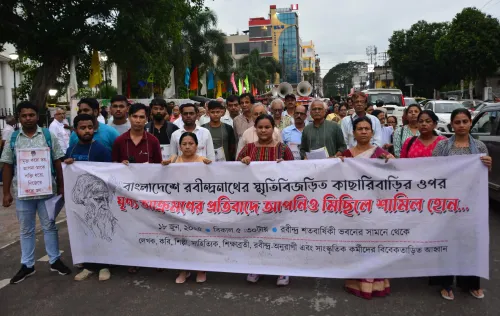
The second — and more visually striking — incident took place on 9 October, when a group operating under the banner of the Rashtra Sanglap Forum defaced a portrait of Rabindranath Tagore on a wall at the Shilpakala Academy in Dhaka's Segunbagicha area. Multiple videos circulating on social media showed a woman using a brush to smear black ink across the mural.
A police officer from Shahbagh Police Station intervened and moved her away from the site. Following a commotion involving the woman and her associates, police detained the group and took them away, according to reports by Bangladeshi daily Dhaka Tribune. The group was reportedly heard chanting slogans during the incident.
The Signatories' Key Concerns
The 37 eminent citizens who signed the statement argued that both incidents share a common thread: the exploitation of religious sentiments to inflame extremism and deepen communal and social tensions. They stressed that freedom of dress is a matter of personal liberty and that misunderstandings of this nature should be resolved through dialogue rather than politicisation.
The signatories also drew a pointed historical comparison, recalling how Pakistani rulers in the 1960s politically portrayed Tagore as anti-Muslim — and arguing that the recent mural defacement echoes that same campaign. 'Language, literature, art and culture are indivisible common heritage of humanity,' the statement read, adding that no religious, geographical, or ideological differences should be used to divide cultural traditions.
Broader Context: Civil Society Under Pressure
This is not an isolated episode. Bangladesh has seen a pattern of incidents in which cultural symbols and minority or progressive figures are targeted under the guise of religious grievance, critics argue. The signatories' warning reflects growing unease within Bangladesh's intellectual and civil society circles about the direction the country is taking. Notably, the open letter format — signed by 37 named citizens — signals that opposition to these trends is organised and public, not merely expressed in private.
How the Dhaka University administration and law enforcement respond to both incidents will be closely watched as a signal of whether institutions are prepared to resist what the signatories describe as a calculated attempt to exploit religious sentiment for political ends.
Point of View
Or whether hesitation signals that such tactics carry low cost. The muted international attention on Bangladesh's internal communal dynamics — compared with the coverage it would attract elsewhere — makes the domestic civil society voice all the more critical.
NationPress
14 Oct 2026
Frequently Asked Questions
What prompted 37 Bangladeshi citizens to issue a joint warning about religious extremism?
Two incidents triggered the statement: demands to punish a Dhaka University English department teacher, Tasneem Siraj Mahbub, over alleged remarks about a student's niqab, and the defacement of a Rabindranath Tagore mural at the Shilpakala Academy in Dhaka on 9 October 2026. The signatories argued both incidents reflected a deliberate attempt to exploit religious sentiments and inflame communal tensions.
What happened to the Rabindranath Tagore mural in Dhaka?
A group operating under the Rashtra Sanglap Forum banner smeared black ink across a Tagore portrait at the Shilpakala Academy in Dhaka's Segunbagicha area on 9 October 2026. Police from Shahbagh Police Station intervened and detained the group, and videos of the defacement spread widely on social media.
What is the controversy surrounding Dhaka University teacher Tasneem Siraj Mahbub?
A master's student accused Mahbub of telling a classmate wearing a niqab that she could leave her face, hands, and feet uncovered instead of observing purdah so strictly. Mahbub denied the allegations in a social media post, stating she had not asked the student to change her attire or leave the classroom. The student subsequently filed a written complaint with the university administration.
Why did the signatories compare the Tagore defacement to 1960s Pakistan?
The signatories recalled that Pakistani rulers in the 1960s politically portrayed Rabindranath Tagore as anti-Muslim as part of a cultural suppression campaign. They argued the recent defacement of his mural follows the same logic — using religion as a political tool to erase shared cultural heritage. This historical parallel was central to their argument that the current incidents are not isolated but echo a recognisable authoritarian playbook.
What action have the 37 signatories demanded?
The signatories called for impartial investigations into both the Dhaka University classroom incident and the Tagore mural defacement, and demanded punishment for those found responsible. They also urged that the classroom dispute be resolved through dialogue rather than political agitation, stressing that freedom of dress is a matter of personal liberty.