Taiwan Protests to Honor the 1959 Tibetan Uprising

Synopsis
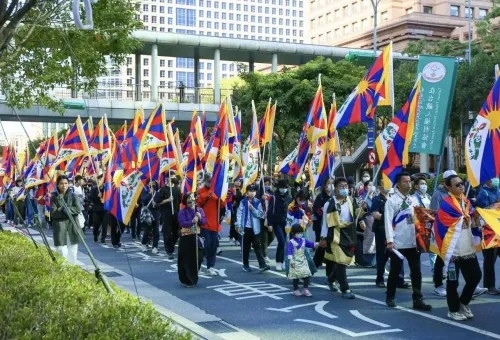
On March 11, around 300 people marched in Taipei to honor the 1959 Tibetan uprising. The event served as a reminder of the ongoing struggle against authoritarianism, with organizers emphasizing the importance of supporting Tibet's fight for dignity and democracy in the face of China's expanding influence.
Key Takeaways
300 people marched in Taipei to honor the 1959 Tibetan uprising.
Kelsang Gyaltsen Bawa highlighted the global implications of authoritarianism.
The event called for international support for Tibet's dignity and democracy.
Participants stressed the importance of maintaining religious autonomy .
Tibetan Uprising Day, celebrated on March 10, marks a historic protest against China.
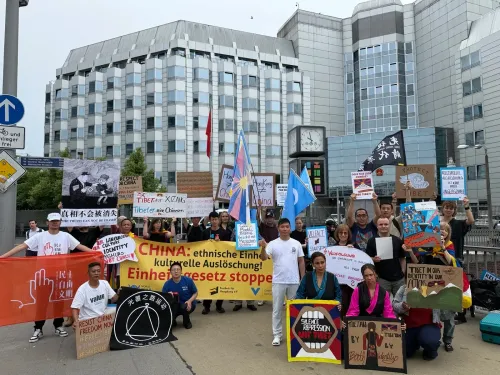
Taipei, March 11 (NationPress) Approximately 300 individuals took part in a yearly march in Taiwan's capital, Taipei, to commemorate the 1959 Tibetan uprising. Organizers cautioned that China's expansion of authoritarian governance will not be confined to just one region, as reported by local media.
Kelsang Gyaltsen Bawa, the chairman of the Tibet Religious Foundation and a prominent Tibetan spiritual leader, stated, "The narrative of Tibet serves as a crucial reminder to the global community, particularly to Taiwan," according to Central News Agency (CNA).
He continued, asserting that the spread of authoritarianism is already impacting the Uyghurs, Southern Mongolians, Hong Kong, and other areas worldwide, facilitated through transnational repression, united front infiltration, and long-arm jurisdiction.
Bawa emphasized the significance of commemorating Tibetan Uprising Day in Taiwan, urging that the island nation's appeals for support of Tibet's dignity and democracy be amplified globally. He noted that Tibetan Uprising Day, observed on March 10, recognizes the day in 1959 when around 10,000 Tibetans gathered in Lhasa to protest against China's stringent control.
According to the Human Rights Network for Tibet and Taiwan, the crackdown by authorities led to the exile of the Dalai Lama and forced approximately 150,000 Tibetans to flee abroad, as reported by CNA.
Yeh Ta-hua, a commissioner with Taiwan's National Human Rights Commission, remarked that Taiwanese have witnessed over the past 67 years how Tibetans have fearlessly opposed the oppressive rule of Chinese authorities in their quest for freedom and faith. He mentioned that supporting Tibet equates to supporting democracy and freedom, encouraging the people of Taiwan to assist Tibetans in maintaining the autonomy of religious reincarnation and resisting transnational oppression.
University student Jacky Ling, who participated in the protest, expressed that the people of Taiwan could draw lessons on identity from the Tibetans, who firmly assert their identity while preserving their religion, language, and traditional attire.
"In the context of national identity, lacking a clear understanding of who you are makes it easy for external influences to define you, causing you to become whatever they assert you to be," he stated, alluding to Beijing's efforts to reshape Taiwanese self-perception.
Point of View
Urging nations to unite in support of those facing oppression. It highlights the importance of solidarity and the voices of communities fighting for their autonomy and identity.
NationPress
22 Oct 2026
Frequently Asked Questions
What was the purpose of the march in Taipei?
The march aimed to commemorate the 1959 Tibetan uprising and raise awareness about the ongoing struggle against authoritarianism and the need for global support for Tibet's dignity and democracy.
How many people participated in the event?
Approximately 300 individuals took part in the annual march in Taipei.
Who is Kelsang Gyaltsen Bawa?
Kelsang Gyaltsen Bawa is the chairman of the Tibet Religious Foundation and a prominent Tibetan spiritual leader.
What does Tibetan Uprising Day commemorate?
Tibetan Uprising Day, observed on March 10, commemorates the day in 1959 when around 10,000 Tibetans protested against China's stringent control in Lhasa.
What message did participants convey regarding China's influence?
Participants emphasized that China's expansion of authoritarian rule affects various regions globally, including Uyghurs, Southern Mongolians, and Hong Kong, and called for resistance against such oppression.