Taiwan condemns China's 'illegal' Taiping Island intrusion, urges global response
Synopsis
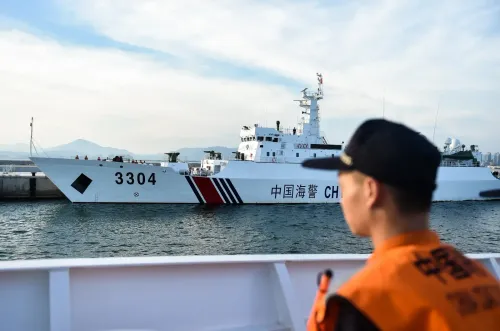
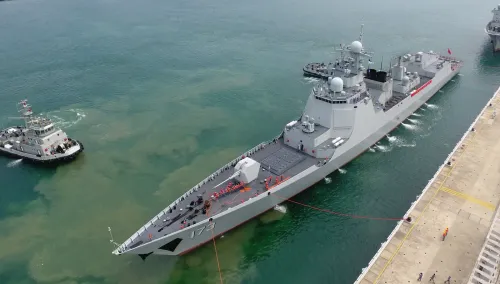
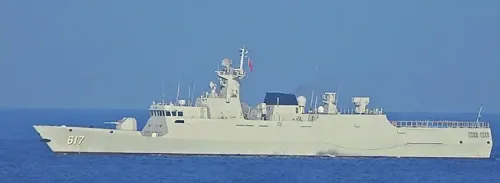
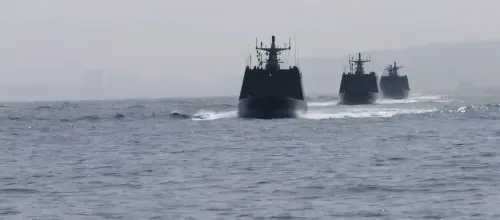
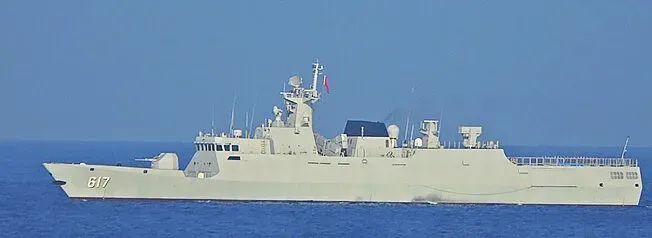
Two Chinese government vessels entered waters around Taiwan-administered Taiping Island on 11 June in what Taipei called a 'brazen and unprecedented' intrusion — the latest in a series of grey-zone provocations that also included harassment of cargo ships in Taiwan's eastern waters. Taiwan's foreign ministry has now escalated to a direct appeal to the international community, framing Beijing's conduct as a systemic challenge to UNCLOS and the global maritime order.
Key Takeaways
Two Chinese government vessels intruded into waters around Taiping Island on the morning of 11 June 2025 .
Taiwan's Ministry of Foreign Affairs condemned the act as 'brazen and unprecedented,' calling it a violation of Taiwan's sovereignty.
The incident followed recent Chinese vessel harassment of cargo ships in Taiwan's eastern waters , indicating a pattern of grey-zone escalation.
Taiwan reiterated that the South China Sea Islands are ROC territory and that neither Taiwan nor the PRC is subordinate to the other.
MoFA cited violations of the UN Convention on the Law of the Sea (UNCLOS) and called on the international community to jointly counter China's conduct.
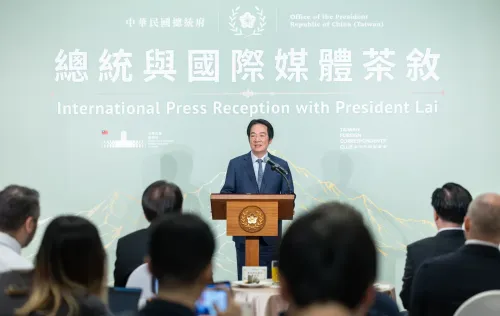
Taiwan's Ministry of Foreign Affairs (MoFA) on Friday, 13 June 2025, issued a sharp condemnation of what it described as a 'brazen and unprecedented' intrusion by Chinese government vessels into waters surrounding Taiping Island, calling on the international community to collectively counter China's 'illegal actions.' The incident, which occurred on the morning of 11 June, marks a significant escalation in cross-strait tensions in the South China Sea.
What Happened at Taiping Island
Two Chinese government vessels entered the waters around Taiping Island — a territory administered by Taiwan (Republic of China) — in what Taipei's foreign ministry characterised as an act that 'harms Taiwan's sovereignty, undermines regional peace and stability, and challenges the international order.' The intrusion was described as without precedent in its brazenness.
This comes just days after Chinese government vessels were reported to have harassed cargo ships exercising freedom of navigation in Taiwan's eastern waters — suggesting a deliberate pattern rather than an isolated provocation.
Taiwan's Official Position
'The Ministry of Foreign Affairs solemnly condemns China's unlawful actions,' the ministry stated, reiterating that 'neither the ROC (Taiwan) nor the People's Republic of China (PRC) is subordinate to the other.' Taipei further asserted that the South China Sea Islands are part of ROC territory, and that Taiwan holds all rights over those islands and their adjacent waters under international law and the law of the sea.
MoFA described the incident as 'another hostile escalation of grey-zone activities and part of a pattern of aggressive behaviour that constitutes a grave threat to Taiwan's sovereign rights and interests and maritime security.'
Violations of International Law Cited
Taiwan's foreign ministry accused Beijing of 'severely contravening the United Nations Convention on the Law of the Sea (UNCLOS), other international laws pertaining to maritime safety, and the law of the sea.' It added that China's actions 'blatantly challenged the international order and disrupted regional peace, security, and stability.'
Notably, this is not the first time Taiwan has invoked UNCLOS to challenge Chinese maritime conduct in the South China Sea — but the explicit reference to Taiping Island, a physically small yet strategically significant outpost, signals a new focal point in the ongoing dispute.
Call to the International Community
MoFA's statement concluded with a direct appeal: 'MOFA once again urges the international community to recognise the serious and immediate threat that China's illegal actions pose to regional peace and stability, and to jointly counter China's unlawful conduct.' The appeal reflects Taiwan's broader diplomatic strategy of internationalising what it frames as Beijing's grey-zone aggression.
With tensions in the South China Sea already elevated amid broader US-China rivalry, the Taiping Island incident is likely to draw scrutiny from regional powers and Western allies monitoring Chinese maritime assertiveness. How the international community responds — or does not — will be closely watched in Taipei.
Point of View
Which signals that Taipei is no longer content to lodge bilateral protests; it is building a record for multilateral accountability. Yet the effectiveness of that strategy hinges on whether key partners — the US, Japan, the Philippines — treat this as a precedent-setting moment or file it as routine friction. Beijing, for its part, has consistently denied the legitimacy of Taiwan's claims over Taiping Island, making diplomatic escalation the more likely next move than any military one.
NationPress
21 Sept 2026
Frequently Asked Questions
What happened at Taiping Island on 11 June 2025?
Two Chinese government vessels intruded into the waters surrounding Taiping Island, a territory administered by Taiwan, on the morning of 11 June 2025. Taiwan's Ministry of Foreign Affairs described the intrusion as 'brazen and unprecedented' and a direct violation of Taiwan's sovereignty.
Where is Taiping Island and why does it matter?
Taiping Island, also known as Itu Aba, is the largest naturally occurring island in the Spratly Islands in the South China Sea, and is administered by Taiwan. Its strategic location makes it a focal point in overlapping sovereignty claims by Taiwan, China, Vietnam, and the Philippines.
What legal violations did Taiwan allege against China?
Taiwan's MoFA accused China of violating the United Nations Convention on the Law of the Sea (UNCLOS) and other international maritime safety laws. It said China's actions 'blatantly challenged the international order and disrupted regional peace, security, and stability.'
Is this the first such incident near Taiping Island?
Taiwan described the 11 June intrusion as 'unprecedented' in its brazenness. It also noted that Chinese vessels had recently harassed cargo ships in Taiwan's eastern waters, suggesting an escalating pattern of grey-zone activity rather than a one-off incident.
What is Taiwan asking the international community to do?
Taiwan's Ministry of Foreign Affairs urged the international community to 'recognise the serious and immediate threat that China's illegal actions pose to regional peace and stability' and to jointly counter China's conduct under international law.