Taiwan President Lai urges China to halt military expansion in Taiwan Strait, South China Sea
Synopsis
Taiwan's President Lai Ching-te used a foreign correspondents' reception to deliver a pointed democratic rebuke to Beijing — invoking 30 years of direct elections, fresh G7 backing from Évian, and a direct call for China to 'choose peace over the use of force.' With Chinese military exercises around the island intensifying, the statement signals Taipei is leaning into multilateral support rather than quiet diplomacy.
Key Takeaways
Taiwan President Lai Ching-te called on China to halt military expansion in the South China Sea , East China Sea , and Taiwan Strait on 19 June 2026 .
Lai stated that China and Taiwan are not subordinate to each other and that only 23 million Taiwanese can determine the island's future.
2026 marks the 30th anniversary of Taiwan's first direct presidential election, held in 1996 despite Chinese missile threats.
G7 leaders at their Évian, France summit reaffirmed opposition to any unilateral, forcible change to the status quo in the Taiwan Strait and surrounding seas.
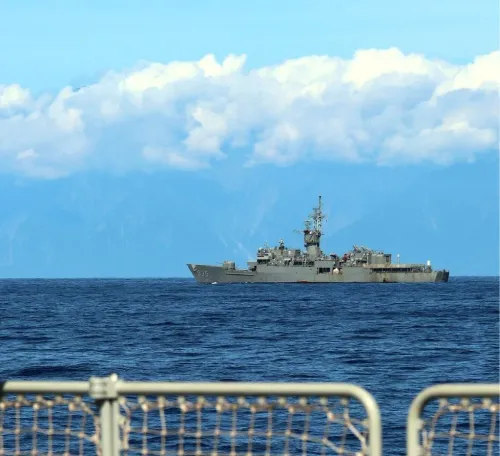
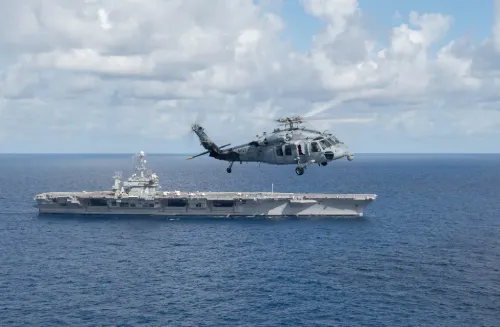
China has escalated the frequency and scale of military exercises around Taiwan in recent years and maintains the island must be reunified with the mainland.
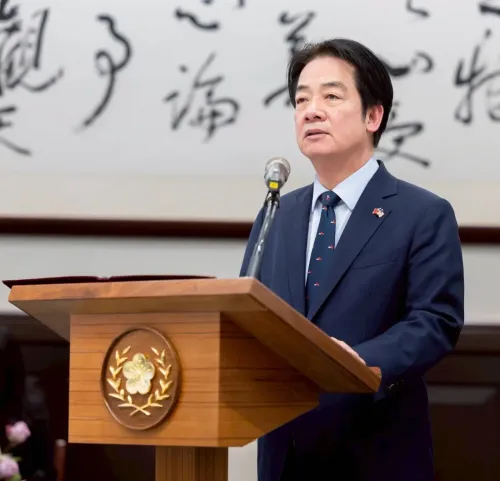
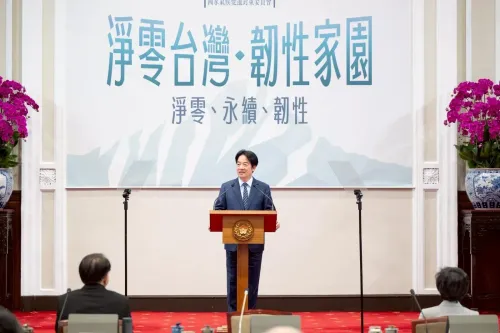
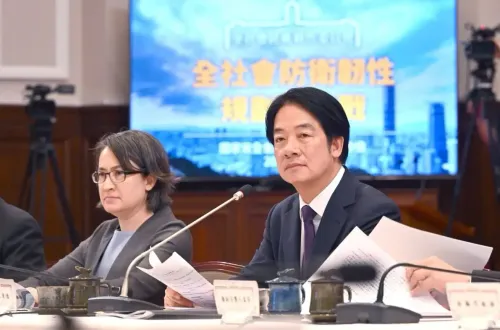
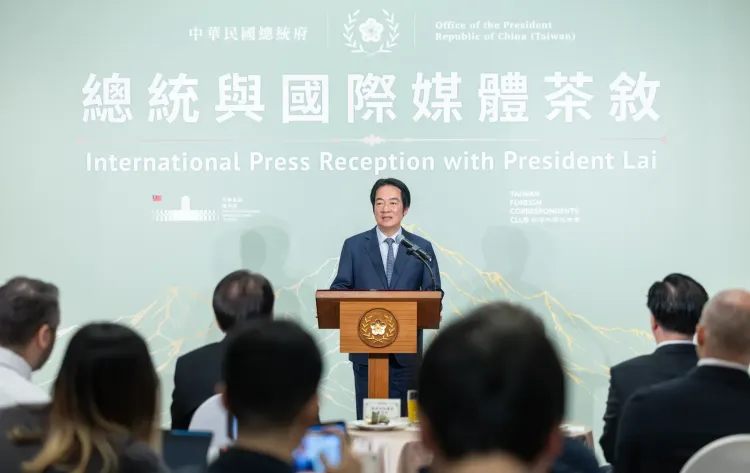
Taiwanese President Lai Ching-te on Thursday, 19 June called on China to cease its military expansion across the South China Sea, the East China Sea, and the Taiwan Strait, and to abandon any use of force against the island. Speaking at a reception for foreign correspondents in Taipei, Lai also reaffirmed Taiwan's readiness to engage with Beijing on the basis of equality and mutual dignity.
Key Remarks at the Correspondents' Reception
Addressing the Taiwan Foreign Correspondents' Club, Lai underscored that 2026 marks the 30th anniversary of Taiwan's first direct presidential election — a milestone he framed as proof that democratic self-determination can withstand external pressure. He recalled that Taiwan held those elections in 1996 despite active missile threats from China, arguing the exercise sent a clear signal to the international community that sovereignty belongs to the people.
Lai stated categorically that China and Taiwan are not subordinate to each other and that Taiwan is not part of China — a formulation that directly challenges Beijing's longstanding 'one China' position. He added that only 23 million Taiwanese can determine the island's future.
Lai's Post on X and the G7 Backing
In a post on X, Lai wrote: 'With the Taiwan Foreign Correspondents' Club today, I marked 30 years of direct presidential elections in Taiwan, highlighting our democracy and thriving economy. Echoing the G7 leaders' statement, I stressed our commitment to upholding the status quo; I urge China to choose peace over the use of force.'
Lai also expressed gratitude to G7 leaders, who at their summit in Évian, France, reiterated their opposition to any unilateral attempt to alter the status quo across the Taiwan Strait by force or coercion. The G7 statement read: 'We reaffirm our opposition to any unilateral attempts to change the status quo, in particular by force or coercion, in the East and South China Seas and across the Taiwan Strait, which should only be resolved peacefully through dialogue.'
China's Escalating Military Posture
The remarks come as China has significantly increased the frequency and scale of its military exercises around Taiwan in recent years. Beijing maintains that Taiwan is an inalienable part of its territory and has not ruled out reunification by force. Taiwan, backed by strong domestic public support, continues to assert its sovereignty and has consistently responded to Chinese military incursions.
This is not the first time Lai has publicly challenged Beijing's military assertiveness since taking office; his remarks have consistently drawn sharp reactions from mainland Chinese officials, who view any assertion of Taiwanese sovereignty as a provocation.
What This Means for Cross-Strait Relations
The confluence of Lai's statements and the G7 communiqué represents a notable alignment between Taipei and the world's leading democracies on the Taiwan question. Analysts note that the explicit G7 language on the Indo-Pacific and the rule of law signals growing multilateral pushback against China's assertiveness in the region.
With the 30th anniversary of Taiwan's democratic presidential elections approaching, the geopolitical stakes around the strait are expected to remain elevated through the remainder of 2026.
Point of View
And invoking the G7 statement from Évian gives Taipei multilateral cover it rarely enjoys this explicitly. What mainstream coverage underplays is the structural bind Beijing faces: every military exercise it conducts around Taiwan now generates another round of G7 condemnation, reinforcing exactly the international sympathy Lai is cultivating. The sovereignty formulation — 'China and Taiwan are not subordinate to each other' — is also a deliberate step beyond the traditional 'Republic of China' framing, and Beijing will not let it pass quietly. The real question is whether G7 statements translate into credible deterrence, or remain rhetorical solidarity that China has learned to discount.
NationPress
20 Sept 2026
Frequently Asked Questions
What did Taiwan President Lai Ching-te say about China's military expansion?
President Lai Ching-te called on China to stop its military expansion in the South China Sea, East China Sea, and Taiwan Strait, and to renounce the use of force against Taiwan. He made the remarks at a foreign correspondents' reception in Taipei on 19 June 2026, also urging China to 'choose peace over the use of force.'
What is the significance of Taiwan's 30th anniversary of direct presidential elections?
Taiwan held its first direct presidential election in 1996 despite active missile threats from China, and 2026 marks the 30th anniversary of that milestone. President Lai used the occasion to argue that Taiwan's democratic self-determination is internationally recognised and that its sovereignty rests with its 23 million people — not Beijing.
What did the G7 say about the Taiwan Strait at the Évian summit?
G7 leaders at their summit in Évian, France, reaffirmed opposition to any unilateral attempts to change the status quo in the East and South China Seas and across the Taiwan Strait, especially by force or coercion. They stressed that disputes should be resolved peacefully through dialogue and called for a free and open Indo-Pacific based on the rule of law.
What is China's position on Taiwan?
China maintains that Taiwan is an inalienable part of its territory and that reunification with the mainland is inevitable, by force if necessary. Beijing has increased the frequency and scale of military exercises around Taiwan in recent years and rejects any assertion of Taiwanese sovereignty as a provocation.
How has Taiwan responded to Chinese military pressure?
Taiwan, backed by strong domestic public support, continues to assert its sovereignty and has consistently responded to Chinese military incursions. President Lai has repeatedly called for international solidarity and has welcomed G7 statements that back the peaceful maintenance of the status quo across the strait.