Taiwan reaffirms 'status quo' commitment after Trump-Xi Beijing talks on sovereignty
Synopsis
After Trump told Fox News he is 'not looking' for Taiwan to go independent and wants both sides to 'cool down,' Taipei pushed back with a pointed reminder: the Republic of China is sovereign and China has no right to claim it. The exchange lays bare the enduring tension at the heart of US strategic ambiguity — and how quickly a presidential aside can rattle the world's most volatile strait.
Key Takeaways
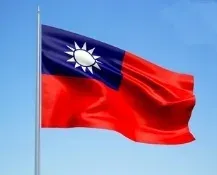
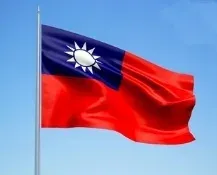
Taiwan's Presidential Office spokeswoman Karen Kuo reaffirmed on 17 May that the Republic of China is a sovereign, independent nation and that China has no right to claim sovereignty over Taiwan.
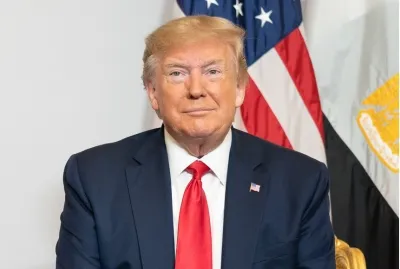
US President Donald Trump said after his Beijing summit with Xi Jinping that he wants both China and Taiwan to 'cool down' and is 'not looking' for Taiwanese independence.
Xi Jinping warned that the Taiwan issue, if mishandled, could push US-China relations toward 'clashes and even conflicts.' The Chinese Ministry of Foreign Affairs quoted Xi calling 'Taiwan independence' and cross-strait peace 'as irreconcilable as fire and water.' Taiwan relies on US security support as its primary deterrent against military action by Beijing , making Washington's tone a matter of acute strategic sensitivity.
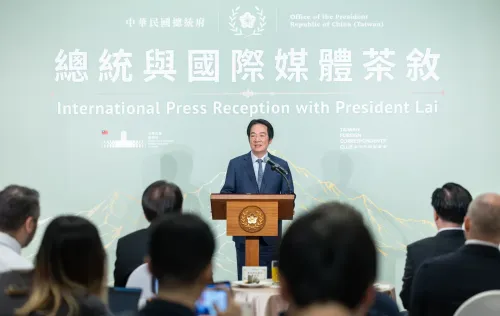
Taiwan's Presidential Office on Sunday, 17 May reaffirmed Taipei's commitment to preserving the cross-strait 'status quo' and contributing to regional peace and security, following remarks by US President Donald Trump that raised fresh questions about Washington's posture on Taiwanese independence.
Presidential Office spokeswoman Karen Kuo reiterated that 'the Republic of China is a sovereign and independent democratic nation' and that China has no right to claim sovereignty over Taiwan, according to the Taipei Times.
What Trump Said After the Beijing Summit
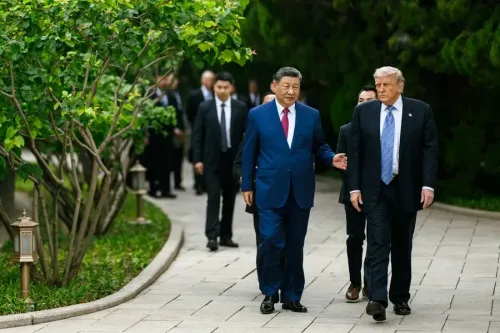
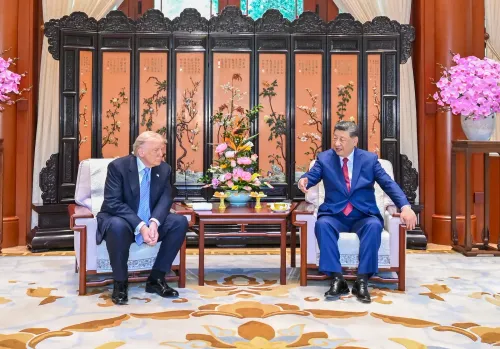
The statement came in direct response to Trump's remarks following his state visit to Beijing, where Chinese President Xi Jinping urged him not to support Taiwan. Speaking to Fox News, Trump said he and Xi 'talked a lot' about Taiwan, and that Xi 'does not want to see a fight for independence, because that would be a very strong confrontation.'
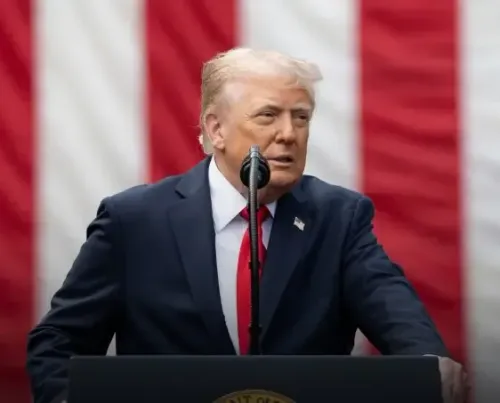
When asked whether the people of Taiwan should feel more or less secure following his meeting with Xi, Trump replied: 'Neutral. This has been going on for years,' adding that US policy on Taiwan had not changed. 'Nothing's changed. I will say this: I'm not looking to have somebody go independent. And, you know, we're supposed to travel 9,500 miles to fight a war. I'm not looking for that. I want them to cool down. I want China to cool down,' Trump told Fox News.
Xi's Warning: Taiwan Issue Could Destabilise US-China Ties
During talks in Beijing on Thursday, Xi Jinping framed the Taiwan question as the single most consequential variable in US-China relations. The Chinese Ministry of Foreign Affairs released a statement quoting Xi: 'The Taiwan question is the most important issue in China-US relations. If it is handled properly, the bilateral relationship will enjoy overall stability. Otherwise, the two countries will have clashes and even conflicts, putting the entire relationship in great jeopardy.'
Xi further stated that 'Taiwan independence' and cross-strait peace are 'as irreconcilable as fire and water,' and described safeguarding stability across the Taiwan Strait as 'the biggest common denominator between China and the US.'
The Structural Stakes for Taiwan
Taiwan relies heavily on US security support as its primary deterrent against military action by Beijing. China maintains that Taiwan is part of its territory and has not ruled out reunification by force. Despite sustained pressure — including repeated military incursions into Taiwan's air defence identification zone — Taipei continues to assert its sovereignty, backed by strong domestic public support.
Notably, this is not the first time a US president's language on Taiwan has prompted a clarifying statement from Taipei. The pattern reflects a recurring tension: Washington's strategic ambiguity on Taiwan has long served as both a deterrent and a source of anxiety for the island's leadership.
What Comes Next
Analysts will closely watch whether the Trump administration issues any formal clarification of its One China Policy posture in the coming weeks. For now, Taipei has signalled it will not alter its political position regardless of the diplomatic signals emerging from the Trump-Xi summit. The cross-strait situation remains one of the most closely monitored flashpoints in Indo-Pacific geopolitics.
Point of View
500 miles away, Trump has handed Xi a rhetorical win without formally abandoning the One China Policy — a distinction that may matter less in Taipei than in Washington. The deeper problem is structural: US strategic ambiguity was designed to deter both Beijing's coercion and Taipei's provocation, but it increasingly functions as a source of uncertainty for all three parties. Karen Kuo's swift restatement of sovereignty is not new policy — it is a signal that Taipei will not allow a US-China bilateral summit to quietly redefine the terms of its existence.
NationPress
24 Sept 2026
Frequently Asked Questions
What did Taiwan's Presidential Office say about the 'status quo'?
Taiwan's Presidential Office reaffirmed on 17 May that Taipei is committed to maintaining the cross-strait 'status quo' and contributing to regional peace and security. Spokeswoman Karen Kuo also reiterated that the Republic of China is a sovereign, independent nation and that China has no right to claim sovereignty over Taiwan.
What did Trump say about Taiwan after his meeting with Xi Jinping?
Speaking to Fox News after his state visit to Beijing, Trump said he wants both China and Taiwan to 'cool down' and that he is 'not looking' for Taiwan to go independent. He added that US policy on Taiwan has not changed, describing his position as 'neutral.'
What did Xi Jinping say about Taiwan during the Beijing summit?
Xi Jinping told Trump that the Taiwan question is the most important issue in US-China relations and warned that mishandling it could lead to 'clashes and even conflicts.' He described 'Taiwan independence' and cross-strait peace as 'as irreconcilable as fire and water.'
Why does Taiwan's relationship with the US matter so much?
Taiwan relies heavily on US security support as its primary deterrent against a potential military move by Beijing. China maintains that Taiwan is part of its territory and has not ruled out using force to achieve reunification, making Washington's posture a matter of acute strategic importance for Taipei.
Has the US changed its One China Policy following the Trump-Xi summit?
No formal change has been announced. Trump stated that 'nothing's changed' regarding US policy on Taiwan. However, analysts are watching for any formal clarification of the One China Policy posture in the weeks following the Beijing summit.