Taiwan flags cybersecurity risks in 4 Chinese apps including Amap

Synopsis
Taiwan's digital security agency has flagged four Chinese apps — including Amap, the top navigation download on both major platforms — for harvesting location, contacts, and microphone data that may be shared with Beijing under Chinese law. The warning arrives alongside a separate NSB disclosure of 100 suspected CCP-linked account groups flooding social media with pro-reunification messaging after the Trump-Xi summit, painting a picture of coordinated, multi-vector pressure on Taiwan.
Key Takeaways
Taiwan's MODA Administration for Cyber Security (ACS) flagged four Chinese apps — Amap , Bilibili , iQIYI , and BIMOBIMO — on 27 May 2025 .
Amap recorded the highest risk behaviours, including continuous location tracking, contact access, and microphone permissions on both Android and iOS.
ACS official Lee Yu-wei warned that developers may be legally required to share user data with Chinese authorities under China's Cybersecurity Law and National Intelligence Law .
Taiwan's NSB Director-General Tsai Ming-yen identified nearly 100 suspicious account groups that spread over 9,000 divisive posts following the Trump-Xi summit in Beijing.
The suspicious accounts promoted CCP narratives on reunification and questioned US commitment to Taiwan; the matter was reported to President William Lai on 17 May .
The US State Department reaffirmed its unchanged Taiwan policy and continued arms sales to Taipei after the summit.
Taiwan's Ministry of Digital Affairs (MODA) on Wednesday, 27 May publicly warned citizens to remain vigilant about cybersecurity risks posed by four Chinese-made mobile applications — Amap, Bilibili, iQIYI, and BIMOBIMO — with Amap currently topping both Android and iOS download charts for navigation apps in Taiwan. The advisory was issued by MODA's Administration for Cyber Security (ACS) at a press conference in Taipei.
Key Findings from the ACS Assessment
The ACS evaluated the four apps across four risk categories: reading data from other applications, gathering and sharing user data, accessing device information, and monitoring user activity. According to the agency, the central concern is that these apps may be compelled to share user data with Chinese authorities under China's Cybersecurity Law and National Intelligence Law — a situation it described as a 'greater risk to national security.'
ACS senior official Lee Yu-wei stated that Amap recorded the highest number of risk behaviours among the four apps assessed. Risk factors identified on both operating systems included continuously reading users' location, accessing contacts, audio-visual data, and microphone permissions.
What Officials Are Advising Citizens
Lee urged Taiwanese citizens not to limit their scrutiny to Chinese-developed apps alone, but to assess whether permissions requested by any app are reasonable. He also recommended using cybersecurity tools as a precautionary measure. The advisory reflects a broader push by Taiwan's digital governance bodies to raise public awareness about data sovereignty risks.
Parallel Threat: CCP Cognitive Warfare After Trump-Xi Summit
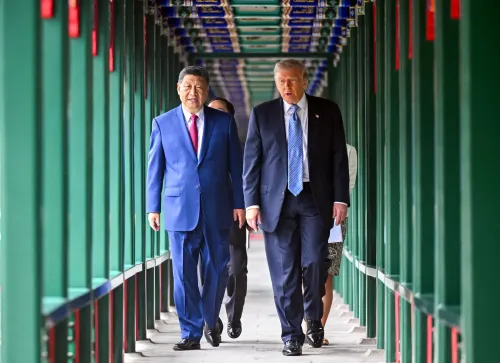
The cybersecurity warning comes alongside separate disclosures from Taiwan's National Security Bureau (NSB). On Monday, NSB Director-General Tsai Ming-yen told the legislature's Foreign Affairs and National Defence Committee that the bureau had identified nearly 100 suspicious account groups that shared over 9,000 divisive messages on social media following the meeting between US President Donald Trump and Chinese President Xi Jinping in Beijing during Trump's State Visit to China earlier this month.
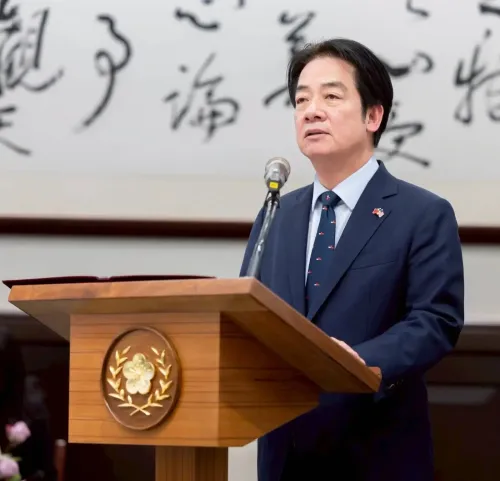
According to Tsai, these accounts lacked normal friend connections or mutual followers, shared posts at set intervals, and echoed Chinese Communist Party (CCP) media narratives — specifically pushing the message that reunification would bring peace and casting doubt on US support for Taiwan. Tsai said the bureau alerted several government agencies to issue clarifications and reported the matter to Taiwanese President William Lai on 17 May.
US Reaffirms Taiwan Policy Amid Disinformation Wave
Tsai Ming-yen noted that the US Department of State subsequently clarified that Washington's policy on Taiwan — including arms sales to Taipei — remains unchanged, which he said helped counter social media claims that the US would abandon Taiwan in a crisis. During the Trump-Xi summit in Beijing, Xi Jinping had stated that US-China ties would have 'overall stability' if the Taiwan issue is handled properly.
China maintains that Taiwan is part of its territory and reserves the right to reunify by force if necessary. Taiwan, backed by broad domestic public support, continues to assert its sovereignty and has consistently responded to Chinese military and informational incursions. The dual warnings — on app-level data risks and coordinated disinformation — underscore the multi-front nature of the digital threat Taiwan now faces.
Point of View
A Chinese navigation app, tops Taiwanese download charts even as regulators flag its data practices points to a real gap between public awareness and user behaviour. More significantly, the NSB's disclosure of coordinated social media operations timed to the Trump-Xi summit suggests Beijing is calibrating its information operations to geopolitical windows. Mainstream coverage tends to treat app security and disinformation as separate beats; Taiwan's experience argues they are two prongs of the same strategy.
NationPress
10 Oct 2026
Frequently Asked Questions
Which Chinese apps has Taiwan flagged as cybersecurity risks?
Taiwan's ACS has flagged four Chinese-made apps: Amap, Bilibili, iQIYI, and BIMOBIMO. Amap was assessed as having the highest number of risk behaviours, including continuous location tracking, access to contacts, and microphone permissions.
Why does Taiwan consider these Chinese apps a national security risk?
According to ACS senior official Lee Yu-wei, companies behind these apps may be legally obligated to share user data with Chinese authorities under China's Cybersecurity Law and National Intelligence Law. The agency described this data-sharing obligation as a 'greater risk to national security.'
What did Taiwan's NSB reveal about social media activity after the Trump-Xi summit?
NSB Director-General Tsai Ming-yen disclosed that nearly 100 suspicious account groups shared over 9,000 divisive messages on social media following Trump's State Visit to China. The accounts were assessed as coordinated CCP-linked operations pushing pro-reunification narratives and undermining confidence in US support for Taiwan.
Has the US changed its policy on Taiwan after the Trump-Xi meeting?
No. The US Department of State stated after the summit that Washington's policy on Taiwan, including arms sales to Taipei, remains unchanged. Tsai Ming-yen said this clarification helped counter disinformation claims that the US would abandon Taiwan.
What should Taiwanese citizens do about risky apps?
ACS official Lee Yu-wei advised citizens to check whether permissions requested by any app — not just Chinese-developed ones — are reasonable, and to use cybersecurity tools where necessary. The agency stopped short of issuing a formal ban on the flagged applications.