Taiwan: the fault line beneath every US-China summit, Xi warns Trump
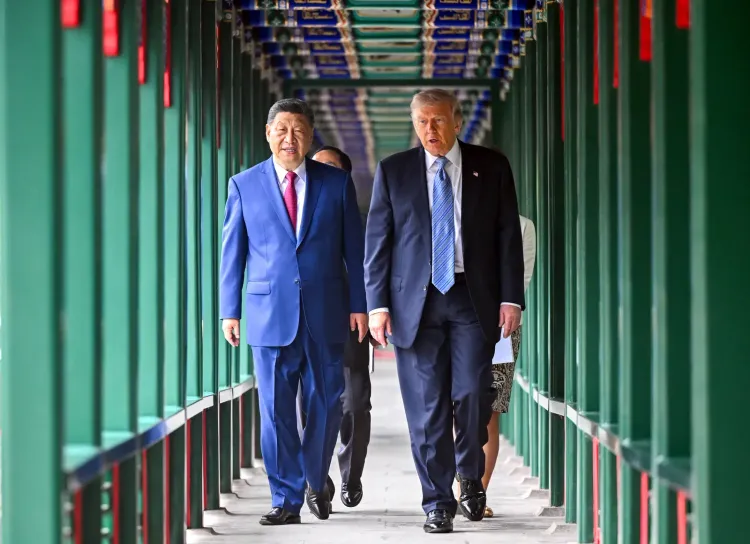
Synopsis
Xi Jinping's blunt warning to Trump in Beijing — that Taiwan could spark 'clashes and even conflicts' — is not new rhetoric but a restatement of structural reality. An analysis in the European Times argues that beneath every US-China summit, trade deal, or climate pledge lies the unresolved question of Taiwan: a fault line shaped by Cold War ambiguity, semiconductor dependence, and competing claims of sovereignty that no bilateral choreography has yet dissolved.
Key Takeaways
Xi Jinping warned Donald Trump in Beijing that Taiwan could lead to 'clashes and even conflicts', placing relations in 'great jeopardy'.
Analyst Khedroob Thondup , writing in the European Times , describes Taiwan as the 'enduring fault line' beneath every US-China diplomatic exchange.
Washington's 'One China' policy , dating to the 1970s Nixon-Mao rapprochement , deliberately left Taiwan's status ambiguous — institutionalising uncertainty rather than resolving it.
Taiwan's position astride the first island chain and its dominance in global semiconductor supply chains make it strategically irreplaceable.
The Chinese Communist Party has tied its domestic legitimacy to 'reunification', while US credibility in the Indo-Pacific — including commitments to Tokyo , Seoul , and Canberra — is seen as contingent on its resolve over Taiwan.
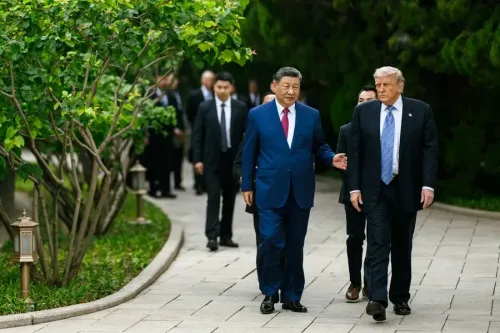
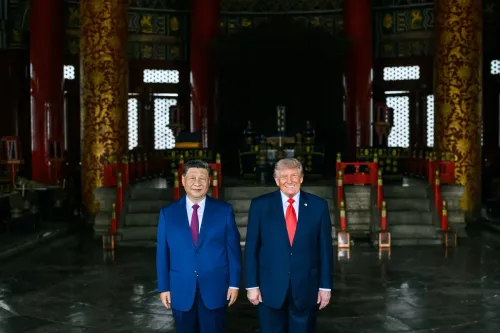
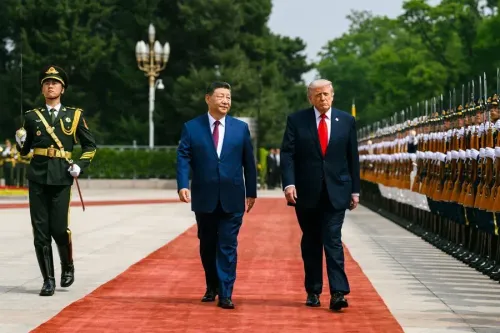
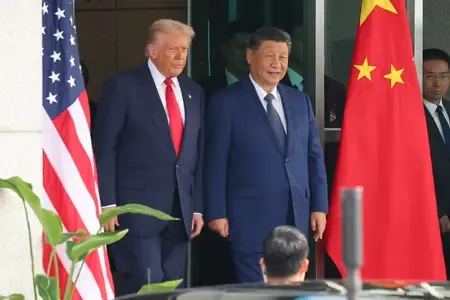
Chinese President Xi Jinping's warning to US President Donald Trump during their recent Beijing meeting — that Taiwan could trigger 'clashes and even conflicts' and place bilateral relations in 'great jeopardy' — was not rhetorical posturing but a statement of structural reality, according to an analysis published in the European Times. The piece, authored by Khedroob Thondup, argues that Taiwan remains the defining fault line in US-China relations, simmering beneath every diplomatic exchange.
The Ambiguity at the Core
Thondup traces the roots of the current tension to the deliberate ambiguity built into Washington's 'One China' policy — a framework shaped by the Nixon-Mao rapprochement of the 1970s and later formalised through the three US-China communiques, the 1979 normalisation of relations, the Taiwan Relations Act, and the Six Assurances. Washington acknowledged Beijing's position without endorsing it, while sustaining robust unofficial ties with Taipei. 'This ambiguity was meant to stabilise relations, but in practice it institutionalised uncertainty,' Thondup wrote. That unresolved status, he argues, is what makes every summit between the two powers incomplete.
Why Taiwan Cannot Be Sidelined
The analysis identifies several interlocking reasons that keep Taiwan at the centre of global geopolitics. First, its geostrategic position: Taiwan sits astride the first island chain, a maritime corridor critical to US and allied defence planning. Second, its semiconductor industry makes it indispensable to global supply chains — a leverage point neither Washington nor Beijing can afford to ignore. Third, the Chinese Communist Party has tied its domestic legitimacy to eventual 'reunification' with Taiwan; any perceived weakness on the issue, Thondup noted, risks internal instability for Beijing.
Alliance Credibility and the Indo-Pacific Calculus
Thondup further argued that Taiwan is inseparable from US alliance credibility across the Indo-Pacific. Washington's security commitments to Tokyo, Seoul, and Canberra are, in his assessment, judged by the resolve it demonstrates on Taiwan. Any sign of American retreat, he warned, would send shockwaves through the region's alliance architecture. This comes amid broader concerns that missteps in arms transfers, diplomatic recognition, or military manoeuvres could trigger escalation — particularly given the limited clarity in international law governing such scenarios.
Summit Choreography and the Shadow Issue
'Summits between Washington and Beijing follow a familiar choreography; trade concessions, military hotlines, or climate cooperation are announced, but Taiwan remains the shadow issue,' Thondup wrote. Xi's direct language to Trump, he argued, underscores that beneath any surface-level cooperation lies a deeper contest over sovereignty and legitimacy. Notably, Xi's framing echoes the language of successive Chinese leaders: Taiwan is described as the 'core of core interests' — a designation that signals non-negotiability for Beijing even as Washington insists that credibility in Asia requires resisting coercion. The pattern suggests that no bilateral breakthrough on trade or climate can fully neutralise the Taiwan variable as long as its political status remains unresolved.
Point of View
Only deferred. The 'One China' ambiguity that Nixon and Kissinger engineered as a pragmatic fix has become a permanent liability — one that every subsequent US administration has inherited and none has resolved. What the Thondup analysis surfaces, and mainstream summit coverage tends to bury, is that trade deals and climate pledges do not neutralise the Taiwan variable; they merely paper over it. With Taiwan's semiconductor centrality now layered on top of its geostrategic significance, the stakes of miscalculation are higher than at any point since the Third Taiwan Strait Crisis of 1996. Washington's credibility problem is real: if Tokyo, Seoul, and Canberra read hesitation in the US posture, the Indo-Pacific alliance architecture begins to fray well before any shots are fired.
NationPress
25 Sept 2026
Frequently Asked Questions
What did Xi Jinping warn Donald Trump about Taiwan?
Xi Jinping warned Trump during their recent Beijing meeting that Taiwan could lead to 'clashes and even conflicts' and place US-China relations in 'great jeopardy'. Analysts describe the remarks not as fresh rhetoric but as a restatement of Beijing's longstanding position that Taiwan is its 'core of core interests'.
Why is Taiwan considered the central fault line in US-China relations?
Taiwan sits at the intersection of unresolved sovereignty claims, geostrategic geography along the first island chain, and global semiconductor supply chains. The US 'One China' policy has deliberately kept Taiwan's status ambiguous since the 1970s, institutionalising uncertainty that neither side has been able to dissolve through summits or trade negotiations.
What is the US 'One China' policy and how does it apply to Taiwan?
The 'One China' policy emerged from the Nixon-Mao rapprochement in the 1970s and was formalised through three US-China communiques, the 1979 normalisation of relations, the Taiwan Relations Act, and the Six Assurances. Washington acknowledged Beijing's position on Taiwan without endorsing it, allowing robust unofficial ties with Taipei while avoiding a formal commitment to either reunification or independence.
How does Taiwan affect US alliances in the Indo-Pacific?
According to the analysis, Washington's security commitments to Japan, South Korea, and Australia are judged by its resolve on Taiwan. Any perceived American retreat on the issue would, analysts argue, send shockwaves across the Indo-Pacific alliance structure, potentially undermining deterrence across the region.
Why does the Chinese Communist Party treat Taiwan as non-negotiable?
The CCP has linked its domestic political legitimacy to eventual 'reunification' with Taiwan. Any perception of weakness on the issue is seen as risking internal instability, which is why successive Chinese leaders — including Xi — have used identical, unambiguous language when addressing the question with foreign counterparts.