'Selling out Taiwan' could cost US credibility and alliances, warns report
Synopsis
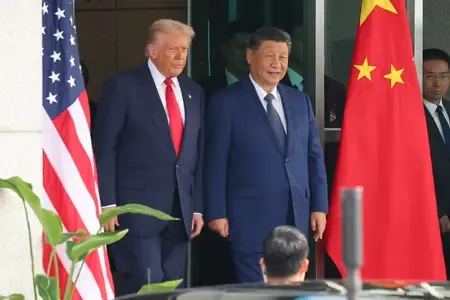
A European Times report warns that if Trump compromises on Taiwan in any future Xi summit, the fallout would span US alliance credibility, semiconductor supply chains, domestic politics, and America's moral standing as a democracy champion — making it one of the highest-stakes diplomatic decisions of his presidency.
Key Takeaways
The European Times warns that any Trump compromise on Taiwan during a future Xi Jinping meeting could have sweeping geopolitical and economic consequences.
Taiwan is described as "the litmus test" for US credibility, with allies like Japan , South Korea , and the Philippines potentially questioning US security guarantees.
Taiwan is identified as "the beating heart of global semiconductor production", making it a critical US economic and technological asset.
The report warns that Trump's tough-on-China image and domestic political standing could suffer if he is perceived as conceding Taiwan's autonomy.
Bipartisan US Congressional support for Taiwan means any policy shift risks significant political backlash.
The report concludes that "selling out Taiwan" would sacrifice US strategic credibility, economic security, political capital, and moral authority.
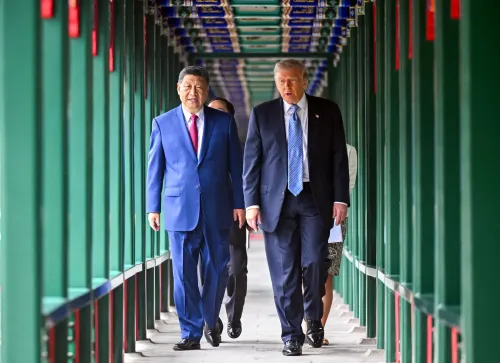
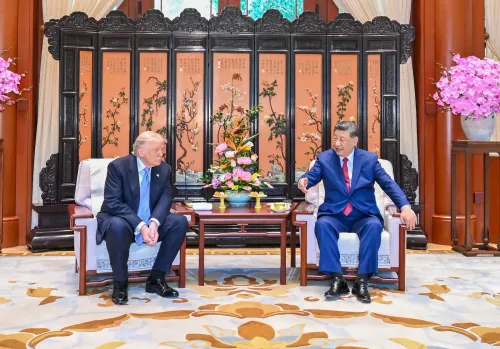
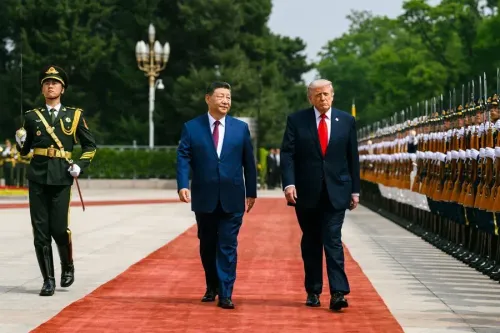
A report by The European Times has warned that any move by US President Donald Trump to compromise on Taiwan during a future engagement with Chinese President Xi Jinping could trigger sweeping geopolitical and economic consequences for Washington. The report, published amid growing speculation over a potential Trump-Xi summit, argues that the stakes extend well beyond diplomatic optics.
Taiwan as a Strategic Litmus Test
The report positions Taiwan as central to America's strategic posture in Asia, describing it as "the litmus test" for US commitments in the region. It warns that if Washington signals that "Taiwan's democracy can be bargained away", key allies including Japan, South Korea, and the Philippines may begin to question US security guarantees. Such doubts, the report cautions, could "embolden Beijing and destabilise the Indo-Pacific."
According to the publication, "the costs would reverberate across US credibility, alliances, and domestic politics" if Trump were to compromise Taiwan's security or international standing. Notably, this warning comes at a time when US-China relations remain deeply contested across trade, technology, and military domains.
The Semiconductor Stakes
Taiwan's economic significance features prominently in the report's analysis. Describing the island as "the beating heart of global semiconductor production", the publication cautions that any US retreat could expose critical industries to Chinese leverage and weaken America's technological competitiveness.
"Trump's own economic agenda, premised on technological competitiveness, would be undercut if Beijing gained control over Taiwan's chip industry," the report stated. It went further, arguing that "selling out Taiwan would mean surrendering a strategic asset that underpins both US national security and economic resilience."
Domestic Political Fallout for Trump
The report also flags the domestic political risks for Trump personally. His carefully cultivated image of being tough on China could be undermined, with the publication noting that "any perception that he conceded Taiwan's autonomy would be seized upon by opponents as evidence of weakness."
It further points to bipartisan support for Taiwan in the US Congress, warning that any policy shift could trigger significant political backlash. This is consistent with the broader legislative trend in Washington, where successive administrations have faced cross-party pressure to maintain robust commitments to Taipei.
Moral Authority and Long-Term Reputational Risk
On the ideological dimension, the report argues that Taiwan represents a democratic counterpoint to China's political system. "If Trump trades away Taiwan's dignity, he forfeits America's moral authority to champion freedom elsewhere," it warns, suggesting the reputational damage could be long-lasting.
The publication also argues that any concession would weaken Trump's future negotiating leverage, stating that he "would not only lose leverage in future negotiations but also embolden Beijing to press harder on other fronts, from trade disputes to military expansion."
A Defining Test of US Commitment
The European Times report concludes that a potential Trump-Xi meeting is "not just another diplomatic encounter" but a defining test of US commitment. It emphasises that "selling out Taiwan would mean sacrificing strategic credibility, economic security, political capital, and moral authority" — risks the report describes as both immediate and enduring. How Washington navigates this question is likely to shape the Indo-Pacific security architecture for years to come.
Point of View
A semiconductor chokepoint, and an alliance stress-test. What the report does not fully reckon with is that Trump's transactional worldview has historically treated all three as negotiable. The deeper risk is not a single dramatic concession but a gradual dilution — ambiguous language, delayed arms approvals, softened statements — that allies read as retreat without Washington ever formally changing policy. That kind of strategic ambiguity, once seeded, is far harder to walk back than a failed summit.
NationPress
30 Sept 2026
Frequently Asked Questions
What are the consequences of the US 'selling out' Taiwan, according to the report?
According to The European Times report, compromising on Taiwan would damage US credibility with key Asian allies, expose global semiconductor supply chains to Chinese leverage, weaken Trump's domestic political standing, and forfeit America's moral authority as a champion of democracy. The risks are described as both immediate and long-term.
Why is Taiwan considered a strategic asset for the United States?
Taiwan is described in the report as central to America's strategic posture in Asia and as the world's leading semiconductor manufacturer. Any Chinese control over Taiwan's chip industry would directly undercut US technological competitiveness and national security.
How could a Trump-Xi summit affect US alliances in the Indo-Pacific?
The report warns that if Washington signals Taiwan's democracy can be bargained away, allies such as Japan, South Korea, and the Philippines may question US security guarantees. This could embolden Beijing and destabilise the broader Indo-Pacific security architecture.
What domestic political risks does the report identify for Trump?
The report notes that Trump's image of being tough on China could be severely damaged if he is seen as conceding Taiwan's autonomy. It also warns that bipartisan Congressional support for Taiwan could translate into significant political backlash against any policy shift.
What is The European Times report's overall conclusion on the Trump-Xi meeting?
The report concludes that a potential Trump-Xi summit is not a routine diplomatic encounter but a defining test of US commitment. It argues that compromising on Taiwan would sacrifice strategic credibility, economic security, political capital, and moral authority simultaneously.