Will Taiwan Strengthen US Relations on AI and Critical Minerals to Counter Beijing?
Synopsis
Taiwan is set to enhance its collaboration with the US in AI and critical minerals to counter China's growing influence. President Lai Ching-te advocates for partnerships with democratic nations, emphasizing economic and technological cooperation amidst rising tensions. This strategic move aims to secure Taiwan's place in global supply chains, particularly in high-tech sectors.
Key Takeaways
Taiwan's collaboration with the US aims to counter China's influence.
Agreements on economic security and AI supply chains were signed.
President Lai emphasizes partnerships with democratic nations.
Strategic moves are intended to embed Taiwan in global supply chains.
Opposition voices suggest collaboration with China for economic benefit.
Mumbai, Feb 5 (NationPress) The Taiwanese administration's initiative to enhance its partnership with the US in artificial intelligence (AI) and critical minerals is a response to the escalating challenges posed by Beijing, according to a recent report.
As per the findings from Modern Diplomacy, high-ranking officials from both Taiwan and the US convened to explore collaboration in AI, technology, and drone innovations, following which the US State Department labeled Taiwan as a “crucial ally”.
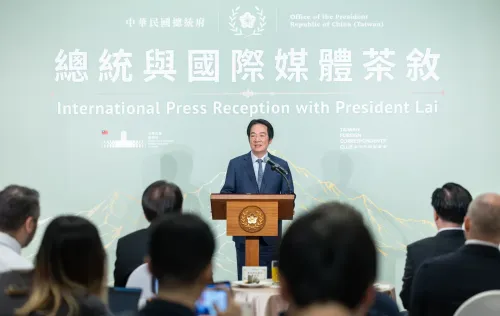
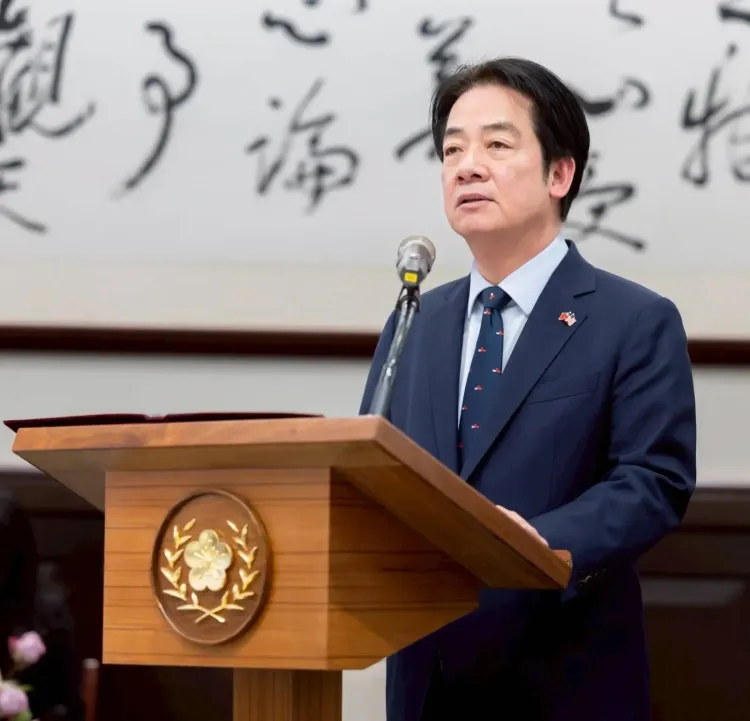
President Lai Ching-te emphasized earlier this week that Taiwan ought to foster relationships with other democracies instead of relying on China for trade and economic partnerships.
“Lai’s statements emerge as Taipei aims to bolster its economic and technological ties with Washington amid increasing strategic rivalry between the United States and China,” the report conveyed.
“Taiwan is embarking on a promising economic trajectory and confidently stepping onto the global stage,” Lai remarked, asserting that the nation possesses both “the capability and confidence” to collaborate with democratic allies in strengthening technological connections.
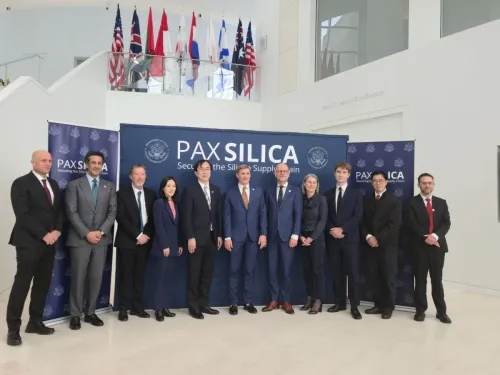
The report noted that both nations formalized agreements concerning economic security and the Pax Silica Declaration, an initiative led by the US to safeguard AI and semiconductor supply chains.
However, Hsiao Hsu-tsen, deputy chairman of Taiwan’s main opposition party, the Kuomintang (KMT), suggested that the nation should “collaborate across the Taiwan Strait” to generate wealth globally, rather than engage in opposition that allows external nations to exploit Taiwan’s resources.
Hsiao recently participated in a think-tank exchange in Beijing, reportedly focusing on “non-political issues” like AI and tourism.
In contrast, President Lai highlighted the faster economic growth recorded during his administration compared to the previous KMT era and questioned, “Do we want to continue collaborating with the US, Japan, Europe, and other allied nations, or revert to a dependency on China?”
The report underscored that Lai framed the trade partnership as a choice between democratic allies and China, seeking to “embed Taiwan more deeply in US-led and allied supply chains, especially in high-value sectors like semiconductors and artificial intelligence.”
Point of View
It is pivotal to recognize Taiwan's proactive stance in enhancing its economic and technological relationships with democratic nations. This strategy not only counters external pressures but also reinforces Taiwan's position in global supply chains. The emphasis on collaboration over confrontation is essential in navigating complex geopolitical dynamics.
NationPress
16 Sept 2026
Frequently Asked Questions
Why is Taiwan strengthening ties with the US?
Taiwan aims to counter the growing influence of Beijing by enhancing cooperation with the US in sectors like AI and critical minerals.
What initiatives have been signed between Taiwan and the US?
Taiwan and the US have signed agreements focusing on economic security and the Pax Silica Declaration to secure AI and semiconductor supply chains.
What is President Lai's perspective on trade partnerships?
President Lai advocates for trade with democratic nations rather than dependency on China, emphasizing Taiwan's capability to collaborate effectively.