Taliban warns US: no third-country transfers for Afghan refugees without bilateral talks
Synopsis
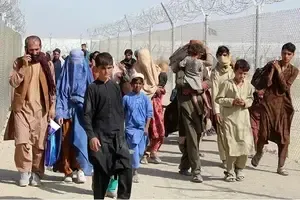
The Taliban has publicly warned the US not to transfer Afghan refugees to Pakistan without direct bilateral coordination, calling any third-country involvement a violation of human dignity. With AfghanEvac reporting an imminent deportation flight of over 150 Afghans from Louisiana, the episode is becoming a flashpoint at the intersection of US immigration policy, Afghan ally commitments, and Taliban diplomacy.
Key Takeaways
Taliban Foreign Ministry expressed 'serious concern' over US plans to transfer Afghan refugees to Pakistan on 2 November 2026 .
Spokesperson Hafiz Zia Ahmad Takal demanded that decisions affecting Afghan citizens be made only through bilateral coordination with Kabul.
Taliban warned third countries, including Pakistan , against acting as transit nations for Afghan deportees.
Advocacy group AfghanEvac reports the US is preparing to deport more than 150 Afghans on a charter flight from Louisiana in the first week of November.
AfghanEvac is calling on Congress to pass Afghanistan Temporary Protected Status (TPS) before the flight departs.
Veterans and Afghan allies plan a Capitol Hill Fly-In on 9–11 November , culminating in a Veterans Day march from the Lincoln Memorial to the Capitol.
The Taliban-run Foreign Ministry of Afghanistan has expressed 'serious concern' over reports that the United States is planning to transfer certain Afghan refugees — those unable to secure legal residency documents in the US — to Pakistan, warning that any decisions affecting Afghan citizens must be made through direct bilateral coordination with Kabul. The statement, issued on 2 November 2026, comes as advocacy groups warn of an imminent deportation flight.
Taliban's Position on the Reported Transfers
Hafiz Zia Ahmad Takal, head of the Public Relations and Information Department at the Taliban's Foreign Ministry, said in a video message posted to his X account that Kabul considers the protection of its citizens' rights its core responsibility, regardless of where those citizens are located. He called on Washington to adopt what he described as a 'responsible and judicious approach' and to make decisions only with 'clear bilateral understanding, necessary coordination, and consideration of the rights and legitimate demands of the relevant individuals.'
Takal stated that the Afghan side is prepared for 'practical and mutually agreed-upon interaction' in this area, taking into account the existing realities and the legitimate concerns of both sides.
Warning to Third Countries
In a pointed remark directed at Pakistan, Takal said third countries 'should not engage in transactions regarding the fate of another country's citizens for the sake of short-term limited privileges or other considerations, and should not undermine human dignity, rights, and accepted moral and humanitarian standards in their decisions and actions.' This is an unusually direct rebuke from Kabul toward Islamabad, the two countries having maintained a fraught and complex relationship since the Taliban's return to power in 2021.
Notably, Afghanistan insisted it remains committed to all forms of constructive interaction aimed at facilitating the 'honourable, dignified, and voluntary return' of its citizens.
Imminent Deportation Flight Reported
According to AfghanEvac, a US-based advocacy group that works to uphold America's commitments to its Afghan allies, the US government is reportedly preparing to deport more than 150 Afghans on a charter flight out of Louisiana in the first week of November — possibly as early as Monday.
Shawn VanDiver, President of AfghanEvac, said: 'America is about to put Afghans on a plane to the Taliban, and the administration is doing it the week the country goes to vote, hoping no one is watching.' VanDiver's remarks came in the context of calls for Congress to pass Afghanistan Temporary Protected Status (TPS).
Veterans and Allies to March on Capitol Hill
AfghanEvac has announced a Mission Partners Fly-In on 9–11 November, during which veterans, diplomats, aid workers, attorneys, and Afghan allies plan to visit Capitol Hill. On Veterans Day, the group intends to walk from the Lincoln Memorial to the Capitol, urging every member of Congress to act before any deportation flight departs.
VanDiver challenged lawmakers directly: 'We are asking every member of Congress one question: will you stand up before the plane takes off?' The episode underscores the unresolved legal and humanitarian limbo facing thousands of Afghans who assisted US forces and government operations over two decades.
Broader Context
The reported transfers come against the backdrop of a broader US crackdown on irregular immigration and a review of Afghan parolee status. Critics argue that deporting Afghans — especially those who worked with American forces — to the Taliban or to transit countries like Pakistan raises serious security and human rights concerns. This is not the first time the Biden-era promises to Afghan allies have faced scrutiny under subsequent administrations; advocates say the pace and direction of policy has shifted sharply, leaving many former partners in legal limbo.
How the US, Pakistan, and the Taliban navigate this triangular standoff in the coming days will likely determine the fate of hundreds of Afghans currently facing removal proceedings.
Point of View
And it is using the language of human rights to make that case. The irony — a government that expelled millions of its own citizens now claiming custodianship of their dignity abroad — is striking. For the US, the optics of deporting Afghan allies to the Taliban the week of an election, as AfghanEvac pointedly notes, are damaging regardless of the legal justification. The real gap in mainstream coverage is the fate of the specific individuals involved — many reportedly holders of special immigrant visa applications or parolees who cooperated with US forces — whose cases are being collapsed into a broader immigration enforcement framing.
NationPress
2 Nov 2026
Frequently Asked Questions
Why is the Taliban objecting to US plans to transfer Afghan refugees to Pakistan?
The Taliban says any decision affecting Afghan citizens must be made through direct bilateral coordination with Kabul, not through third countries. It warned that transferring refugees to Pakistan without Afghan government involvement violates human dignity and accepted humanitarian standards.
How many Afghans are facing deportation from the US, and when?
According to advocacy group AfghanEvac, the US government is reportedly preparing to deport more than 150 Afghans on a charter flight from Louisiana in the first week of November 2026, possibly as early as Monday. The refugees are reportedly those who could not obtain legal residency documents in the US.
What is AfghanEvac and what is it calling for?
AfghanEvac is a US-based advocacy group that works to uphold America's commitments to its Afghan allies. It is urging Congress to pass Afghanistan Temporary Protected Status (TPS) to halt the deportations and has organised a Capitol Hill Fly-In on 9–11 November, including a Veterans Day march from the Lincoln Memorial to the Capitol.
What did Taliban spokesperson Hafiz Zia Ahmad Takal say about third countries?
Takal said third countries 'should not engage in transactions regarding the fate of another country's citizens for the sake of short-term limited privileges' and must not 'undermine human dignity, rights, and accepted moral and humanitarian standards.' The remarks were widely read as a direct warning to Pakistan.
What is Afghanistan's stated position on the return of its citizens?
The Taliban government says it is committed to facilitating the 'honourable, dignified, and voluntary return' of Afghan citizens and considers fulfilling their rights its responsibility. It has offered to engage in practical, mutually agreed-upon cooperation with the US on this issue.