South Korea, US, Japan top diplomats to meet in Manila on North Korea
Synopsis
Just two weeks after meeting at the NATO summit in Ankara, the top diplomats of South Korea, the US, and Japan are reconvening in Manila — this time on ASEAN's sidelines. The back-to-back trilateral cadence, combined with a new SMR cooperation pact, signals that the alliance is evolving from a security arrangement into a broader economic and energy partnership targeting the Indo-Pacific.
Key Takeaways
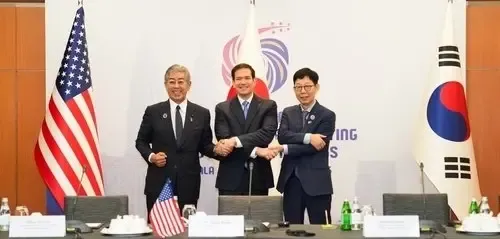
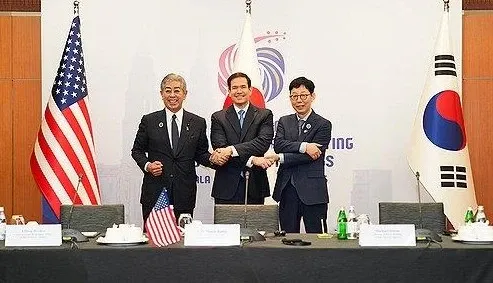
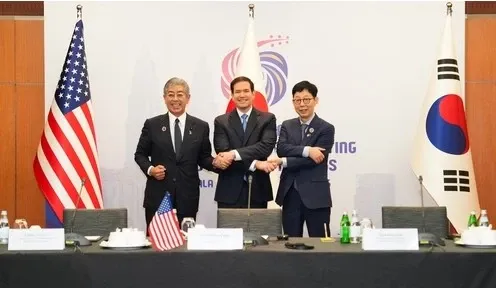
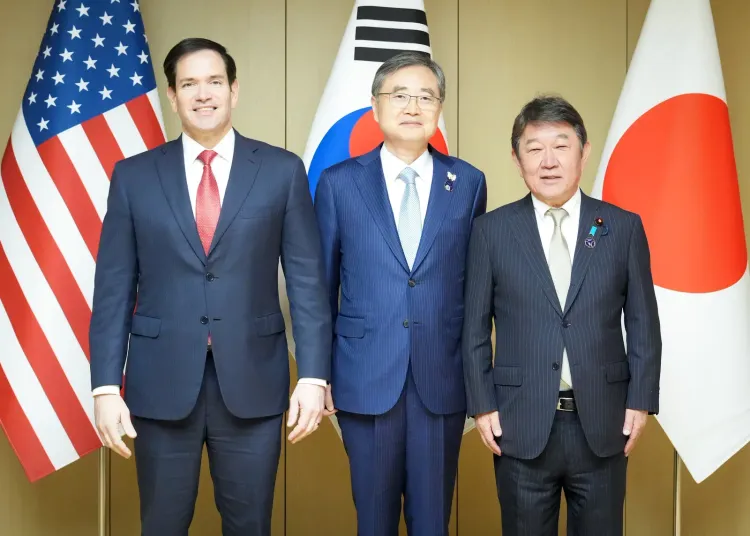
South Korean Foreign Minister Cho Hyun , US Secretary of State Marco Rubio , and Japanese Foreign Minister Toshimitsu Motegi will meet in Manila on Wednesday .
The trilateral talks will cover North Korea , regional security, economic cooperation, and the Middle East crisis.
The Manila meeting follows a similar trilateral session at the NATO summit in Ankara on 7 July .
The three countries have signed an MOC to deploy small modular reactors (SMRs) in third countries across the Indo-Pacific .
Cho will also hold bilateral talks with counterparts from Australia , Thailand , New Zealand , Brunei , and the Philippines .
South Korea, the United States, and Japan will convene their top diplomats in Manila this week to advance trilateral coordination on North Korea and deepen economic and security cooperation, Seoul's foreign ministry confirmed on Monday, 20 July. The meeting underscores the three allies' sustained diplomatic tempo, coming just two weeks after their last trilateral engagement.
Key Developments
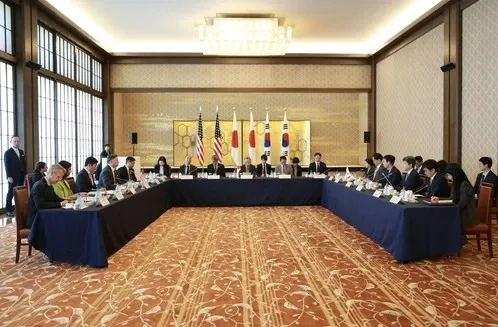
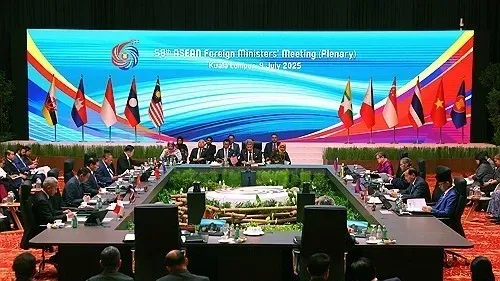
South Korean Foreign Minister Cho Hyun is scheduled to meet US Secretary of State Marco Rubio and Japanese Foreign Minister Toshimitsu Motegi on Wednesday on the sidelines of Association of Southeast Asian Nations (ASEAN)-related ministerial meetings in the Philippine capital. The gathering follows a similar trilateral session held on the margins of the North Atlantic Treaty Organization (NATO) summit in Ankara on 7 July.
Agenda: North Korea, SMRs, and Regional Security
The three sides are expected to address the North Korea situation, ways to strengthen trilateral security and economic ties, and developments in the Middle East and broader Indo-Pacific. At their earlier meeting this month, the ministers reaffirmed commitment to the denuclearisation of the Korean Peninsula and pledged to continue pursuing dialogue with Pyongyang.
Notably, the three countries also signed a memorandum of cooperation (MOC) to establish a framework for accelerating the deployment of small modular reactors (SMRs) in third countries, with a particular focus on the Indo-Pacific region — signalling that the alliance's economic dimension is expanding well beyond traditional security guarantees.
Cho's Manila Schedule
Minister Cho is set to begin a two-day visit to the Philippines from Tuesday, attending a series of multilateral forums: the Korea-ASEAN foreign ministers' meeting, the ASEAN Plus Three ministerial involving South Korea, Japan, and China, the ASEAN Regional Forum (ARF) foreign ministers' meeting, and the East Asia Summit (EAS) foreign ministers' meeting.
During these sessions, Cho is expected to reaffirm Seoul's commitment to strengthening ASEAN ties and to outline the government's efforts to promote peaceful coexistence and shared prosperity on the Korean Peninsula.
Bilateral Talks on the Margins
On the sidelines of the multilateral gatherings, Cho plans to hold bilateral meetings with counterparts from Australia, Thailand, New Zealand, Brunei, and the Philippines. Seoul is also coordinating separate bilateral discussions with the US, Japan, and China on the fringes of the same meetings, according to ministry officials.
The Manila meetings represent a further consolidation of the trilateral diplomatic architecture that South Korea, the US, and Japan have been building in response to continued provocations from Pyongyang and shifting regional dynamics.
Point of View
Now Manila — is not routine diplomatic scheduling; it reflects a deliberate effort to institutionalise the South Korea-US-Japan axis at a moment when North Korea's posture and China's regional assertiveness are both intensifying. The SMR memorandum is the more underreported signal: it extends the alliance's reach into energy infrastructure across the Indo-Pacific, giving the trilateral a development-diplomacy dimension that competes directly with Chinese investment frameworks. Whether Manila produces concrete deliverables on Pyongyang or remains another reaffirmation of existing commitments will be the real measure of this diplomatic tempo.
NationPress
21 Jul 2026
Frequently Asked Questions
Why are South Korea, the US, and Japan meeting in Manila?
The three countries' top diplomats are meeting in Manila on Wednesday to coordinate on North Korea, strengthen trilateral security and economic ties, and discuss regional developments including the Middle East crisis. The meeting is held on the sidelines of ASEAN-related ministerial forums.
Who is attending the trilateral meeting in Manila?
South Korean Foreign Minister Cho Hyun, US Secretary of State Marco Rubio, and Japanese Foreign Minister Toshimitsu Motegi are scheduled to attend the Wednesday trilateral session in Manila.
How does this meeting relate to the NATO summit talks in Ankara?
The Manila meeting comes approximately two weeks after the same three ministers held trilateral talks on the sidelines of the NATO summit in Ankara on 7 July. The back-to-back sessions reflect an accelerated diplomatic cadence among the three allies.
What is the SMR memorandum of cooperation signed by the three countries?
South Korea, the US, and Japan signed a memorandum of cooperation (MOC) to establish a framework for accelerating the deployment of small modular reactors (SMRs) in third countries, particularly across the Indo-Pacific region. It represents a significant expansion of the trilateral alliance into clean energy infrastructure.
What other meetings will South Korean Foreign Minister Cho attend in Manila?
Cho will attend the Korea-ASEAN foreign ministers' meeting, the ASEAN Plus Three ministerial, the ASEAN Regional Forum (ARF) meeting, and the East Asia Summit (EAS) foreign ministers' meeting. He will also hold bilateral talks with counterparts from Australia, Thailand, New Zealand, Brunei, and the Philippines.