Trump slaps 50% tariffs on Canada, citing auto, dairy and alcohol curbs
Synopsis
Trump has invoked a rarely used 1930 trade law to hit Canada with 50% tariffs on hundreds of goods — from wine to cement — citing a documented collapse in US auto, alcohol, and dairy exports to Canada. With USMCA now effectively bypassed and Ottawa framed alongside China as a trade holdout, this is the most aggressive unilateral US action against a treaty partner in decades.
Key Takeaways
President Trump signed three proclamations on 21 July imposing a 50% tariff on hundreds of Canadian imports.
The action invokes Section 338 of the Tariff Act of 1930 and applies even to goods qualifying under the USMCA .
US motor vehicle exports to Canada fell roughly 22% (about $5.6 billion ) between April 2025 and March 2026 , according to the White House.
US alcoholic beverage exports to Canada dropped approximately 81% (about $582 million ) in the March 2025–February 2026 period, per White House data.
Exemptions include energy, potash, fish, critical minerals, and goods already under Section 232 tariffs.
Tariffs take effect in 30 days ; Canada and China are the only two countries cited as having retaliated rather than negotiated.
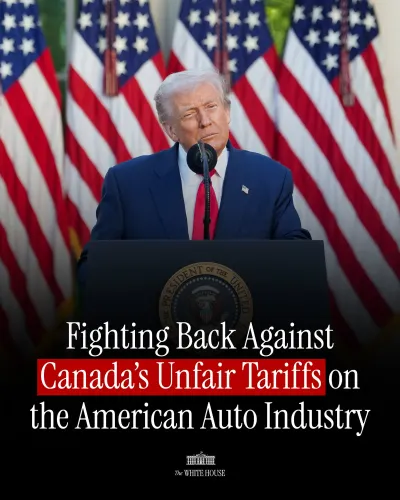
President Donald Trump on 21 July imposed an additional 50 per cent tariff on hundreds of Canadian imports, accusing Ottawa of systematically discriminating against American exports of automobiles, alcoholic beverages, and dairy products. The move marks a sharp escalation in trade tensions between the two North American neighbours and represents one of the most sweeping unilateral trade actions Washington has taken against a treaty partner.
Legal Basis and Scope
Invoking Section 338 of the Tariff Act of 1930, Trump signed three separate proclamations imposing the new duties on selected Canadian imports. The White House described the action as necessary to offset 'the burden and disadvantage on US commerce from Canada's discriminatory treatment' and to 'level the playing field' for American exporters.
The tariffs are set to take effect 30 days after signing and will apply regardless of whether goods qualify for preferential treatment under the United States-Mexico-Canada Agreement (USMCA). Exemptions cover energy, potash, fish, critical minerals, and products already subject to Section 232 tariffs. The accompanying annexes span hundreds of tariff classifications, covering goods ranging from wine and hockey sticks to cement and consumer products.
What Washington Says Canada Did Wrong
The White House outlined three primary grievances. On automobiles, it said Canada imposed tariffs and quota restrictions on US motor vehicles that were not applied to imports from other countries, and administered quotas in ways that allegedly pushed American manufacturers to invest in Canadian production rather than expand facilities in the United States. According to a White House fact sheet, Canadian imports of US motor vehicles fell by approximately 22 per cent, or $5.6 billion, between April 2025 and March 2026 compared with the same period a year earlier, while imports from other countries rose to fill the gap.
On alcohol, the administration said all but two Canadian provinces and territories halted the purchase, distribution, or retail sale of US alcohol while maintaining access for products from other countries. Canadian imports of US alcoholic beverages reportedly declined by about 81 per cent, or $582 million, during the March 2025 to February 2026 period compared with the previous year.
On dairy, the White House argued that Canada's tariff-rate quota system for cheese under the USMCA was more restrictive than the quota system applied to similar European Union imports under the Canada-EU Comprehensive Economic and Trade Agreement (CETA), placing US exporters at a competitive disadvantage.
Canada Framed as a Holdout
The administration stated that over the past year and a half, only two countries — China and Canada — had chosen to retaliate against Trump's tariffs rather than negotiate trade agreements with Washington. The White House said it had secured 18 trade deals opening new markets for US exports, but argued that Canada had 'elected to discriminate against the United States rather than address Canadian trade barriers.'
What Comes Next
The tariffs take effect in 30 days, giving Ottawa a narrow window to respond diplomatically or legally through USMCA dispute mechanisms. Canada has previously retaliated against US tariffs with counter-measures of its own, and analysts expect Ottawa to weigh its options carefully given the breadth of the new duties. The move is the latest application of Trump's America First trade agenda and signals that the US-Canada trade relationship — long regarded as one of the world's most integrated — faces a prolonged period of friction.
Point of View
But the White House fact sheet is the sole source; independent verification matters before treating these figures as settled. More consequentially, framing Canada alongside China as a 'retaliator' rather than a partner rewrites the diplomatic architecture of North American trade. If Ottawa responds in kind, the integrated supply chains that underpin the auto sector on both sides of the border face real disruption — and American consumers, not just Canadian exporters, will feel the price effect.
NationPress
21 Jul 2026
Frequently Asked Questions
What tariffs has Trump imposed on Canada?
President Trump has imposed an additional 50 per cent tariff on hundreds of Canadian imports, signed on 21 July under three separate proclamations invoking Section 338 of the Tariff Act of 1930. The duties cover goods ranging from wine and hockey sticks to cement and consumer products, and take effect 30 days after signing.
Why is the US imposing new tariffs on Canada?
The White House says Canada has discriminated against US exports of automobiles, alcoholic beverages, and dairy products — applying restrictions on American goods that are not applied to imports from other countries. The administration cites a 22% drop in US auto exports and an 81% drop in US alcohol exports to Canada over the past year as evidence.
Does the 50% tariff override USMCA protections?
Yes, according to the White House. The new tariffs apply regardless of whether goods qualify for preferential treatment under the United States-Mexico-Canada Agreement (USMCA), effectively bypassing the trade pact's normal protections for the listed product categories.
What goods are exempt from the new Canada tariffs?
Energy, potash, fish, critical minerals, and products already subject to Section 232 tariffs are exempt from the new 50 per cent duties. The exemptions are listed in the annexes accompanying the three presidential proclamations.
How has Canada responded to Trump's tariffs?
No formal Canadian government response to this specific round of tariffs has been detailed in available reports. However, the White House noted that Canada — along with China — is one of only two countries to have retaliated against earlier Trump tariffs rather than negotiate a trade deal with Washington, suggesting Ottawa may consider counter-measures.