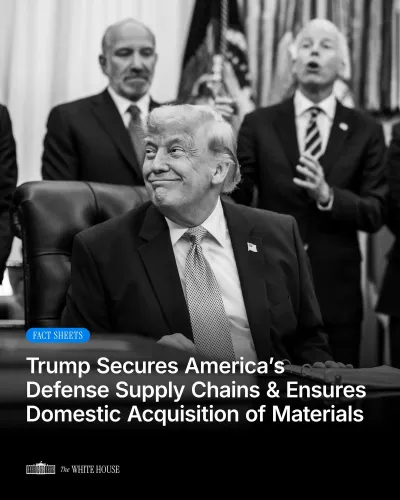
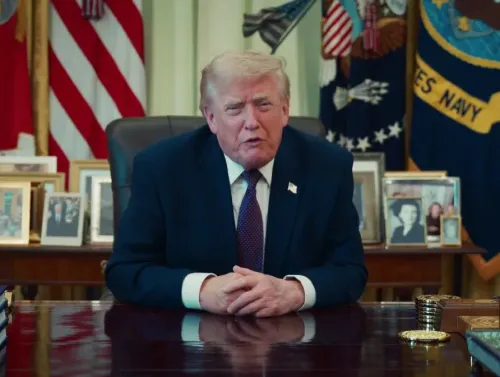
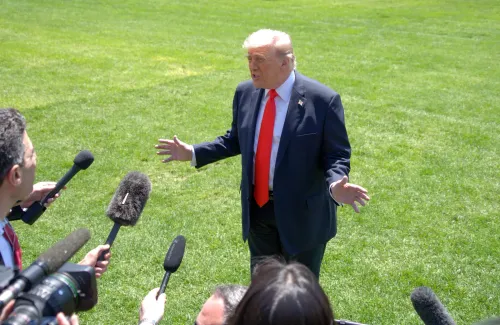
Trump signs executive order to tighten US defence supply chains
Synopsis
President Trump's latest executive order doesn't just tweak procurement rules — it targets the hidden lower tiers of US defence supply chains that have long escaped government scrutiny. By ending routine waivers and mandating full chain-of-custody mapping from raw materials to finished weapons, the administration is signalling that supply chain resilience is now as much a battlefield priority as firepower itself.
Key Takeaways
President Donald Trump signed an executive order on 21 July to tighten US defence supply chains.
The order sharply restricts waivers for acquiring critical materials from restricted foreign countries , requiring mitigation plans where waivers are approved.
Prime contractors and subcontractors must map defence supply chains from raw materials to finished military products under new Department of War regulations.
Peter Navarro described the measure as 'battlefield preparation,' warning that missile systems dependent on foreign-controlled suppliers pose unacceptable risk.
The order builds on executive actions signed since January 2025 covering defence acquisition reform, critical mineral production, and military procurement.
While China was cited as a concern, Navarro stressed the order addresses dependencies on all foreign sources , not China alone.
US President Donald Trump signed an executive order on 21 July aimed at overhauling America's defence supply chains, restricting waivers for foreign-sourced critical materials, mandating supply chain mapping by contractors, and pushing the defence industrial base toward domestic and allied sources. The order represents one of the most sweeping structural interventions in US military procurement in recent years.
Key Provisions of the Order
The order directs the Secretary of War to sharply limit the circumstances under which waivers can be granted for acquiring covered materials from restricted countries under federal law. Where waivers are approved, contractors will be required to submit mitigation plans detailing how they will transition their supply chains to compliant domestic or allied sources.
Additionally, the Department of War has been directed to develop regulations requiring prime contractors and subcontractors to map critical defence supply chains from raw materials through to finished military products. The White House said the measure is intended to identify vulnerabilities, bottlenecks, and potential foreign influence throughout the defence industrial base.
What the Administration Said
Peter Navarro, Senior Counsellor for Trade and Manufacturing, announced the measure during a White House briefing, stating: 'The US has the most lethal military on earth, but even the most advanced weapons system is only as strong as the supply chains behind it.'
Navarro said the administration's goal was to expose hidden vulnerabilities in lower-tier suppliers that often remain outside government visibility. 'We basically end the waiver racket exposed by mapping hidden supply chains, vet the lower tiers much more carefully, qualify trusted sources and hold contractors accountable when they hide the ball,' he said.
Framing the order in stark terms, Navarro added: 'This is not paperwork. It is battlefield preparation. If a missile system depends on a foreign controlled supplier, the Department of War needs to know before the shooting starts.'
China and Beyond
When asked specifically about China, Navarro acknowledged that Beijing had long studied American defence supply chains. 'We need to get about the business of addressing these vulnerabilities in a world where, as you know, China has been more and more bold about weaponising supply chains,' he said.
However, Navarro was emphatic that the order's scope extended beyond China. 'I love this question because this is not about China. This is about dependencies on the rest of the world,' he said, stressing that the administration's objective was to build resilient domestic supply chains while working with allies where possible.
Broader Context and What Comes Next
The White House said the latest order builds on a series of executive actions signed since January 2025 to modernise defence acquisitions, expand domestic critical mineral production, reform military procurement, and negotiate agreements addressing imports of processed critical minerals viewed as affecting national security. Notably, this is part of a sustained policy arc — not a standalone measure.
The order also encourages defence contractors to qualify new domestic sources of critical minerals, materials, and components, while removing regulatory barriers that delay their approval. Contractors relying on suppliers deemed unreliable will be required to qualify alternative sources as quickly as possible, consistent with legal and operational requirements.
With supply chain resilience now a declared national security priority, the order is expected to reshape how major US defence contractors structure their procurement hierarchies in the months ahead.
Point of View
US defence contractors have operated with limited visibility into sub-tier suppliers, creating exploitable blind spots. Compelling full chain-of-custody disclosure from raw material to finished weapon is structurally significant, but enforcement will be the real test: past defence procurement reforms have frequently stalled at the regulatory drafting stage. The framing of this as 'battlefield preparation' rather than administrative compliance is deliberate — it raises the political cost of contractor non-compliance and signals that the administration views supply chain vulnerability as an active strategic risk, not a theoretical one.
NationPress
21 Jul 2026
Frequently Asked Questions
What does Trump's defence supply chain executive order do?
The order restricts the circumstances under which waivers can be granted for sourcing critical materials from restricted foreign countries, mandates that prime contractors and subcontractors map their full defence supply chains, and requires contractors relying on unreliable suppliers to qualify alternative domestic or allied sources as quickly as possible.
Why is the US tightening defence supply chain rules now?
The administration has cited growing foreign influence in lower-tier defence supply chains as a national security vulnerability. Senior Counsellor Peter Navarro specifically referenced China's increasing willingness to 'weaponise supply chains,' though the order is framed as addressing dependencies on all foreign sources, not China alone.
What is the role of Peter Navarro in this order?
Peter Navarro, Senior Counsellor for Trade and Manufacturing, announced the executive order at a White House briefing and served as its primary public advocate. He framed it as 'battlefield preparation' and called for ending what he described as a 'waiver racket' that had obscured supply chain vulnerabilities.
How does this order fit into Trump's broader defence policy?
The White House said the order builds on a series of executive actions signed since January 2025 covering defence acquisition modernisation, domestic critical mineral production expansion, military procurement reform, and agreements on processed critical mineral imports affecting national security.
Who is affected by the new supply chain requirements?
Prime contractors and subcontractors involved in US military production are directly affected. They will be required to map supply chains from raw materials to finished products, submit mitigation plans when waivers are granted, and qualify alternative sources when current suppliers are deemed unreliable.