PM Modi at SCO Summit: Translate India's security-connectivity-opportunity vision into outcomes
Synopsis
At the 26th SCO Summit in Bishkek, Modi didn't just restate India's vision — he issued a deadline. With the bloc turning 25, he demanded that the Security-Connectivity-Opportunity framework move from rhetoric to results, called out double standards on terrorism, and conditioned connectivity on sovereignty — a pointed message to partners backing CPEC.
Key Takeaways
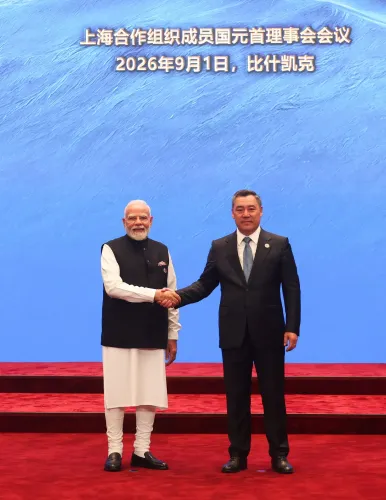
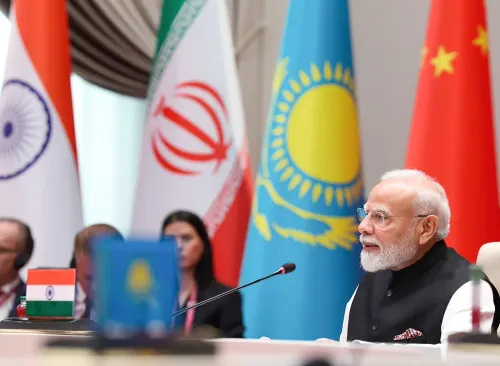
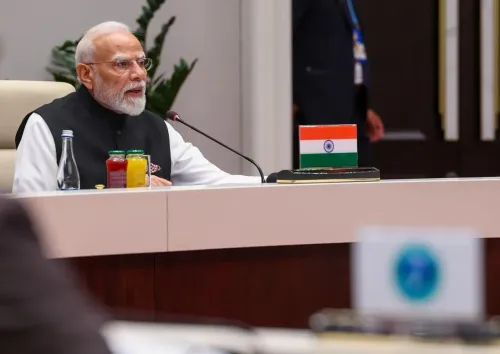
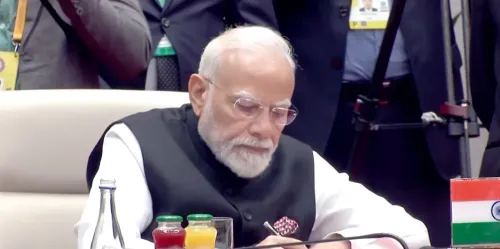
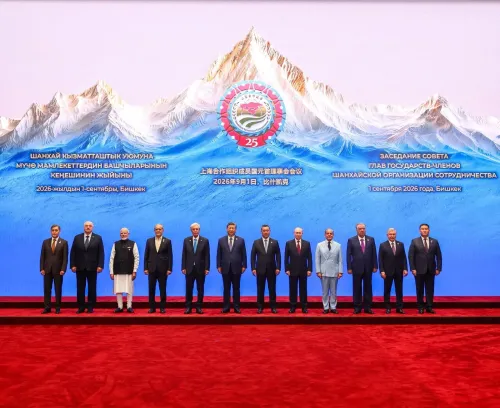
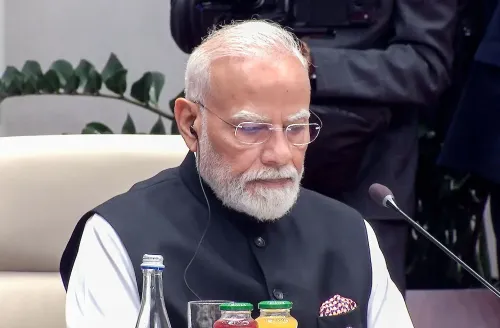
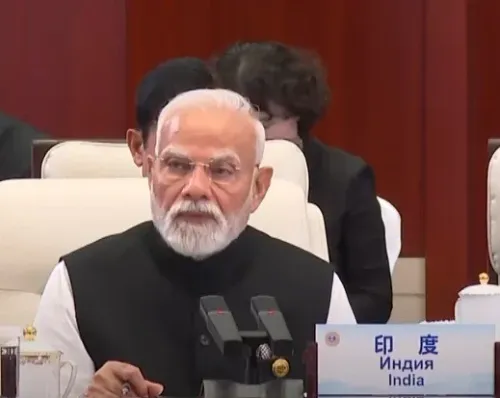
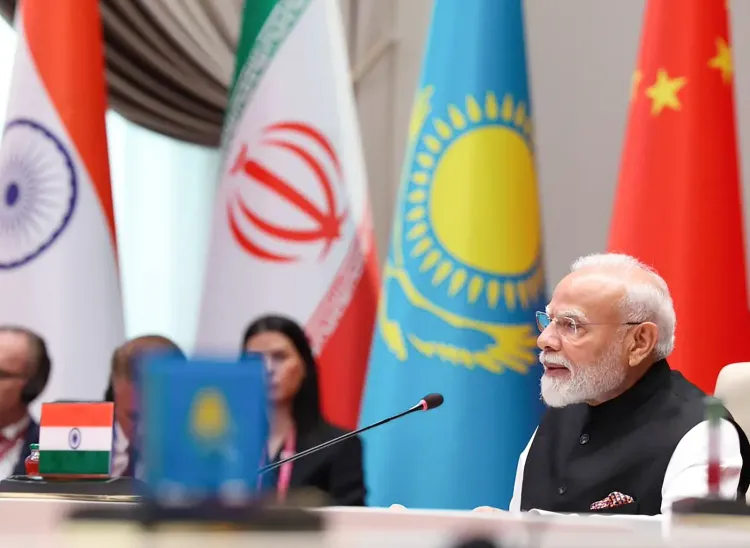
PM Modi addressed the 26th SCO Summit in Bishkek, Kyrgyzstan on Tuesday, 1 September .
He called for translating India's three-pillar SCO vision — Security, Connectivity, Opportunity — into concrete, measurable outcomes.
Modi demanded dismantling the full ecosystem of terrorist financing, recruitment, radicalisation, and safe havens , rejecting double standards.
He backed connectivity initiatives only if they respect the sovereignty and territorial integrity of nations.
India reaffirmed its development and humanitarian assistance to Afghanistan , linking Eurasian stability to peace there.
The inaugural SCO Civilizational Dialogue Forum , proposed by India, is set to hold its first session in India this year.
Prime Minister Narendra Modi on Tuesday called on Shanghai Cooperation Organisation (SCO) member states to move beyond declarations and convert India's three-pillar vision — Security, Connectivity, and Opportunity — into concrete, measurable results. Addressing the 26th SCO Summit in Bishkek, Kyrgyzstan, Modi framed the organisation's 25th anniversary as a defining moment to chart the bloc's course for the next quarter-century.
Security: Zero Tolerance on Terrorism
Modi placed counter-terrorism at the centre of his address, arguing that the fight against extremism demands a systemic overhaul — not merely reactive measures. 'Terrorism continues to pose a serious challenge to humanity as a whole. In the fight against terrorism, we cannot remain confined to an action-reaction approach. We must dismantle the entire ecosystem of terrorist financing, recruitment, radicalisation, and safe havens,' he said.
He pressed SCO members to speak in a unified voice and reject double standards, warning that 'terrorism can never be a strategic asset for anyone.' The remarks carried an unmistakable subtext in a bloc that includes states accused by India of harbouring cross-border militant networks.
Modi also flagged the widening definition of security in an interconnected world, pointing to the West Asia crisis as evidence that regional conflicts cascade globally — disrupting energy security, maritime trade, and supply chains. He underscored that nations of the Global South absorb the sharpest shocks from such instability, and reiterated India's consistent position that all conflicts must be resolved 'not on the battlefield, but through dialogue and diplomacy.'
Afghanistan: A Shared Responsibility
Stability in Afghanistan was identified as a precondition for broader Eurasian security. Modi reaffirmed that India has been contributing to development and humanitarian assistance for the Afghan people and would continue to do so. The statement signals New Delhi's intent to maintain engagement with Afghanistan even as the political situation there remains complex.
Connectivity on India's Terms
On the second pillar, Modi backed connectivity initiatives that link markets, expand trade, and generate development opportunities — but attached a non-negotiable condition: such projects must respect the sovereignty and territorial integrity of nations. The caveat is widely read as India's standing objection to the China-Pakistan Economic Corridor (CPEC), which passes through Pakistan-administered Kashmir.
He urged the bloc to transform 'shared geography into shared opportunities,' arguing that at a time of global uncertainty, geographic proximity should be leveraged for collective economic gain rather than strategic rivalry.
People-Driven Opportunity: Start-Ups, Youth and Civilisational Dialogue
Modi pushed for SCO cooperation to evolve from government-to-government frameworks toward people-driven partnerships, highlighting technology, entrepreneurship, innovation, and start-ups as engines of opportunity across member economies.
He cited several Indian-led initiatives — the SCO Start-up Forum, the Young Authors' Conclave, and the Young Scientists' Forum — as examples of youth-centred engagement. He also welcomed the inaugural session of the SCO Civilizational Dialogue Forum, proposed by India the previous year, which is set to be held in India this year.
'Our cooperation in the SCO should not be merely government-driven; it should also be people-driven,' Modi told the assembled leaders, closing with India's commitment to the SCO's collective journey: 'From shared geography to shared opportunities, from vision to outcomes — India is ready to contribute.'
With the SCO now entering its second quarter-century, Modi's address sets out a clear Indian agenda: a tougher multilateral line on terrorism, connectivity that does not compromise sovereignty, and a people-first model of regional integration that goes beyond diplomatic communiqués.
Point of View
India is effectively challenging a bloc where two nuclear-armed members — China and Pakistan — sit on opposite sides of New Delhi's core red lines. The 'no double standards on terrorism' line, delivered to an audience that includes Islamabad's backers, is pointed. The deeper question is whether SCO can produce binding outcomes or remain a forum for managed disagreement dressed up as consensus.
NationPress
1 Sept 2026
Frequently Asked Questions
What did PM Modi say at the 26th SCO Summit in Bishkek?
PM Modi urged SCO member states to move beyond vision and translate India's three-pillar framework — Security, Connectivity, and Opportunity — into concrete outcomes. He called for unified action against terrorism, sovereignty-respecting connectivity, and people-driven cooperation including youth and start-up initiatives.
What is India's three-pillar vision for the SCO?
India's SCO vision rests on three pillars: Security (counter-terrorism and regional stability), Connectivity (trade and market linkages that respect national sovereignty), and Opportunity (technology, entrepreneurship, and people-to-people ties). Modi first outlined this framework at a previous SCO meeting and at Bishkek called for it to produce measurable results.
Why did Modi raise the issue of terrorism at the SCO Summit?
Modi argued that terrorism remains the foremost threat to regional security and that an action-reaction approach is insufficient. He called for dismantling the entire ecosystem of terrorist financing, recruitment, and safe havens, and warned that there can be no double standards — a remark widely seen as directed at states accused of supporting cross-border militancy.
What did Modi say about connectivity and the sovereignty condition?
Modi supported connectivity initiatives that link markets and expand trade but insisted they must respect the sovereignty and territorial integrity of all nations. This condition is broadly interpreted as India's continued objection to projects like CPEC that pass through disputed territory.
What is the SCO Civilizational Dialogue Forum that Modi mentioned?
The SCO Civilizational Dialogue Forum was proposed by India at the previous SCO summit to foster cultural and civilisational exchange among member states. Its inaugural session is scheduled to be held in India this year, and Modi expressed confidence it would become a strong platform for dialogue within the bloc.