Trump hikes Canada tariffs to 50% on cars, steel from Jan 2027
Synopsis
Donald Trump has announced 50% tariffs on Canadian vehicles, auto parts, and steel starting 1 January 2027 — one of the steepest unilateral moves against a US ally in decades. With Canada conducting the bulk of its trade with the US, the announcement threatens to disrupt deeply integrated North American supply chains, while Trump's 'build in the US' exemption frames the move as an industrial policy lever as much as a trade weapon.
Key Takeaways
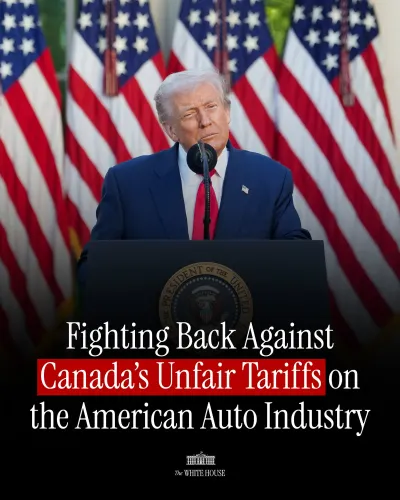
US President Donald Trump announced 50% tariffs on Canadian cars, trucks, automotive parts, and steel, effective 1 January 2027 .
Trump cited a $60 billion trade deficit and high Canadian tariffs on American farm products as justification.
Companies that shift manufacturing to the United States will face zero tariffs under an exemption offer.
Trump claimed Canada conducts 95 per cent of its business with the US, arguing Washington holds the stronger hand.
Ottawa has not yet formally responded; Canada has previously retaliated against US tariff actions.
The 1 January 2027 deadline gives both sides roughly 16 months to negotiate or escalate.
US President Donald Trump announced on 24 August that tariffs on Canadian vehicles, automotive parts, and steel will rise to 50 per cent effective 1 January 2027, sharply escalating his trade confrontation with one of America's closest economic partners. The announcement marks one of the steepest unilateral tariff moves against Canada in modern US trade history.
What Trump Announced
Trump made the declaration via a post on Truth Social, accusing Canada of imposing punishing duties on American agricultural products and of running what he called an unfair trade relationship for years. 'Canada has been ripping off the United States of America for years,' he said in the post.
Trump specifically cited a $60 billion trade deficit between the two countries, attributing it to what he described as 'ridiculously high tariffs' on American farm goods. 'Their ridiculously high tariffs on our Farmers and farm products has made life impossible for these great American Patriots,' he wrote.
The new 50 per cent levy will apply to all cars, trucks — both large and small — automotive parts, and steel imports from Canada. Trump declared the existing arrangement 'not sustainable' and said Washington would no longer accept it.
The Exemption Offer
Trump offered companies a route around the tariffs: relocate manufacturing to the United States. 'Build in the US, and there are zero tariffs,' he said, framing the move as an incentive to onshore production rather than purely a punitive measure. The offer mirrors similar exemption structures floated during his first-term trade campaigns against China and the European Union.
Broader Signal on Canada Relations
Beyond tariffs, Trump signalled a wider deterioration in relations with Ottawa, saying Canada would no longer receive what he described as preferential treatment from Washington. 'Canada will be treated like a State no longer!' he wrote, adding that Canada is 'among the worst Nations in the World to deal with.'
Trump also claimed that Canada conducts 95 per cent of its business with the United States while the American economy is far less dependent on Canadian trade — a framing that critics argue overstates US leverage and understates the deep integration of North American supply chains, particularly in the auto sector.
Context and What Comes Next
This comes amid an already strained trade relationship that has seen multiple rounds of tariff escalation since Trump's return to the White House. Canada is the United States' largest goods-trading partner, and the automotive and steel sectors are among the most deeply integrated across the two economies. A 50 per cent tariff on Canadian vehicles and parts would ripple through assembly lines on both sides of the border, analysts have noted.
Ottawa has not yet issued a formal response to the latest announcement. Canada has previously retaliated in kind to US tariff actions, and trade observers expect a similar response to be under consideration. The 1 January 2027 effective date gives both governments roughly 16 months to negotiate — or escalate further.
Point of View
And the 16-month runway to January 2027 is long enough for a deal or a climb-down. What is different this time is the breadth: autos and steel together touch the spine of North American manufacturing, and Canada cannot absorb a 50% levy without retaliating in ways that hurt US border-state economies too. The 'build in the US' exemption is the tell — this is industrial policy dressed as trade war, aimed at reshoring auto production ahead of a political cycle. Whether it works depends entirely on whether automakers treat the threat as credible, which, given Trump's track record of following through on tariff announcements, they probably will.
NationPress
25 Aug 2026
Frequently Asked Questions
What tariffs has Trump announced on Canada?
Trump has announced 50% tariffs on all Canadian cars, trucks, automotive parts, and steel, set to take effect on 1 January 2027. The announcement was made via a Truth Social post on 24 August.
Why is Trump imposing higher tariffs on Canada?
Trump cited a $60 billion US trade deficit with Canada and what he described as punishingly high Canadian tariffs on American agricultural products. He declared the existing trade relationship 'not sustainable' and said Washington would no longer accept it.
Is there any exemption to the new Canada tariffs?
Yes. Trump offered a full exemption — zero tariffs — to any company that relocates its manufacturing operations to the United States. The offer mirrors exemption structures used during his first-term trade campaigns.
How has Canada responded to the tariff announcement?
Ottawa had not issued a formal response at the time of the announcement. Canada has previously retaliated in kind to US tariff actions, and trade observers expect a similar response to be under consideration.
When do the new Canada tariffs take effect?
The 50% tariffs are scheduled to take effect on 1 January 2027, giving both governments approximately 16 months to negotiate, respond, or escalate before the deadline.