Trump defends Hegseth, claims military wins in Iran and Venezuela
Synopsis
At an unscheduled White House press conference, Trump claimed Hegseth ‘won two wars’ in Iran and Venezuela while simultaneously admitting rising energy costs could be a political liability. With impeachment calls still live, no deal framework on Iran, and the Venezuela operation's status unclear, Trump's triumphalist framing raises as many questions as it answers.
Key Takeaways
President Donald Trump publicly defended Secretary of War Pete Hegseth against impeachment pressure at a White House press conference on 10 November 2026 .
Trump claimed the Venezuela operation lasted just 48 minutes with no casualties, and asserted the US is gaining access to oil supplies there.
Trump said Iran's navy and air force had been destroyed and that Tehran is seeking a deal, but offered no terms or negotiation timetable.
Trump acknowledged rising energy costs linked to the campaigns could hurt him politically in the short term, without specifying relief measures.
Trump cited a surge in military recruitment — from severe shortfalls to record levels with waiting lists — as evidence of Hegseth's performance.
Trump declined to answer a question on Russia-Ukraine ceasefire efforts after criticising the reporter's network.
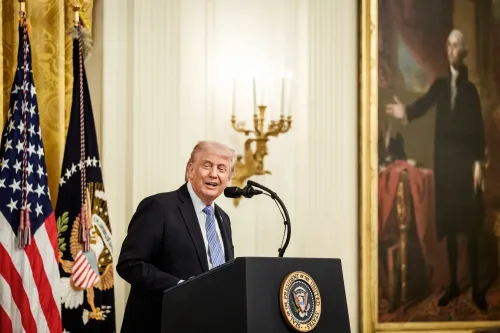
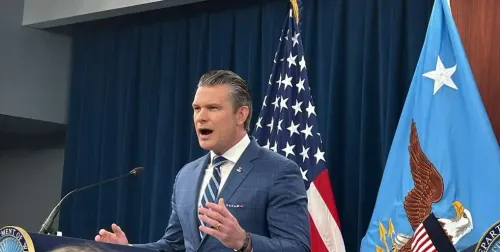
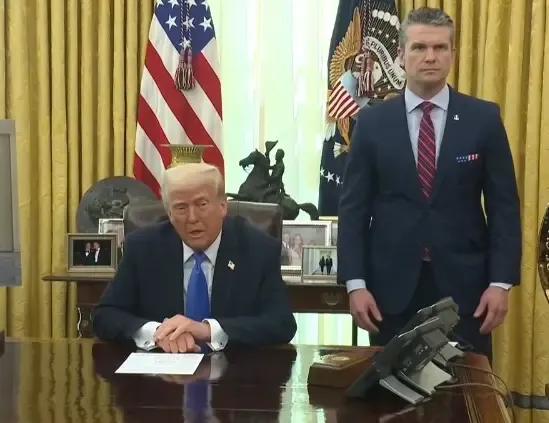
US President Donald Trump on 10 November 2026 mounted a forceful public defence of his Secretary of War Pete Hegseth at an impromptu White House press conference, pushing back against criticism and impeachment calls by claiming US military victories in Iran and Venezuela. Trump simultaneously acknowledged that rising energy costs tied to these campaigns could carry a political price.
Trump's Claims on Iran and Venezuela
Trump described the Venezuela operation as lasting just 48 minutes, asserting that no lives had been lost and that the United States was gaining access to substantial oil supplies and generating revenue from its involvement. On Iran, Trump declared that the country's navy and air force had been destroyed and that Tehran was now seeking a peace agreement. He presented preventing Iran from acquiring a nuclear weapon as the campaign's primary strategic gain.
Trump's characterisation of the Iran campaign appeared to shift mid-answer. He first said Hegseth “won the war in Iran” before adding, “he's certainly winning the war,” suggesting the conflict may not yet be concluded. He offered no proposed terms for a deal with Iran, nor any timetable for negotiations.
Impeachment Talk and Trump's Defence of Hegseth
Responding to what he called unfair impeachment pressure on Hegseth, Trump argued that the secretary should be credited, not punished, for campaigns the president described as successful. “So I say this, Pete Hegseth won two wars, oh, let's impeach him,” Trump said. He drew pointed contrasts with earlier US military engagements in Vietnam, Afghanistan, and Iraq, arguing those conflicts had produced heavy casualties without meaningful strategic gains, and questioned why officials associated with those outcomes faced no similar accountability demands.
Trump also cited a sharp improvement in military recruitment as evidence of Hegseth's effectiveness, claiming enlistment had surged from severe shortfalls before his return to office to record levels, with waiting lists reportedly forming. “He's done a very good job,” Trump said.
Energy Costs and the Political Risk
In a rare admission of political vulnerability, Trump acknowledged that voter concern over rising energy prices linked to the military operations could hurt him in the near term. “Now, short term, probably bad for me because people want to have a little bit lower energy cost. We'll get it back down,” he said. He did not specify a timeline for price relief or outline any concrete policy measures his administration intended to pursue to reduce energy costs.
Ukraine, Putin, and a Reporter Confrontation
When a reporter raised the topic of Russian President Vladimir Putin and efforts to broker a ceasefire in Ukraine, Trump challenged the question's premise. Upon learning the reporter represented a network he identified as MS Now, he criticised the outlet and declined to engage with the question. He had earlier interrupted a separate line of questioning referencing criticism from a lawmaker identified as Massie, responding with a personal attack before returning to his argument that US military campaigns had made the world safer.
What Happens Next
The press conference leaves several key questions unanswered: the precise status of operations in both Iran and Venezuela, any framework for a potential Iran deal, and the mechanism by which the administration plans to bring energy prices down. Congressional pressure on Hegseth, according to reports, has not abated. How Trump navigates the tension between asserting military success and managing the economic fallout will likely define the near-term political debate in Washington.
Point of View
With no casualties and immediate oil access, lacks independent verification and sits uneasily alongside the acknowledged spike in energy costs — an admission that the campaigns carry real economic consequences at home. The comparison to Vietnam, Afghanistan, and Iraq is politically shrewd but strategically incomplete: those were wars of occupation; what the US is doing in Iran and Venezuela has not been defined in those terms publicly. The refusal to outline any Iran deal framework or ceasefire timetable suggests Washington is projecting victory without having secured it.
NationPress
10 Nov 2026
Frequently Asked Questions
Why is Pete Hegseth facing impeachment calls?
Hegseth, the US Secretary of War, has faced criticism and talk of impeachment linked to his direction of US military operations in Iran and Venezuela. Trump forcefully rejected those calls at a White House press conference on 10 November 2026, arguing that Hegseth should be credited for campaigns the president characterised as successful.
What did Trump claim about the Venezuela military operation?
Trump said the Venezuela operation lasted just 48 minutes and that no one had been killed. He also claimed the United States was gaining access to substantial oil supplies and generating revenue from its involvement, though he provided no independent verification or further operational detail.
Has the US won the war in Iran, according to Trump?
Trump's statements were internally inconsistent: he initially said Hegseth had won the war in Iran, then added that he was ‘certainly winning’ it, suggesting the conflict is ongoing. He said Iran's navy and air force had been destroyed and that Tehran is seeking an agreement, but offered no proposed terms or negotiation timetable.
How does Trump say energy costs will come down?
Trump acknowledged that voter concern over rising energy prices linked to the military campaigns could hurt him politically in the short term, saying ‘We'll get it back down.’ He did not specify a timeline or outline any concrete policy measures his administration plans to take to reduce costs.
What was Trump's response to questions about a Russia-Ukraine ceasefire?
When a reporter raised the topic of Russian President Vladimir Putin and Ukraine ceasefire efforts, Trump challenged the question's premise, then criticised the reporter's network — identified as MS Now — and declined to answer. He gave no update on Washington's position on the Ukraine conflict.