Iran's Military Crippled: Ceasefire After US Strikes, Claims Hegseth

Synopsis
In a staggering display of military power, the US has effectively dismantled Iran's military capabilities, leading to a ceasefire. Secretary of War Pete Hegseth hails this as a monumental victory, with implications for global stability and security.
Key Takeaways
US military operations have significantly weakened Iran's military strength.
Operation 'Epic Fury' resulted in a historic victory for the US.
The ceasefire allows for the reopening of the Strait of Hormuz .
The US will continue to monitor Iran's nuclear activities closely.
Strategic military pressure led to Iran's acceptance of ceasefire terms.
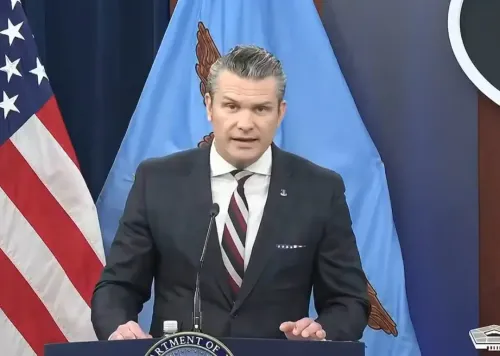
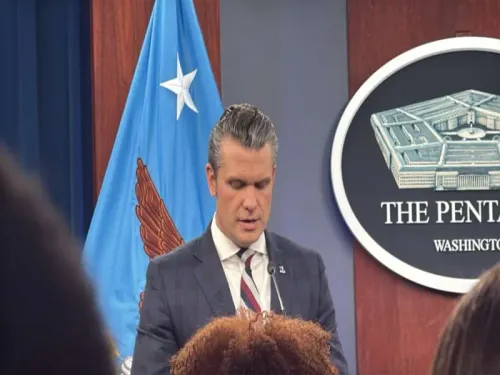
Washington, April 8 (NationPress) The military capabilities of Iran have been significantly crippled by the United States, compelling the nation to agree to a ceasefire amidst intense pressure, stated US Secretary of War Pete Hegseth on Wednesday. He characterized the results of Operation 'Epic Fury' as a monumental and decisive victory on the battlefield.
“Iran pleaded for this ceasefire… marking a crucial day for global peace,” Hegseth remarked, noting that the operation had “devastated Iran's military and left it combat ineffective for the foreseeable future.”
During a press conference with Chairman of the Joint Chiefs of Staff, Air Force General Dan Caine, Hegseth confirmed that the US and its allies fulfilled “all objectives… as per the plan and on schedule.”
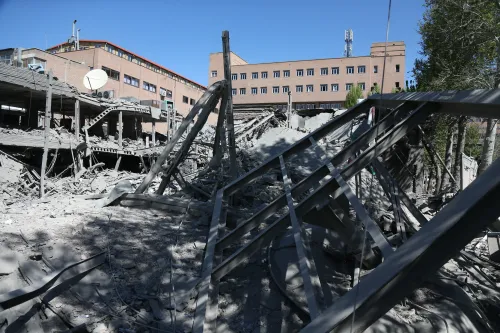
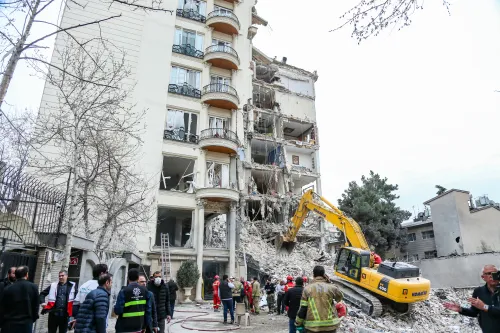
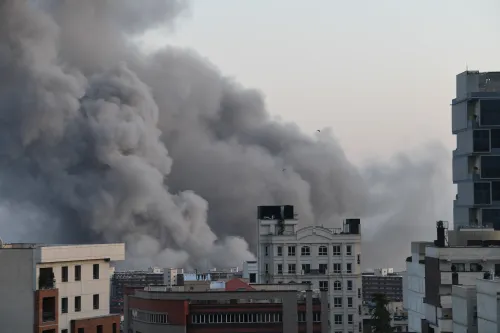
The Pentagon disclosed the extensive scale of the operation. US forces targeted over 13,000 installations, including more than 4,000 high-priority battlefield sites, effectively dismantling around 80% of Iran’s air defense systems and over 90% of its naval fleet.
“Iran’s Navy lies at the bottom of the sea… while Iran’s Air Force has been completely eradicated,” Hegseth declared.
General Caine added that the joint forces also eliminated more than 450 facilities for ballistic missiles, 801 drone storage locations, and nearly 90% of Iran’s weapons manufacturing sites.
“Almost 80% of Iran’s nuclear industrial base was affected,” he stated, emphasizing that the operation “targeted the core of Iran’s power projection capabilities.”
The US military conducted upwards of 10,000 missions, including long-range bombing operations lasting more than 30 hours, in what was described as an unprecedented logistical undertaking.
Hegseth warned that Iran’s command and control systems had been so severely degraded that “they can hardly communicate or coordinate,” cautioning that any further military actions by Tehran “would be extremely unwise.”
The ceasefire agreement entails reopening the Strait of Hormuz, a vital global shipping route. Hegseth assured that US forces would remain in the region to ensure adherence to the terms.
“We’re not leaving… we’ll maintain our position, stay prepared, and remain vigilant,” he stated.
He remarked that Iran consented to allow vessels to transit through the strait, although the US anticipates support from other nations in ensuring its security.
The administration reiterated its hardline stance on Iran’s nuclear ambitions.
“It has always been non-negotiable that they will not possess nuclear capabilities,” Hegseth stated, revealing that the US is actively monitoring Iran’s remaining nuclear materials and is prepared to eliminate them “by any means necessary.”
Hegseth attributed the successful outcome to military pressure coupled with the threat of further strikes on Iran’s critical infrastructure.
“We had a precise target list, ready to execute… including power plants, bridges, and oil facilities,” he explained, adding that Iran “recognized that their fate rested in the hands of President Trump.”
He noted that the US opted for restraint after Iran accepted the terms, stating, “He chose mercy… he’s a president of peace,” referring to Trump's leadership.
General Caine highlighted the successful rescue of downed US pilots during the operation as a testament to the military’s capability, describing it as a display of “determination, ingenuity, bravery, and resilience.”
The Pentagon confirmed that 13 US service members lost their lives during Operation Epic Fury.
This conflict represented one of the most direct and sustained military engagements by the US against Iran in decades, specifically targeting its nuclear, missile, and defense infrastructure.
Point of View
Highlighting the significant impacts of Operation 'Epic Fury'. The narrative focuses on the US's strategic military decisions and the resulting ceasefire, emphasizing the broader implications for international security.
NationPress
12 Oct 2026
Frequently Asked Questions
What led to the ceasefire between the US and Iran?
The US severely crippled Iran's military capabilities, leading to overwhelming pressure on Iran to agree to a ceasefire.
What were the main objectives of Operation 'Epic Fury'?
The operation aimed to dismantle Iran's military infrastructure, including air defense systems and naval capabilities.
How did the US achieve its military objectives?
US forces conducted over 10,000 missions, targeting more than 13,000 installations, which resulted in the destruction of key military assets.
What does the ceasefire entail?
The ceasefire includes the reopening of the Strait of Hormuz, crucial for global shipping, with US forces remaining in the region to ensure compliance.
What is the US stance on Iran's nuclear program?
The US maintains a non-negotiable stance that Iran will not be allowed to develop nuclear capabilities.