Sam Pitroda calls for global constitution and AI governance body
Synopsis
Sam Pitroda is not just criticising the UN — he is calling for a replacement architecture. From a dedicated AI governance body to a global constitution built on 20 shared principles, the Congress leader’s New York remarks amount to one of the most sweeping reform proposals by an Indian political figure in recent memory, arriving precisely when multilateralism is under its sharpest stress since 1945.
Key Takeaways
Sam Pitroda called for a new global constitution based on shared principles including human development, climate action, non-violence, and equality.
He argued the post- World War II order — including the UN , IMF , WTO , and NATO — is now obsolete.
Pitroda called for dedicated international institutions on Artificial Intelligence and on equity, noting none have been created in 80 years .
He described AI as a unique opportunity to redesign the world, though predicted reform could take up to 25 years .
Pitroda also proposed a Marshall Plan-style global development strategy for Africa , citing a projected population of 3 billion .
Senior Congress leader Sam Pitroda has called for a new global constitution and the creation of international institutions to govern Artificial Intelligence (AI), equality, and climate action, arguing that the world order built after World War II is now fundamentally obsolete. Speaking from New York, Pitroda said the planet stands at a critical crossroads — and that no serious platform exists to redesign it.
The Case Against the Post-War Order
Pitroda argued that the institutions born from the post-war settlement — the United Nations, World Bank, International Monetary Fund (IMF), World Trade Organisation (WTO), World Health Organisation (WHO), and NATO — were designed for a world that no longer exists. “That design doesn’t work anymore,” he said bluntly.
He pointed to the intensifying rivalry between the United States and China as evidence that global debate had narrowed into a binary power struggle, crowding out the more fundamental question of whether unipolar dominance itself remains viable. “Nobody says, wait a minute, you don’t need one global power anymore,” he said. “It is a networked world.”
A Global Constitution Built on Shared Principles
Pitroda proposed that countries begin by reaching consensus on a limited set of foundational issues — human development, climate action, peaceful conflict resolution, non-violence, equality, equity, and the role of women — as the basis for a global constitution. “If we agree on 20 issues, that’s the beginning of a global constitution, that everybody will follow that,” he said.
Notably, Pitroda did not call for a world government, but for a shared normative framework that transcends national borders. He acknowledged that political will for such reform remains absent. “Borders don’t make sense anymore, but there is no political will to redesign the world,” he said.
New Institutions for AI and Equity
Pitroda was particularly pointed about the absence of global bodies capable of addressing 21st-century challenges. “In 80 years, we have not created one single new global institution of the kind of UN,” he said, calling specifically for dedicated institutions on Artificial Intelligence and on equality and equity. He described AI as a “fantastic opportunity and tool” to catalyse a redesign of the global order, and predicted that reform — while inevitable — could take as long as another 25 years.
A Marshall Plan for Africa
Pitroda also raised the question of Africa’s development as a global imperative, linking economic deprivation on the continent to future migration pressures. “We need almost a Marshall plan for Africa because their population is going to be three billion,” he said, calling for a coordinated international development strategy for the region.
What This Signals
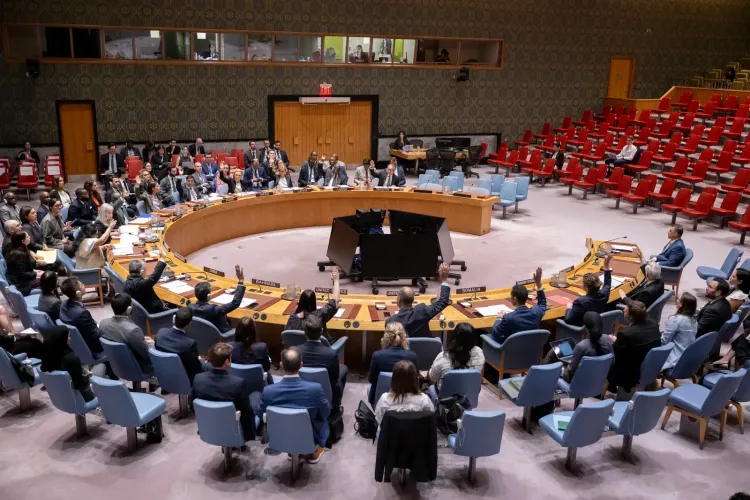
The remarks come at a moment of acute strain on multilateral institutions — from deadlocked UN Security Council reform to the absence of a binding global AI governance framework. Pitroda’s comments, while not representing official Congress party policy, reflect a growing strand of thinking among global reform advocates that the architecture of international cooperation needs a structural overhaul, not just incremental adjustment.
Point of View
Arriving as the EU’s AI Act and the US executive orders reveal just how fragmented the regulatory landscape already is. The Africa Marshall Plan idea, meanwhile, surfaces a hard demographic reality that most G20 communiqués acknowledge and then shelve. Whether these ideas move beyond a senior leader’s interview into any policy platform — Congress’s or otherwise — remains the real test.
NationPress
28 Aug 2026
Frequently Asked Questions
What did Sam Pitroda say about a global constitution?
Pitroda called for a new global constitution built around approximately 20 shared principles, including human development, climate action, peaceful conflict resolution, non-violence, equality, and the role of women. He argued that agreement on these fundamentals could form the foundation of a framework that all countries follow.
Why does Pitroda say the current world order is obsolete?
He argued that institutions created after World War II — including the UN, World Bank, IMF, WTO, WHO, and NATO — were designed for a different era and no longer address modern challenges such as AI governance, climate change, or multipolarity. According to Pitroda, no major new global institution has been created in 80 years.
What kind of AI governance did Pitroda propose?
Pitroda called for a dedicated international institution focused on Artificial Intelligence, comparable in stature to the UN. He described AI as a unique opportunity to catalyse a broader redesign of the global order, though he acknowledged such change could take up to 25 years.
What did Pitroda say about Africa?
Pitroda called for a Marshall Plan-style global development strategy for Africa, citing the continent’s projected population of three billion. He linked economic deprivation in Africa directly to future migration pressures, framing African development as a global rather than regional concern.
Do these views represent the Congress party’s official position?
The remarks were made by Pitroda in a personal interview and have not been presented as official Indian National Congress (INC) party policy. Pitroda is a senior Congress leader and has previously served as an adviser on technology and innovation.