How Are Global CEOs Advocating for Autonomy and Empowerment in the AI Ecosystem?
Synopsis
At the India AI Impact Summit 2026, influential tech CEOs highlighted the importance of autonomy, infrastructure, and societal empowerment in shaping the future of AI. Their discussions pointed to a pivotal moment for India to establish itself as a leader in the AI landscape.
Key Takeaways
AI should promote empowerment rather than dominance.
Energy systems are critical for robust AI functionality.
AI is foundational for the next industrial era.
Inclusivity and accessibility are vital for AI's success.
India has a unique opportunity to shape the future of AI.
New Delhi, Feb 19 (NationPress) During the India AI Impact Summit 2026, leaders of major tech corporations underscored the importance of autonomy, robust infrastructure, and widespread empowerment within the AI ecosystem.
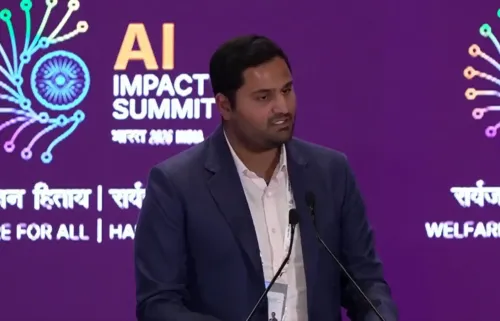
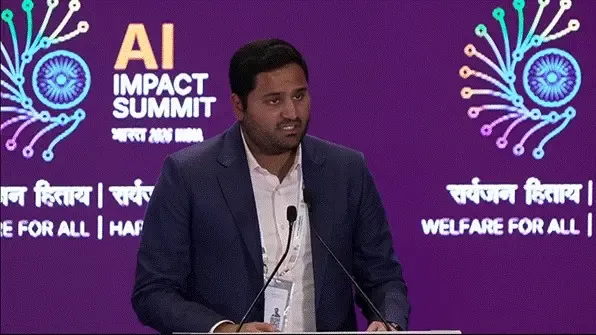
In keynote speeches at the summit, notable figures such as Arthur Mensch, CEO & Co-founder of Mistral AI; Jeet Adani, Director of Adani Digital Labs; Rajesh Subramaniam, CEO of FedEx; and Vinod Khosla, Founder of Khosla Ventures, discussed how artificial intelligence is transforming sovereignty, global trade, infrastructure, and the accessibility of essential services, with a focus on transparency, ownership, and broad societal impact.
Arthur Mensch emphasized the significance of AI autonomy and open innovation, stating, “AI should serve as a tool for empowerment, not a means of control. Nations and regions must take charge of their AI futures; this is not merely a privilege, but an essential component of maintaining digital independence.”
He cautioned against the dangers of power consolidation, asserting, “We cannot allow a future where a handful of giant corporations monopolize access to intelligence. The future must be constructed by the collective, for the collective.”
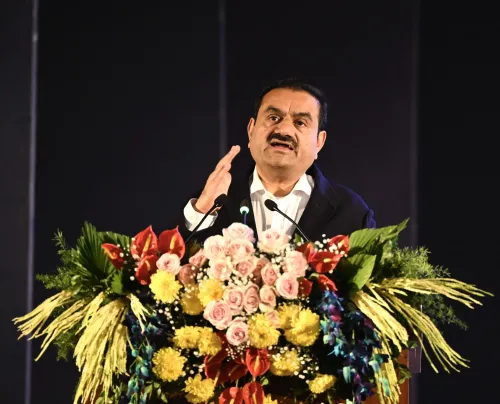
Jeet Adani approached AI from the perspective of national capability and strategic sovereignty.
He identified energy, computational capabilities, and service sovereignty as three vital components, stating, “AI is codified in software, but it operates on electricity. A nation’s intelligence infrastructure is only as strong as its energy systems.”
He also announced substantial investments in sustainable, sovereign AI infrastructure, stating, “The real question isn’t if India will engage in the AI era, but whether India will leave its mark on this era through its infrastructure, intelligence, and values.”
Rajesh Subramaniam framed AI as the backbone of the forthcoming industrial age, especially regarding global supply chains.
Reflecting on his company’s evolution, he noted, “AI has transcended being a mere trend; it is now the next industrial paradigm. Intelligence is not just an asset; it is foundational infrastructure.”
He highlighted the vast potential, saying, “In the next 50 years, our differentiation will stem from orchestrating the intelligence that drives modern commerce, anticipating disruptions, optimizing logistics, and constructing resilient supply chains.”
Vinod Khosla shifted the discussion to immediate, impactful applications that can change lives.
He advocated for AI-driven tutors, healthcare providers, and agricultural services accessible to all, declaring, “If AI doesn’t uplift the lower half of India’s populace, we won't witness its true potential.”
He emphasized feasibility, stating, “The future is accessible now. What once necessitated enormous investments can now be delivered cost-effectively, broadening access to education, healthcare, and expertise for all Indians.”
The session reflected a unified belief that the next phase of AI must be characterized not only by technological advancement, but by ownership, accessibility, and equitable implementation.
From fostering open-source autonomy and sovereign infrastructure to enhancing intelligent supply chains and universal digital services, the leaders asserted that India is at a pivotal juncture, with a unique opportunity to shape AI systems that are inclusive, resilient, and influential on the global stage.
Point of View
It's essential to recognize the significance of ownership and accessibility in technological advancements. The insights shared by these global leaders at the India AI Impact Summit 2026 provide a roadmap for India to not only participate in the AI revolution but to lead it with values that prioritize societal benefit. The emphasis on decentralized power and local ownership is a crucial step toward ensuring that the benefits of AI are widely distributed.
NationPress
6 Oct 2026
Frequently Asked Questions
What was the main focus of the India AI Impact Summit 2026?
The summit primarily focused on the importance of autonomy, infrastructure, and mass empowerment in the AI ecosystem.
Who were some of the key speakers at the summit?
Key speakers included Arthur Mensch, Jeet Adani, Rajesh Subramaniam, and Vinod Khosla.
What did Arthur Mensch emphasize regarding AI?
Arthur Mensch emphasized that AI should empower people and not lead to dominance by a few large corporations.
Why is energy sovereignty important for AI?
Jeet Adani highlighted that AI relies on stable energy systems; fragile energy infrastructure leads to fragile intelligence systems.
What future applications did Vinod Khosla advocate for?
Vinod Khosla advocated for AI applications like tutors and healthcare services that should be accessible to all citizens, particularly the underserved.