Intensified US Strikes in Iran: Military Capabilities Diminished, Says Hegseth
Synopsis
The US has escalated military operations in Iran, striking over 7,000 targets. Defence Secretary Pete Hegseth claims Tehran's military power is significantly weakened as the conflict intensifies. This article delves into the ongoing military strategies and regional implications.
Key Takeaways
Over 7,000 targets have been struck in Iran.
Tehran's military capabilities are reported to be significantly degraded .
Ballistic missile attacks against US forces have decreased by 90% .
Support from Gulf states has been strong.
The timeline for concluding operations remains uncertain.
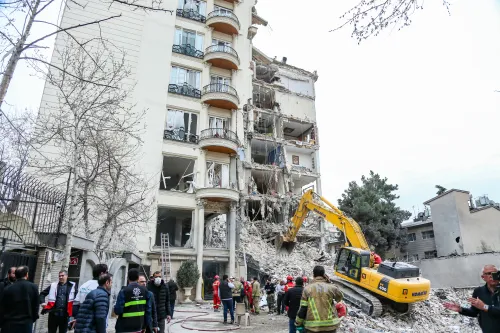
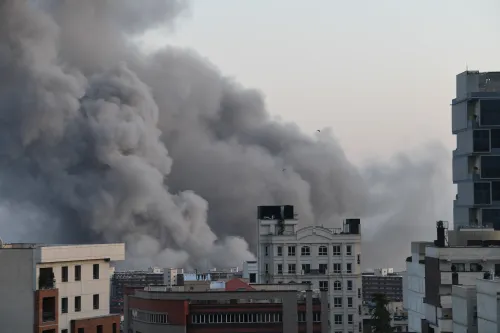
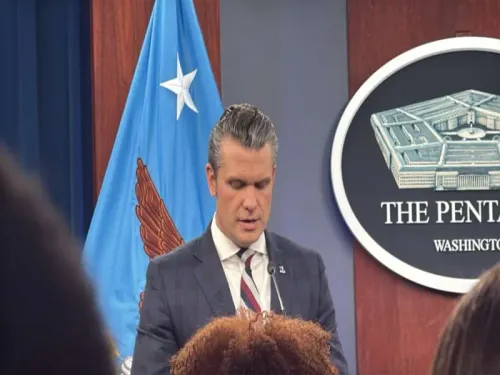
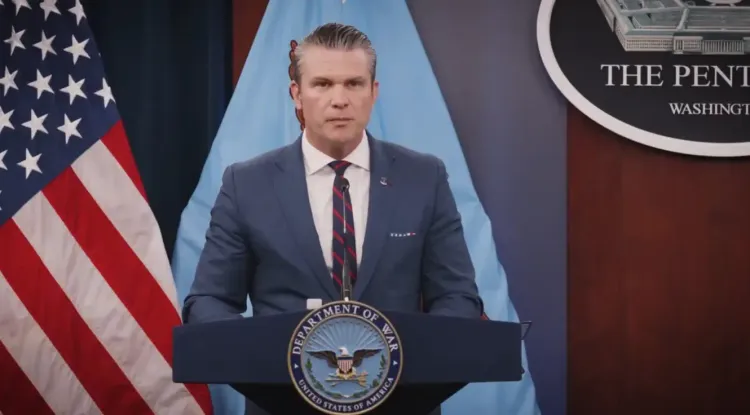
Washington, March 19 (NationPress) The United States has targeted over 7,000 locations within Iran and is ramping up its military operations. Defence Secretary Pete Hegseth claimed that Tehran's military strength has been notably diminished, even as the situation escalates.
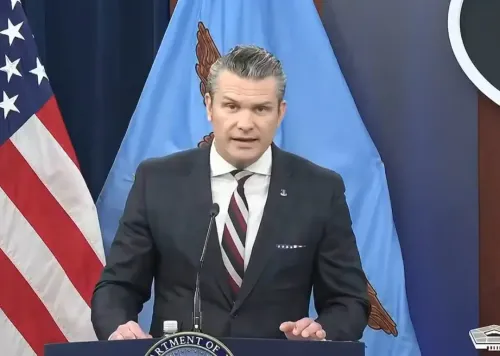
“We are achieving victory on our terms,” Hegseth stated during a Pentagon briefing, addressing worries about a prolonged conflict.
He emphasized that the mission is “laser-focused” and “decisive,” with objectives to dismantle Iran’s missile capabilities, defense infrastructure, and naval forces while thwarting its nuclear ambitions.
Hegseth noted that ballistic missile assaults on US personnel have decreased by “90 percent since the start of hostilities,” and similar trends were observed in drone strikes. “The Iranians will continue to fire, but their capacity has been severely limited,” he remarked.
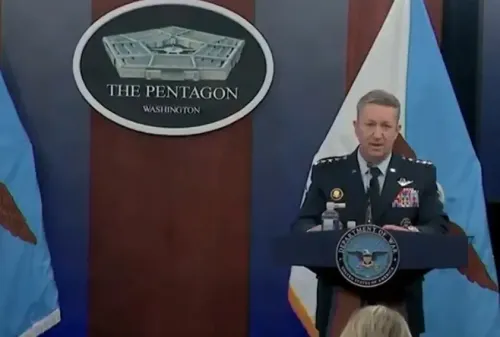
The Pentagon described a comprehensive military initiative throughout Iranian soil. Joint Chiefs Chairman General Dan Caine remarked that US forces are “on track” and penetrating deeper into Iranian territory, targeting underground installations.
“Recently, the US military deployed 5,000-pound penetrator munitions against subterranean storage sites,” Caine highlighted, adding that operations are extending “further east and deeper into Iranian airspace.”
The US has also focused on undermining Iran’s naval forces. Hegseth reported that over 120 vessels have been damaged or destroyed, asserting that Iran’s submarine fleet has been effectively neutralized and “its surface fleet is no longer a threat.”
Caine elaborated on the operational pace, stating that US forces are “unyielding in our pursuit of Iranian missile systems” and continue to “locate and eliminate mine storage facilities and naval ammunition stockpiles.”
The Pentagon has also broadened its use of airpower. A-10 aircraft and AH-64 Apache helicopters are now active over the southern area, including the Strait of Hormuz, targeting fast-attack vessels and drone positions. Heavy bombers such as B-1s, B-2s, and B-52s are executing long-range strike operations, supported by extensive aerial refueling.
Even with the escalation, US officials refrained from providing a timeline for the conclusion of the campaign. “Our strategy is progressing well,” Hegseth indicated, noting that the timing of any operational conclusion will be determined by President Trump.
The Defence Secretary characterized the conflict as a direct reaction to Iran's longstanding actions. “They have waged war against us, whether we acknowledge it or not, for 47 years,” he asserted, referencing assaults on US personnel and support for militant organizations across various regions.
According to the general, Iran still possesses some offensive capabilities. “They entered this conflict well-armed,” Caine pointed out, highlighting ongoing missile launches and the necessity for layered defense systems in the region.
Hegseth also confirmed robust support from regional allies. “The Gulf states have remarkably bolstered their contributions,” he noted, identifying countries such as the UAE, Qatar, Bahrain, Kuwait, and Saudi Arabia as essential partners alongside Israel.
The Pentagon is also countering Iran’s information campaigns amid domestic internet blackouts. Hegseth accused the Iranian regime of disseminating “fake AI-generated images” to manipulate public perception of the conflict.
Point of View
The current military operations in Iran represent a significant escalation in US foreign policy. The Pentagon's focus on dismantling Iranian military capabilities highlights a complex geopolitical landscape. It is crucial to monitor the unfolding events in order to understand their broader implications.
NationPress
22 Sept 2026
Frequently Asked Questions
What is the current status of US military operations in Iran?
The US has struck over 7,000 targets in Iran, with intensified operations aimed at degrading Tehran's military capabilities.
What are the objectives of the United States in this conflict?
The US aims to dismantle Iran's missile systems, defense industry, and naval power while preventing nuclear weapon acquisition.
How has the conflict impacted missile attacks on US forces?
Ballistic missile attacks on US forces have decreased by 90% since the conflict began.
What support is the US receiving from regional allies?
The Gulf states, including the UAE, Qatar, Bahrain, Kuwait, and Saudi Arabia, are providing substantial support alongside Israel.
Is there a timeline for concluding US military operations?
US officials have not provided a timeline for ending the campaign, stating that it will be determined by President Trump.