US Intensifies Military Operations Against Iran While Pursuing Negotiations

Synopsis
The United States is escalating military actions against Iran and engaging in negotiations, claiming that increased pressure is compelling Tehran toward a resolution. As operations continue, US officials assert that the situation is becoming critical.
Key Takeaways
The US is ramping up military strikes on Iran.
Ongoing negotiations are happening concurrently.
US firepower is increasing while Iran's capabilities are declining.
Strategic focus includes ensuring navigation through the Strait of Hormuz.
The recent trend shows a decrease in Iranian missile and drone assaults.
Washington, March 31 (NationPress) On Tuesday, the United States announced that it is ramping up military operations against Iran while simultaneously engaging in active negotiations, with officials asserting that the pressure on the battlefield is nudging Tehran toward an agreement.
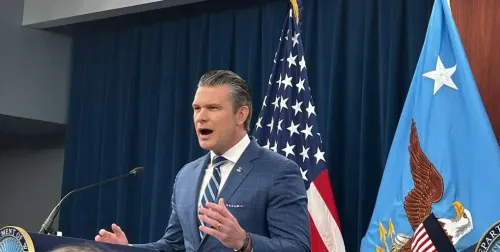
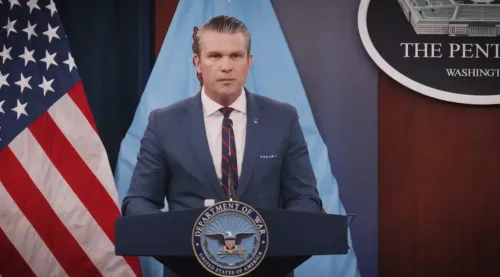
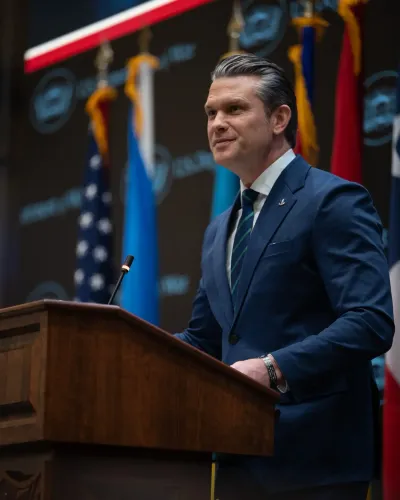
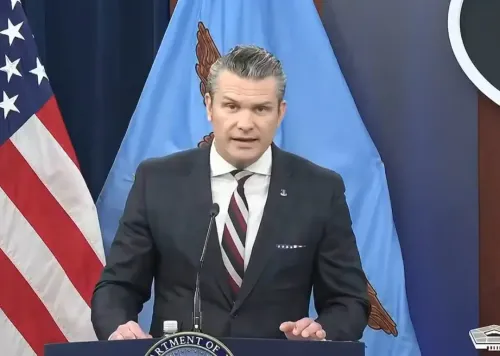
During a briefing at the Pentagon, Defence Secretary Pete Hegseth stated that discussions with Iran are "very real... ongoing... active, and... gaining momentum", even as US forces persist with operations under the codename "Operation Epic Fury".
"Our aim is to avoid excessive military action," remarked Hegseth. "However, we will negotiate with bombs if necessary."
According to officials, the current campaign has reached a critical juncture, with US military capabilities on the rise while Iran's capacities are diminishing.
"American strength is only escalating, while Iran’s is waning," Hegseth noted, adding that "the coming days will be crucial."
The Pentagon reported that US forces have targeted over 11,000 locations in the last month, concentrating on Iran’s missile systems, naval assets, and defense manufacturing bases.
Chairman of the Joint Chiefs, Gen. Dan Caine, stated that operations are being executed continuously across air, land, sea, space, and cyberspace, aiming at diminishing Iran’s ability to exert influence beyond its borders.
He further revealed that US forces conducted "200 dynamic strikes" in a single night, targeting mobile sites based on real-time intelligence.
Reports indicate a reduction in Iranian missile and drone assaults in recent days, with Hegseth commenting that the past 24 hours displayed the "lowest number" of attacks since the onset of the conflict.
US intelligence suggests that the ongoing campaign is impacting Iranian forces on the ground, leading to "widespread desertions, critical personnel shortages, and growing frustrations among senior leadership".
Hegseth also mentioned that US strikes have dismantled vital command bunkers, compelling Iranian leaders to function under increasingly restricted circumstances.
Strategically, Washington has expressed its commitment to keeping the Strait of Hormuz accessible, while calling on other nations to share the burden.
"This is a global waterway... the international community should take note," Hegseth emphasized, highlighting that the US has taken preliminary actions to ensure safe passage.
Officials have refrained from providing a timeline for the operation, explaining that they will not disclose specific goals or completion dates.
"We will never disclose exactly what our objectives are, as our aim is to accomplish them," Hegseth asserted.
He also indicated that no military options, including ground operations, are off the table, underscoring the necessity for unpredictability.
"You cannot win a war if you reveal your plans to your opponent," he stated.
President Donald Trump has consistently maintained that Iran must relinquish its nuclear intentions, with Hegseth reiterating that "Iran cannot possess a nuclear bomb... and they won’t."
Point of View
The ongoing military operations by the United States against Iran, alongside active negotiations, represent a complex geopolitical strategy. The emphasis on both military and diplomatic avenues reflects a nuanced approach aimed at addressing national security concerns while navigating international relations.
NationPress
7 Oct 2026
Frequently Asked Questions
What prompted the US to increase military strikes on Iran?
The US has intensified military strikes on Iran to apply pressure on Tehran, as officials believe it will lead to a negotiated agreement.
How many targets have US forces struck in the last month?
US forces have targeted over 11,000 locations in Iran over the past month.
What is 'Operation Epic Fury'?
'Operation Epic Fury' refers to the ongoing military operations conducted by US forces against Iranian targets.
What are the implications of the US military actions for the Strait of Hormuz?
The US has expressed its commitment to ensuring that the Strait of Hormuz remains open for international navigation.
What has been the recent trend in Iranian military actions?
There has been a decline in Iranian missile and drone attacks, with recent reports indicating the lowest activity since the conflict began.