US Rejects Calls from China and Russia to End Iran Conflict
Synopsis
The United States has firmly dismissed calls from China and Russia to cease military actions in Iran, emphasizing that the focus remains on Tehran's nuclear ambitions. This comes amid ongoing operations targeting Iran’s military capabilities.
Key Takeaways
U.S. dismisses calls from China and Russia to end hostilities in Iran.
Focus remains on Iran's nuclear ambitions and military capabilities.
Operation Epic Fury targets Iran's missile systems and military infrastructure.
Early battlefield successes but conflict is still in early stages.
Support from Middle Eastern nations is crucial in this operation.
Washington, March 4 (NationPress) – On Wednesday, the United States dismissed appeals from both China and Russia to halt hostilities in the ongoing conflict with Iran, stating that the focus remains strictly on Tehran’s nuclear ambitions and military capabilities.
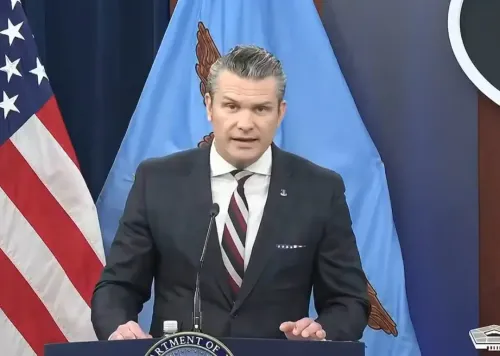
During a Pentagon press conference, Secretary of War Pete Hegseth emphasized that the U.S. is not in discussions with Beijing or Moscow regarding this issue, asserting that they are not pivotal to the current situation.
“I don’t have a message for them, and they’re not a factor here,” Hegseth stated in response to inquiries about the call for a ceasefire from Russia and China.
“Our concern is not with them. It’s about Iran's nuclear ambitions,” he asserted.
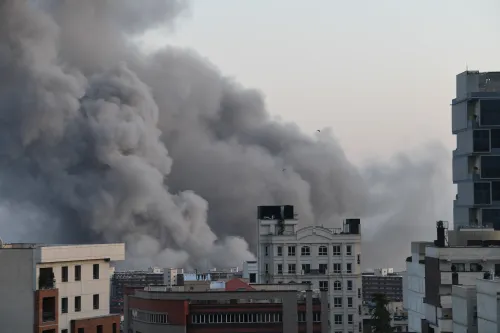
These comments came as the U.S. military entered the fourth day of operations under Operation Epic Fury, a comprehensive effort aimed at targeting Iran’s missile systems, naval assets, and military infrastructure.
Officials from the U.S. indicated that this campaign commenced after intelligence reports suggested Tehran was not engaging earnestly in negotiations concerning its nuclear program.
“The evidence we gathered since the 12-day conflict indicated that Iran had no genuine intentions of negotiating a nuclear deal that would prevent them from developing a nuclear bomb,” Hegseth remarked.
He indicated that Washington believes Iran continues to advance its nuclear weapons capabilities while maintaining a significant missile arsenal.
“They have thousands of missiles aimed at us,” he noted.
The Pentagon has stated that this military operation aims to neutralize Iran’s capacity to pose a threat to U.S. forces, regional allies, and international shipping routes.
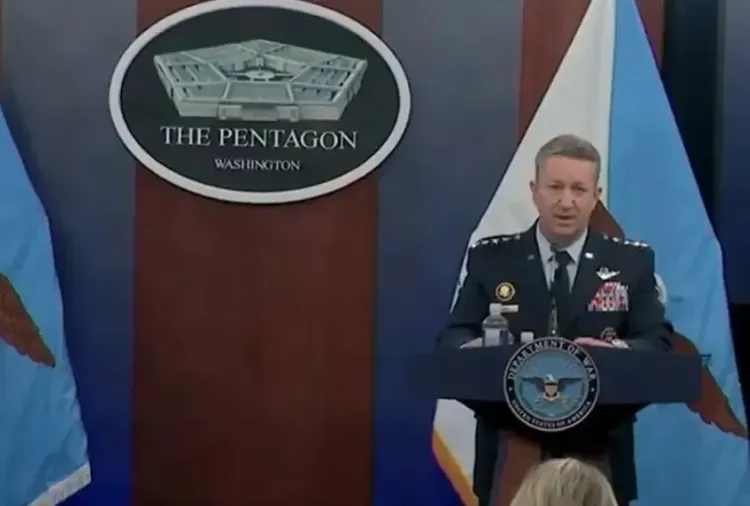
Chairman of the Joint Chiefs of Staff, Air Force General Dan Caine, noted that the operation has successfully targeted thousands of locations within Iran.
“So far, we’ve engaged over 2,000 targets,” Caine reported.
He added that the campaign has significantly curtailed Iranian missile launches.
“Iran's theatre ballistic missile launches have dropped by 86 percent since the conflict began,” he stated.
U.S. officials emphasize that the focus of the operation is to dismantle Iran’s capability to extend its influence beyond its borders.
“This operation was initiated with specific military objectives aimed at reducing Iran’s capacity to project power outside of its borders, both now and in the future,” Caine elaborated.
The Pentagon also acknowledged the support from several Middle Eastern nations in countering Iranian missile and drone threats, including Saudi Arabia, the United Arab Emirates, Qatar, Bahrain, and Jordan.
Despite the early successes on the battlefield, U.S. officials have cautioned that the conflict is still in its infancy.
“We’re just 100 hours in. It’s very early,” Caine remarked.
Tensions between Washington and Tehran have escalated sharply in recent months, with the U.S. accusing Iran of seeking nuclear weapons and facilitating attacks against American forces and allies in the region.
Point of View
It is essential to highlight the national interest in this conflict. The U.S. is prioritizing its security concerns regarding Iran's nuclear capabilities over international diplomatic appeals. This stance may have significant ramifications for global geopolitical dynamics.
NationPress
16 Sept 2026
Frequently Asked Questions
Why is the U.S. involved in the conflict with Iran?
The U.S. is focused on Iran's nuclear ambitions and military capabilities, which it views as threats to national and regional security.
What is Operation Epic Fury?
Operation Epic Fury is a large-scale U.S. military campaign aimed at targeting Iran’s missile systems and military infrastructure.
How has Iran responded to U.S. military actions?
Iran has been accused of continuing its pursuit of nuclear weapons and facilitating attacks against U.S. forces and allies in the region.
What countries are assisting the U.S. in this conflict?
Countries including Saudi Arabia, the United Arab Emirates, Qatar, Bahrain, and Jordan are providing support in countering Iranian threats.
What are the potential implications of this conflict?
The ongoing conflict may escalate tensions in the region and lead to further military engagements, impacting international relations and security.