Fort Hood shooter Hasan's firing squad execution won't be livestreamed: Trump
Synopsis
Trump reversed the Pentagon's own plan to livestream the Fort Hood execution — a rare case of the White House pulling back from a spectacle it had initially encouraged. With the firing squad date set for 3 December, Hasan's execution will be the first by the US military in over 65 years, and the first use of a firing squad since 1945.
Key Takeaways
Donald Trump announced on 15 October 2026 that Nidal Malik Hasan's execution will not be livestreamed, reversing a Pentagon plan.
Hasan is scheduled to be executed by firing squad at Fort Hood, Texas , on 3 December at 1 pm CST .
Immediate families of the 13 victims may attend the execution in person, according to Trump.
Trump approved the death sentence on 2 October ; Acting Army Secretary Adam Telle issued the execution order on 6 October .
The execution will be the first by the US military since 1961 and the first by firing squad since 1945 .
Trump alleged the Obama-era FBI missed pre-attack communications between Hasan and cleric Anwar al-Awlaki , calling it 'a key intelligence failure.'
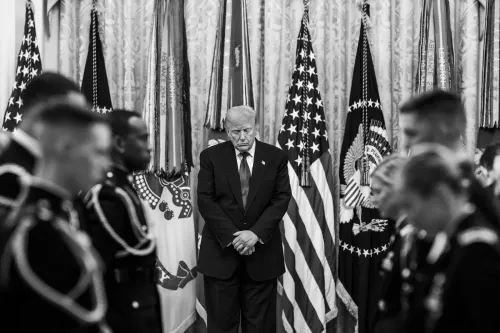
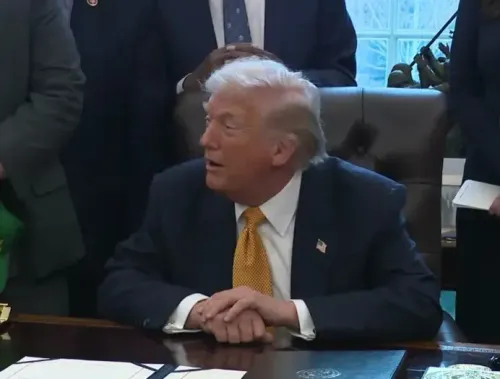
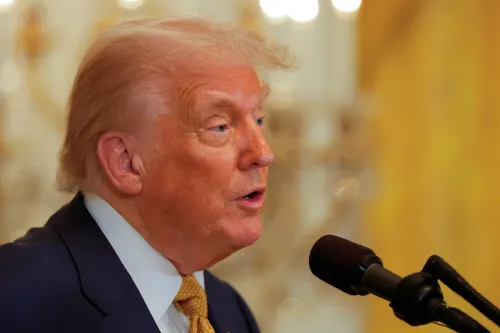
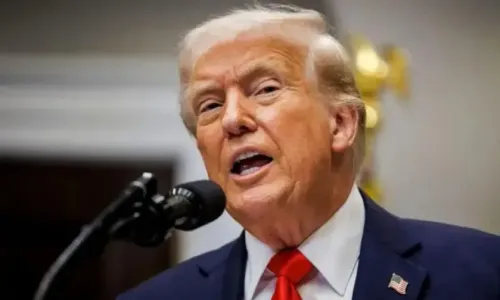
US President Donald Trump on Thursday, 15 October 2026, announced that Nidal Malik Hasan — the former Army psychiatrist convicted of killing 13 people at Fort Hood, Texas, in 2009 — 'will die, as scheduled, by firing squad, but this event will not be streamed.' The decision reverses an earlier Pentagon plan to livestream what would be the first US military execution in more than 65 years.
Trump's Reasoning on Truth Social
In a post on Truth Social, Trump said he had seriously considered broadcasting the execution as a deterrent to future acts of terrorism. 'I think streaming the execution for all to see might have been a strong deterrent for the World to witness how America deals with Terrorists and SCUM like Hasan,' he wrote, 'but many very good and well-meaning people would rather not watch him die, through streaming, or through any other visual device.'
Trump added that the immediate families of the victims would be permitted to attend in person. 'The execution may be viewed in person by the immediate families of the victims, if they so choose. They deserve to witness JUSTICE!' he wrote.
What Led to This Point
Trump approved Hasan's death sentence on 2 October after a full appeals process upheld the conviction. On 6 October, Acting Army Secretary Adam Telle formally ordered the execution by firing squad to take place at Fort Hood on 3 December at 1 pm CST. The US Supreme Court had declined to review Hasan's court-martial conviction on 31 March 2025.
A military jury found Hasan guilty of all 42 counts on 23 August 2013 and sentenced him to death five days later. He is currently held on military death row at Fort Leavenworth, Kansas.
Bipartisan Criticism of the Livestream Plan
The short-lived plan to broadcast the execution drew criticism from across the political spectrum. Defence Secretary Pete Hegseth had said last week that 'Hasan is going to get a firing squad of soldiers, and we'll make sure that people can watch it,' with the Pentagon subsequently confirming the livestream. Critics — including some supporters of the death sentence itself — warned that a public broadcast could feed Hasan's stated desire for martyrdom.
Vice President JD Vance had cast doubt on the plan the day after Hegseth's announcement, saying, 'I don't know that's going to happen.' House Speaker Mike Johnson told reporters that a video recording could be weaponised as a terrorist recruiting tool, adding, 'I wouldn't be watching it if it was aired.'
Trump's Allegations Against the Obama-Era FBI
In the same post, Trump alleged a pre-attack intelligence failure, claiming the FBI had 'intercepted electronic communications between Hasan and the radical Yemeni-American cleric, Anwar al-Awlaki,' but that 'investigators concluded that Hasan's emails were not a threat.' Trump called this assessment 'a key intelligence failure' and attributed responsibility to the Obama administration's FBI — allegations that carry political weight but have not been independently verified in the post.
Historical Context and What Comes Next
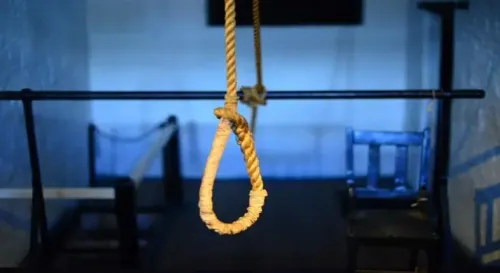
The last US military execution took place in 1961, when Army Pvt John Bennett was hanged. The last use of a firing squad by the US military dates to 1945, when Pvt Eddie Slovik was executed for desertion during World War II. Hasan's scheduled execution on 3 December would thus mark a historic milestone in the US military justice system.
Under Army regulations, the execution date must fall between 60 and 150 days after presidential approval — a window that places 3 December within the required timeframe. The President holds sole authority to approve a death sentence for a military prisoner. With the livestream question now settled, attention shifts to whether legal challenges — if any — emerge in the weeks before the scheduled date.
Point of View
The White House was broadcasting internal discord as much as a deterrence message. The decision to permit only victims' families to attend is the politically safer middle ground, but it does nothing to resolve the deeper tension: whether a military execution, the first in over six decades, is being managed as a legal process or a political statement. Trump's renewed attack on the Obama-era FBI — timed to the execution announcement — conflates accountability with score-settling, and the allegation deserves scrutiny against the public record, not just acceptance as framing.
NationPress
15 Oct 2026
Frequently Asked Questions
Why won't Nidal Hasan's execution be livestreamed?
President Trump reversed the Pentagon's livestream plan, citing concern that many 'good and well-meaning people would rather not watch him die.' Critics across party lines had also warned that broadcasting the execution could serve as a martyrdom platform for Hasan and a recruitment tool for extremists.
When is Nidal Hasan scheduled to be executed?
Hasan is scheduled to be executed by firing squad on 3 December at 1 pm CST at Fort Hood, Texas. The date was set by Acting Army Secretary Adam Telle on 6 October, following Trump's approval of the death sentence on 2 October.
What did Nidal Hasan do at Fort Hood in 2009?
On 5 November 2009, Hasan opened fire at a soldier readiness centre at Fort Hood, Texas, killing 13 people — including a pregnant soldier and her unborn child — and seriously injuring 32 others. He was a US Army Major and psychiatrist at the time of the attack.
Why is this execution historically significant?
It will be the first US military execution since 1961, when Army Pvt John Bennett was hanged, and the first by firing squad since 1945, when Pvt Eddie Slovik was executed for wartime desertion. The gap of more than 65 years makes it a landmark moment in US military justice.
Who can attend Hasan's execution?
Trump stated that the immediate families of the victims may attend in person if they choose. The general public and media will not be able to watch via any livestream or broadcast.