US firing squad execution livestream plan draws global outrage

Synopsis
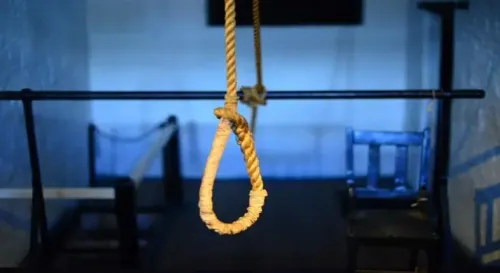
The US Pentagon’s plan to livestream the firing squad execution of Fort Hood shooter Nidal Malik Hasan would mark the first public execution in America in nearly a century — a move condemned as ‘abhorrent’ by the UN and ‘beyond disgusting’ by senior Republicans in Trump’s own party. It places the US in the same category as Iran, North Korea, and the Islamic State on a practice most of the world has abandoned.
Key Takeaways
Pete Hegseth announced that the execution of Nidal Malik Hasan would be publicly livestreamed via a firing squad.
Hasan was convicted by court-martial for killing 13 people and wounding 32 others at a US military base in 2009 .
The execution would be the first military execution in the US since 1961 and the first public execution since World War II .
UN spokesperson Stephane Dujarric called the planned public display “abhorrent”; Republican Senator Thom Tillis described it as “beyond disgusting.” 23 of 50 US states have abolished the death penalty; 47 executions took place across 11 states last year, according to the Death Penalty Information Center .
Tennessee is separately facing scrutiny after a reportedly failed execution attempt this week left Linda Pike hospitalised.
US Secretary of Defense Pete Hegseth announced on Thursday, 9 October 2026 that the execution of convicted terrorist Nidal Malik Hasan would be livestreamed to the public, marking what would be the first public execution in the United States in roughly a century. The announcement has drawn swift and sharp condemnation from international bodies, opposition voices, and notably from within President Donald Trump's own Republican Party.
What Was Announced
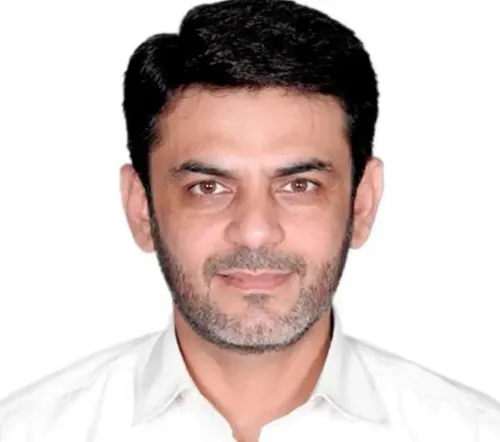
Hegseth confirmed the Pentagon's plan in explicit terms: “We’ll make sure that people are able to watch it, that it’s public.” Hasan, a former US Army major and psychiatrist, was convicted by court-martial for the terrorist killing of 13 people at a military base in 2009. The attack also wounded 32 others. Hasan did not contest his conviction, openly acknowledging that he carried out the shooting as a “mujahideen.”
If carried out, the execution would be the first military execution in the US since 1961, and the first public execution since World War II. Hasan had also reportedly sent communication to the late Abu Bakr al-Baghdadi, the self-proclaimed “Caliph” of the Islamic State.
International and Domestic Condemnation
United Nations Secretary-General Antonio Guterres’ spokesperson Stephane Dujarric publicly criticised the plan on Friday, calling it “abhorrent.” “A government executing someone in public or in front of live cameras, frankly, is abhorrent,” Dujarric said.
Criticism from within the Republican Party was equally pointed. Republican Senator Thom Tillis called the plan “beyond disgusting,” stating that “public executions are what oppressive dictatorships like Iran and Afghanistan do.” Austin Scott, a senior Republican on the House Armed Services Committee, said: “Live-streaming executions is what jihadists do,” adding, “America is better than that” — while also affirming his support for the death penalty in principle.
Historical and Global Context
The planned livestream would restore a practice that the US last observed publicly around World War II. Today, public executions are largely associated with governments such as those of Afghanistan, Iran, and North Korea, as well as the now-routed Islamic State when it controlled territory. Even Saudi Arabia, which historically conducted public beheadings, has reportedly discontinued the open practice.
This comes amid a broader reckoning in the US over capital punishment methods. Tennessee this week reportedly experienced a failed execution attempt involving Linda Pike, a woman who survived after two lethal injections did not result in death. Pike, sentenced in 1995 for a murder committed when she was 18 years old, had been on death row for more than 30 years. She is currently hospitalised. According to the Death Penalty Information Center, 47 people were executed across 11 US states last year.
Death Penalty Landscape in the US
Capital punishment in the US falls largely under state jurisdiction, with 23 of 50 states having abolished it. Permitted execution methods vary by state and include lethal injection, firing squad, and the electric chair. Military and federal cases operate under separate frameworks, which is why Hasan’s case falls under military jurisdiction.
What Happens Next
No confirmed execution date for Hasan has been publicly announced beyond the Pentagon’s Thursday statement. Legal and human rights advocates are expected to challenge the public execution format. The episode is likely to reignite Congressional debate over military execution procedures and the broader limits of federal capital punishment.
Point of View
The reputational cost to the US internationally is real and immediate. The UN’s ‘abhorrent’ is not diplomatic hyperbole; it places Washington alongside Kabul and Pyongyang on a human rights metric. What makes this more striking is that it arrives in the same week that Tennessee’s death row system visibly malfunctioned — raising urgent questions about whether the US execution apparatus is equipped for any kind of scrutiny, let alone a global livestream.
NationPress
10 Oct 2026
Frequently Asked Questions
Who is Nidal Malik Hasan and why is he facing execution?
Nidal Malik Hasan is a former US Army major and psychiatrist convicted by court-martial for the terrorist killing of 13 people and the wounding of 32 others at a military base in 2009 . He did not contest the charges, openly stating he carried out the attack as a ‘mujahideen.’
Why is the planned execution considered historic?
If carried out, it would be the first military execution in the US since 1961 and the first public execution in the country since World War II . The decision to livestream the event makes it an unprecedented spectacle in the modern era.
Who has criticised the public execution plan?
UN spokesperson Stephane Dujarric called it “abhorrent” on Friday. Within the Republican Party , Senator Thom Tillis described the plan as “beyond disgusting,” and House Armed Services Committee member Austin Scott said live-streaming executions is “what jihadists do.”
How does the US compare globally on public executions?
Public executions are today largely practised only by governments such as those of Afghanistan , Iran , and North Korea , and were previously used by the Islamic State . Even Saudi Arabia has reportedly discontinued the open practice of beheadings.
What is the current state of the death penalty in the United States?
Capital punishment is governed primarily by state law in the US, with 23 of 50 states having abolished it. According to the Death Penalty Information Center , 47 executions were carried out across 11 states last year. Military and federal cases operate under separate rules.