Trump Calls Ceasefire Breach 'Foolish Violation' of US-Brokered Deal
Synopsis
The White House quoted President Donald J. Trump on June 26, 2026, calling a breach of a US-facilitated ceasefire 'obviously a foolish violation.' The blunt public rebuke signals Washington's anger and puts pressure on the offending party, though the agreement's specific parties remain unnamed in the post.
Key Takeaways
Trump publicly condemned a breach of a ceasefire agreement the United States brokered, calling it 'a foolish violation.' The statement was posted by The White House on X on Friday, June 26, 2026 .
Trump's phrasing — 'our Ceasefire Agreement' — frames the US as a principal guarantor, not merely a mediator.
The offending party and the specific agreement were not named in the White House's public post.
The unusually blunt, public nature of the rebuke signals the administration is applying open pressure rather than pursuing quiet diplomacy.
Diplomatic observers are watching for follow-on US actions, including envoy deployments or formal demarches to the parties involved.
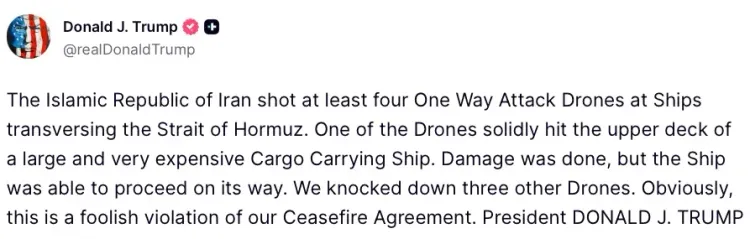
The White House, the official communications account of the Executive Office of the President of the United States, posted a sharp rebuke on Friday, June 26, 2026, quoting President Donald J. Trump condemning what he described as a breach of an active ceasefire agreement facilitated by Washington. The statement, brief and unambiguous, read: 'Obviously, this is a foolish violation of our Ceasefire Agreement.'
Context
The post attributes direct ownership of the agreement to the United States — 'our Ceasefire Agreement' — signalling that Washington considers itself a principal guarantor of the truce, not merely a facilitator. The phrasing 'obviously' and 'foolish' are unusually blunt for a formal presidential communication, indicating a high level of frustration from the Trump administration. Such public rebukes are typically reserved for situations where a breach is both clear-cut and seen as a direct affront to American diplomatic credibility.
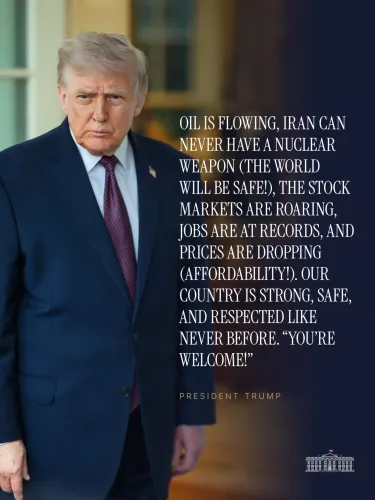
The statement was accompanied by an image, though no additional parties, dates, or geographic locations were named in the post itself. The identity of the party alleged to have violated the agreement has not been specified in the White House's public communication.
Policy Backdrop
The Trump administration has a documented history of brokering and championing ceasefire and normalization agreements, most notably the Abraham Accords of 2020, which established frameworks between Israel and several Arab states and included de-escalation commitments. Washington's diplomatic posture under Trump has consistently framed such agreements as personal and institutional achievements, making any perceived violation a politically sensitive matter.
US presidents across administrations have historically issued public statements when parties breach Washington-mediated truces. These statements serve a dual purpose: signalling continued American diplomatic investment and warning the offending party of potential consequences. The public nature of this rebuke, posted directly to X, suggests the administration is choosing transparency and pressure over quiet back-channel diplomacy, at least at this stage.
Stakeholders and Impact
The parties to the ceasefire agreement — whose identities have not been publicly confirmed by the White House in this post — are the most immediately affected stakeholders. Regional governments in areas where the United States has active diplomatic engagements will be closely watching for follow-on signals from Washington, including whether the administration convenes emergency diplomatic meetings or issues formal demarches.
For US negotiators and allied governments that co-signed or endorsed the agreement, the breach creates pressure to respond in a coordinated manner. A failure to act decisively risks undermining the credibility of future American-mediated agreements, a concern that weighs heavily on any administration's foreign policy legacy.
What's Next
Observers will be watching for official reactions from the capitals of the parties named in the agreement once those identities are publicly confirmed. Scheduled follow-on diplomatic meetings, congressional briefings, or the deployment of US envoys to the region would signal the seriousness with which Washington intends to respond.
The stark, public framing of the statement leaves little diplomatic ambiguity — the Trump administration is placing the burden of explanation and remedy squarely on the party it holds responsible. Whether this leads to renewed negotiations, punitive measures, or a formal withdrawal of US guarantees will define the next phase of this diplomatic episode.
Point of View
Not an accidental one. By using the phrase 'our Ceasefire Agreement,' the administration is staking its credibility on the deal's survival, raising the diplomatic cost of inaction. This fits a broader pattern in Trump's foreign policy: using public pressure as a first-resort tool rather than a last one. The absence of named parties, however, gives Washington flexibility to calibrate its response without being locked into a specific punitive course.
NationPress
26 Jun 2026
Frequently Asked Questions
What ceasefire agreement did Trump say was violated?
The White House did not name the specific ceasefire agreement or the parties involved in its June 26, 2026 post. Trump referred to it as 'our Ceasefire Agreement,' indicating the US brokered or guarantees the deal.
Who violated the ceasefire according to Trump?
The White House post did not identify the party alleged to have violated the agreement. The statement condemned the breach without naming a specific country or group.
What did Trump say about the ceasefire breach?
President Trump said, 'Obviously, this is a foolish violation of our Ceasefire Agreement,' in a statement posted by the White House on X on June 26, 2026.
What happens when a US-brokered ceasefire is violated?
Historically, the US has responded with public rebukes, emergency diplomatic meetings, envoy deployments, or formal demarches to the offending party. The specific response in this case has not yet been announced.
Why is Trump's ceasefire statement significant for India?
Any breach of a US-mediated ceasefire in a volatile region has implications for global stability, energy markets, and Indian diplomatic interests, particularly given India's active engagement with multiple parties in US-mediated conflict zones.