Trump Signs Executive Order Creating US Space Academy
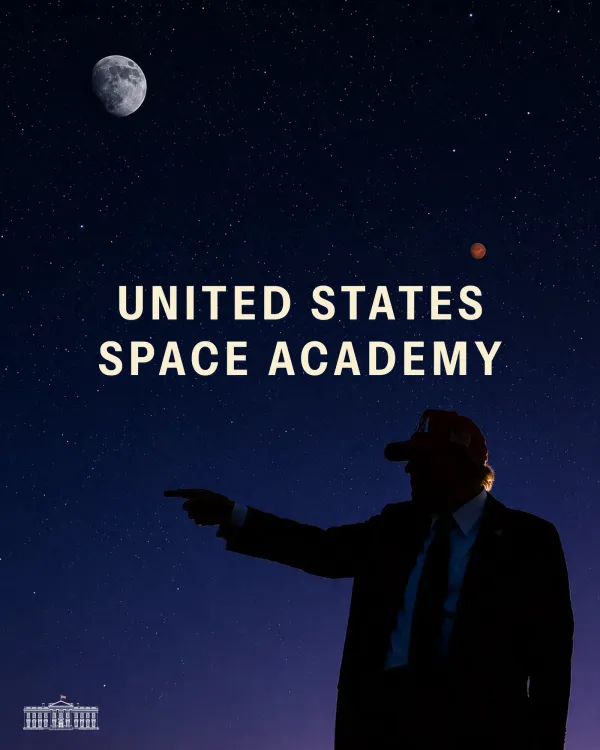
Synopsis
President Trump signed an executive order on August 28, 2026, creating the United States Space Academy — a dedicated institution to commission officers for the U.S. Space Force, the military branch stood up in 2019. Congressional funding and legislation will determine how and when the academy is fully built out.
Key Takeaways
President Trump signed an executive order on August 28, 2026 establishing the United States Space Academy .
The academy is intended to train and commission officers for the U.S.
Space Force , created in 2019 as the sixth branch of the American military.
The Space Force currently draws officers from existing service academies; a dedicated academy would close that institutional gap.
Congressional appropriations and authorising legislation will be required to fully fund and stand up the new institution.
The move reflects a broader U.S. policy of treating space as a distinct and critical military operational domain.
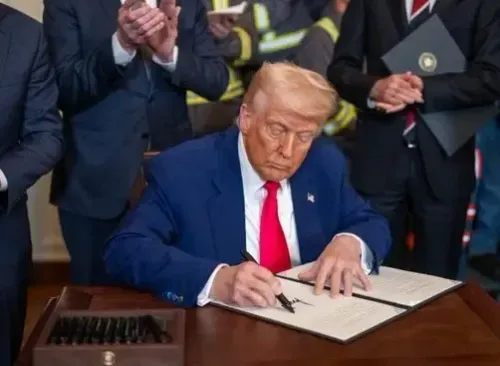
A new chapter in American space ambition opened on Friday, August 28, 2026, when President Donald Trump signed an executive order establishing the United States Space Academy — a dedicated institution to train the next generation of space professionals for the nation's military and strategic space enterprise.
What the Space Academy order means
The White House announced the signing on Saturday, August 29, describing it as 'pioneering the next frontier.' The executive order creates the United States Space Academy, which, if modelled on existing service academies like West Point or the Naval Academy in Annapolis, would provide a four-year commissioning pipeline for officers destined for the U.S. Space Force — the sixth branch of the American armed services, stood up in 2019 under the FY2020 National Defense Authorization Act.
Space Force's short but fast-moving history
The U.S. Space Force was itself a product of executive momentum: Trump directed its creation in 2018 and Congress codified it the following year. The service was born without a dedicated academy, drawing officers instead from existing service academies and ROTC programmes. A standalone Space Academy would close that institutional gap, giving the youngest branch of the military its own commissioning school — a symbolic and structural coming-of-age.
Successive administrations have treated space as a distinct operational domain, not merely a scientific frontier. The logic is straightforward: satellites underpin GPS navigation, missile-warning systems, and battlefield communications. Protecting and contesting that infrastructure now demands a dedicated officer corps trained from the ground up in space operations.
What Congress will decide next
An executive order can direct the creation of an academy and set its mission, but standing up a fully funded institution alongside West Point, Annapolis, Colorado Springs, and the other service academies will require Congressional appropriations and likely authorising legislation. Lawmakers on the Senate and House Armed Services Committees will scrutinise the budget request, the proposed location, and the academy's curriculum — debates that could shape the institution's final form for decades.
For India and other space-active nations watching closely, the move signals that Washington intends to treat space-domain expertise as a core military competency — one worth investing in at the foundational, educational level.
The frontier has a new school. Now comes the hard work of building it.
Point of View
And now uses the same lever to give it a commissioning school. The move raises the strategic stakes for rival space powers, signalling that Washington is investing in space-domain expertise at the foundational level, not just in hardware. For Congress, the real test is whether it will fund a new service academy at a time of fiscal pressure. For India, which has its own Defence Space Agency, the precedent of a dedicated space officer pipeline is one New Delhi's strategic planners will watch carefully.
NationPress
14 Oct 2026
Frequently Asked Questions
What is the United States Space Academy?
The United States Space Academy is a new institution ordered by President Trump on August 28, 2026, to train and commission officers for the U.S. Space Force. It is expected to function similarly to existing service academies like West Point.
When did Trump sign the Space Academy executive order?
President Trump signed the executive order establishing the United States Space Academy on Friday, August 28, 2026 .
What is the U.S. Space Force?
The U.S. Space Force is the sixth branch of the American armed services, established by Congress in the FY2020 National Defense Authorization Act after President Trump directed its creation in 2018. It is responsible for organising and advancing U.S. military space capabilities.
Does the executive order fully create the Space Academy?
The executive order directs the creation of the academy, but fully standing it up will require Congressional appropriations and likely additional legislation to fund facilities, faculty, and operations.
Why does the Space Force need its own academy?
The Space Force currently commissions officers through existing service academies and ROTC programmes. A dedicated academy would provide a specialised educational pipeline focused entirely on space operations, mirroring how other military branches train their officers.