Trump orders US Space Academy to train Moon and Mars generation
Synopsis
Trump's Space Academy order is more than a symbolic gesture — it signals an institutional bet on space as a permanent domain of national power. By anchoring the academy under NASA rather than the Pentagon, and explicitly targeting commercial operators alongside military personnel, the administration is framing space readiness as a whole-of-nation mission, not just a defence priority.
Key Takeaways
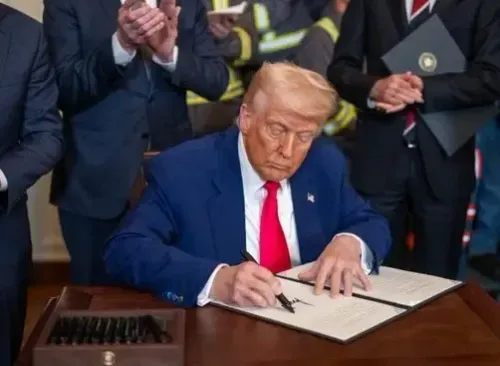
President Trump signed an Executive Order on 29 August to begin creating the US Space Academy , a proposed NASA-led federal institution.
A Presidential Commission chaired by NASA Administrator Jared Isaacman has 120 days to recommend governance, curriculum, and a permanent location.
The academy would serve military, civil, and commercial space needs — distinct from existing service academies.
Artemis II crew members Reid Wiseman, Victor Glover, Christina Koch , and Jeremy Hansen received the Congressional Space Medal of Honor , the first such awards since 2023 .
The crew travelled 252,756 miles from Earth — farther than any humans before them — during their April 2025 lunar flyby mission.
NASA astronaut Anil Menon , son of Indian and Ukrainian immigrants, was among those praised by Trump during the ceremony.
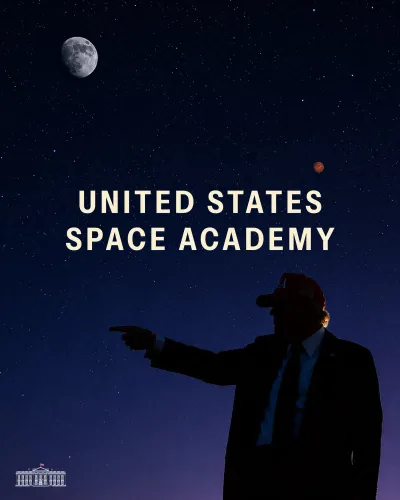
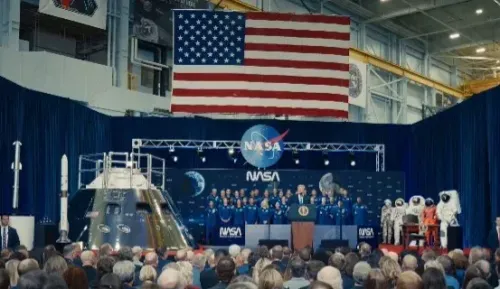
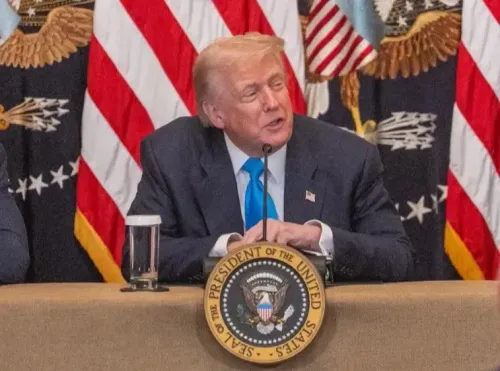
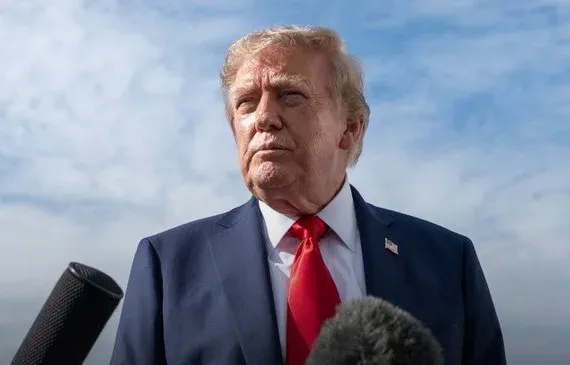
President Donald Trump on 29 August signed an Executive Order directing the creation of the United States Space Academy, a proposed NASA-led federal institution designed to educate and train a new generation of space professionals for missions to the Moon, Moon Base, and Mars. The announcement was made during a ceremony at NASA's Johnson Space Center in Houston, Texas.
What the Executive Order Creates
The order establishes a Presidential Commission on the United States Space Academy, which will have 120 days to recommend a governance structure, curriculum, admission requirements, graduate service obligations, and a permanent location. The commission will also address pilot programmes, institutional partnerships, and any required congressional legislation.
NASA Administrator Jared Isaacman will chair the commission, with NASA Deputy Administrator Matt Anderson serving as its executive director. The proposed academy is envisaged as distinct from existing military service academies — it would serve military, civil, and commercial space needs under NASA's leadership.
Trump's Vision for the Academy
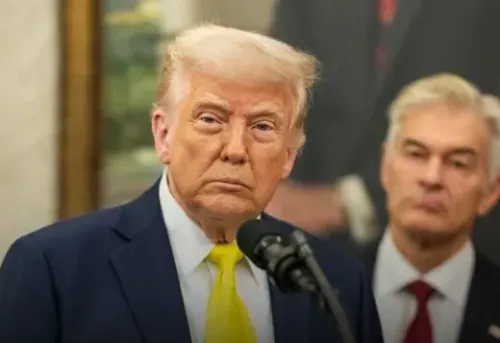
Speaking at the Houston ceremony, Trump drew a direct comparison to America's most selective institutions. 'Whether it's West Point, Annapolis, the Coast Guard Academy, if you look at the Air Force Academy, we're going to have an academy for what you people do,' he said during a call with astronauts aboard the International Space Station. 'I said, it has to be at the same level. Those are among the hardest schools to get into in the whole country. I would say almost at the top, and that's what we want,' Trump added.
Trump framed the institution as a direct response to the rapid expansion of both the US Space Force and the commercial space sector. 'It's clear we will need to educate and train an entire generation of skilled service members, engineers, and civil operators,' he said.
Artemis II Crew Honoured
The signing ceremony coincided with Trump presenting the Congressional Space Medal of Honor — the first such awards since 2023 — to the four members of the Artemis II crew: NASA astronauts Reid Wiseman, Victor Glover, and Christina Koch, along with Canadian Space Agency astronaut Jeremy Hansen. Their mission, which launched on 1 April and splashed down on 10 April after a lunar flyby, saw the crew travel 252,756 miles from Earth — farther than any humans before them — covering 695,081 miles in total, according to NASA.
Anil Menon and the ISS Connection
Trump also singled out NASA astronaut Anil Menon, the son of Indian and Ukrainian immigrants currently serving aboard the International Space Station as a colonel in the US Space Force, describing him and his fellow crew members as 'great Americans, great patriots, brave people.'
Menon, who had recently completed a spacewalk, welcomed the Space Academy plan. 'As a colonel in the Space Force, I am very proud to serve in the largest domain imaginable,' he said. He expressed excitement that the United States would 'pave the way to our next journey to the Moon, Moon Base and Mars.' Trump invited the ISS crew to visit the Oval Office after their return to Earth.
What Comes Next
Establishing a sixth permanent federal service academy — the United States currently operates five — would require decisions on funding, degree programmes, and, where necessary, acts of Congress. The commission's 120-day window means initial recommendations are expected by late 2025. Notably, Trump first established the US Space Force in December 2019 as the sixth branch of the armed services; the Space Academy would extend that legacy into civilian and commercial domains. Whether Congress moves swiftly on enabling legislation will be the critical variable in translating the Executive Order into a functioning institution.
Point of View
Sustained funding, and a curriculum that can serve three distinct constituencies — military, civil, and commercial — whose training needs diverge sharply. Trump's framing of the academy as equivalent to West Point sets a high bar that a 120-day commission cannot deliver alone. The real test will come when Capitol Hill is asked to legislate and appropriate; space commands bipartisan enthusiasm, but permanent institutions carry permanent price tags. Placing NASA rather than the Pentagon in the lead is the genuinely novel structural choice here, and one that will generate friction as the Space Force's own institutional interests assert themselves.
NationPress
13 Oct 2026
Frequently Asked Questions
What is the US Space Academy announced by President Trump?
The US Space Academy is a proposed NASA-led federal institution ordered by President Trump on 29 August to educate and train space professionals — including military personnel, civil servants, and commercial operators — for missions to the Moon and Mars. A Presidential Commission has 120 days to design its structure, curriculum, and location.
Who will lead the Presidential Commission on the Space Academy?
NASA Administrator Jared Isaacman will chair the commission, with NASA Deputy Administrator Matt Anderson serving as its executive director. The panel must submit recommendations on governance, admissions, degree programmes, graduate service obligations, and a permanent site within 120 days.
How does the Space Academy differ from existing US service academies?
Unlike West Point or the US Naval Academy, which are military institutions under the Department of Defence, the proposed Space Academy would be NASA-led and designed to serve military, civil, and commercial space needs. Establishing it as a permanent institution would require congressional action on funding and authorisation.
Who were the Artemis II crew members honoured at the ceremony?
NASA astronauts Reid Wiseman, Victor Glover, and Christina Koch, along with Canadian Space Agency astronaut Jeremy Hansen, received the Congressional Space Medal of Honor — the first such awards since 2023. Their Artemis II mission in April 2025 took them 252,756 miles from Earth, farther than any humans before them.
Who is Anil Menon and why was he mentioned by Trump?
Anil Menon is a NASA astronaut and US Space Force colonel of Indian and Ukrainian descent currently aboard the International Space Station. Trump praised him as a 'great American' and 'brave' patriot during the Houston ceremony; Menon welcomed the Space Academy plan and expressed enthusiasm for future Moon and Mars missions.