NASA, US Energy Dept sign nuclear space pact, Moon reactor planned for 2028
Synopsis
NASA and the US Energy Department have formalised a sweeping nuclear space partnership, with a reactor launching to deep space in 2028 and a Moon-surface fission power system targeted by 2030. This is the most concrete step yet in America's bet that nuclear power — not solar — is the key to sustained human presence on the Moon and, eventually, Mars.
Key Takeaways
NASA and the US Department of Energy signed the nuclear space MOU in Washington , effective 1 November .
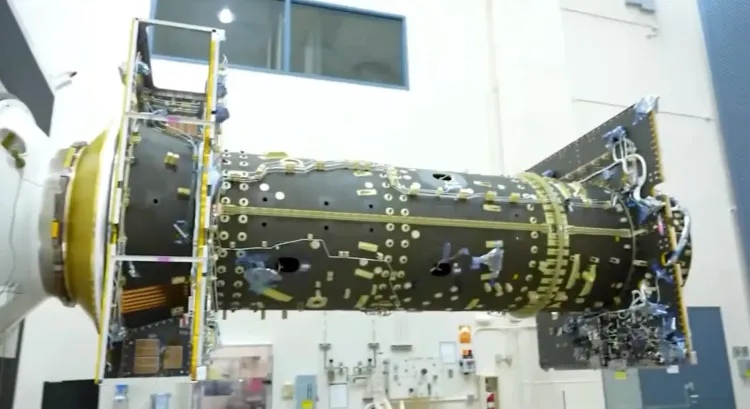
Space Reactor-1 Freedom is scheduled for launch in 2028 to demonstrate operational nuclear propulsion in deep space.
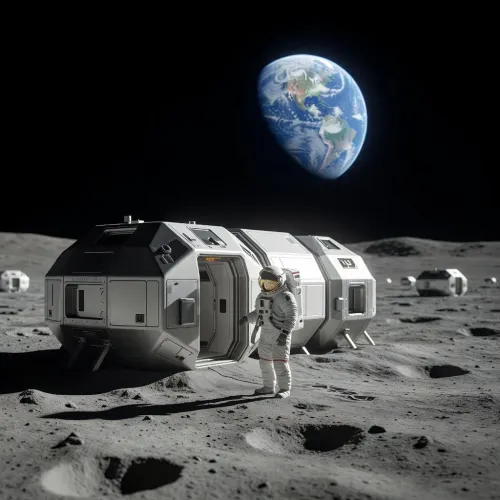
Lunar Reactor-1 , a fission surface power system, is designed to power a future American Moon base .
US President Trump signed an executive order in December 2025 mandating a launch-ready lunar reactor by 2030 .
The Dragonfly mission to Titan and support for ESA's Rosalind Franklin Mars rover are also part of the nuclear power collaboration.
The agencies say the programme will build an American industrial base for space nuclear technologies, with future Mars missions also in view.
NASA and the US Department of Energy on 9 October 2026 signed a memorandum of understanding to accelerate the development of nuclear-powered spacecraft and lunar infrastructure, with a space reactor mission slated for 2028 and a fission-based power system earmarked for a future American base on the Moon. The agreement, formalised in Washington, marks a significant shift in how the United States plans to sustain deep-space exploration.
What the Agreement Covers
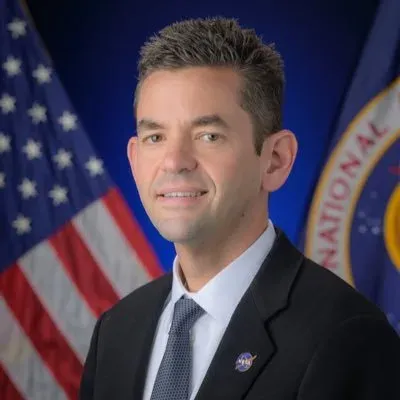
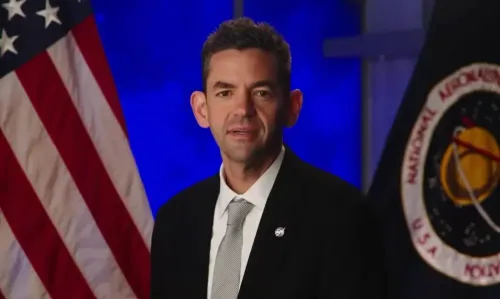
The memorandum, titled 'Accelerating American Leadership in Space Nuclear Power and Propulsion', was signed by NASA Administrator Jared Isaacman and Energy Secretary Chris Wright at the Golden Age Summit at the Donald J. Trump Institute of Peace. It takes effect on 1 November and establishes a framework spanning nuclear fuel development, advanced research, testing, launch integration, and operations. Both agencies said safety would remain central to the programme.
The 2028 Reactor Mission and Lunar Plans
Under the agreement, NASA plans to launch Space Reactor-1 Freedom in 2028, a mission designed to move nuclear-powered space technology from laboratory development into operational use in deep space. That mission is expected to pave the way for Lunar Reactor-1, a fission-based surface power system intended to supply electricity to a future Moon base.
Unlike solar arrays, a nuclear reactor can operate through prolonged periods of lunar darkness and function in permanently shadowed craters — regions where solar power is impractical. NASA said nuclear energy would be essential to power habitats, communications systems, scientific instruments, rovers, and other infrastructure needed for sustained human activity on the lunar surface.
Policy Backing and Strategic Context
The agreement builds on an executive order signed by US President Donald Trump in December 2025, which directed NASA to have a launch-ready lunar surface reactor by 2030. 'We are entering the Nuclear NASA-era, which represents a major transformation for space exploration,' Isaacman said at the signing. 'Nuclear power will allow us to go farther, operate longer, and field more capable spacecraft and instruments than ever before.'
Energy Secretary Wright added: 'Thanks to President Trump, America's nuclear renaissance is reaching a new frontier. The Energy Department is proud to partner with NASA as we help American space missions reach uncharted territory.'
Notably, both agencies said the reactor programmes would also help establish an American industrial base capable of developing and supplying nuclear technologies for space, a strategic objective that extends well beyond any single mission.
Other Nuclear-Powered Missions in the Pipeline
The broader collaboration includes continued work on radioisotope power systems — devices that convert heat from radioactive decay into electricity or maintain equipment temperatures in extreme environments. NASA's Dragonfly mission to Saturn's moon Titan, set for launch in 2028, will use a radioisotope thermoelectric generator and 24 lightweight heater units to power and warm the spacecraft as it investigates Titan's environment and potential habitability.
Additionally, NASA and the Energy Department plan to supply 24 radioisotope heater units to the European Space Agency's Rosalind Franklin Mars rover, protecting its scientific instruments from extreme cold. NASA has relied on nuclear power systems for decades on missions where solar energy is insufficient, including probes to the outer solar system.
Road to Mars
Beyond the Moon, officials said the nuclear power systems being developed could support future crewed missions to Mars, where both spacecraft propulsion and surface operations would face demanding energy requirements that solar panels alone cannot meet. The agreement is widely seen as a foundational step in the US strategy to sustain a long-term presence beyond low Earth orbit.
Point of View
Not a research curiosity. The 2028 timeline is aggressive — past fission-in-space programmes have slipped by years — and the 2030 lunar reactor target set by executive order is even tighter. The industrial-base language in the agreement is the sleeper detail: it suggests Washington wants a supply chain, not just a one-off mission, which would reshape procurement and private-sector participation in space energy for years. The question is whether Congress will sustain funding through multiple administrations, something no previous US space nuclear initiative has managed to do.
NationPress
9 Oct 2026
Frequently Asked Questions
What did NASA and the US Department of Energy agree to?
The two agencies signed a memorandum of understanding titled 'Accelerating American Leadership in Space Nuclear Power and Propulsion,' committing to joint development of nuclear-powered spacecraft and lunar infrastructure. The agreement covers nuclear fuel development, testing, launch integration, and operations, and takes effect on 1 November.
What is Space Reactor-1 Freedom?
Space Reactor-1 Freedom is a NASA mission planned for launch in 2028 that aims to move nuclear-powered space technology from laboratory development to operational use in deep space. It is the precursor to Lunar Reactor-1, a fission-based power system for a future Moon base.
Why does a Moon base need nuclear power rather than solar?
A nuclear reactor can operate through prolonged periods of lunar darkness and in permanently shadowed polar craters where solar panels are ineffective. NASA says nuclear power is essential for sustaining habitats, communications, scientific instruments, and rovers on the lunar surface over extended periods.
What did President Trump's executive order say about nuclear space power?
US President Trump signed an executive order in December 2025 directing NASA to develop a launch-ready lunar surface reactor by 2030. The latest NASA-Energy Department agreement is designed to accelerate progress toward that presidential deadline.
Which other missions are connected to this nuclear space collaboration?
NASA's Dragonfly mission to Saturn's moon Titan, scheduled for 2028, will use a radioisotope thermoelectric generator and 24 heater units. NASA and the Energy Department are also supplying 24 radioisotope heater units to the European Space Agency's Rosalind Franklin Mars rover to protect its instruments from extreme cold.