Trump demands Columbus statue return to Columbus, Ohio at White House event
Synopsis
At a White House Columbus Day celebration, President Trump issued a direct demand for the return of the Columbus statue to Columbus, Ohio — framing it as part of a sweeping monument restoration drive that has already touched 82 landmarks across Washington. With no legal mechanism announced, the move is as much a culture-war signal as a policy action.
Key Takeaways
President Trump demanded the immediate return of a Christopher Columbus statue to Columbus, Ohio at a Columbus Day White House event on 9 October 2026 .
Trump announced plans for a new Columbus statue in the White House Rose Garden , including a 19th-century statue from Italy.
Interior Secretary Doug Burgum has overseen restoration work on 82 monuments, fountains, and statues across Washington.
The President recalled the July 2020 destruction of a Columbus statue in Baltimore , praising Italian Americans who raised over $100,000 to rebuild it.
No legal or administrative mechanism was specified to compel the Ohio statue's return.
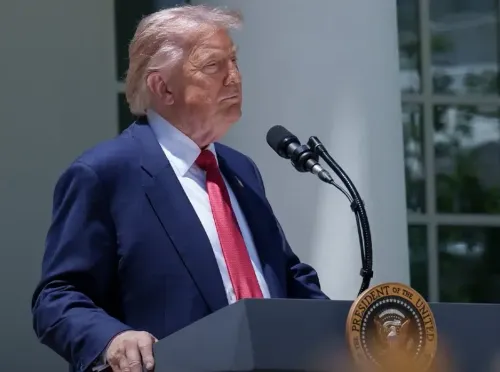
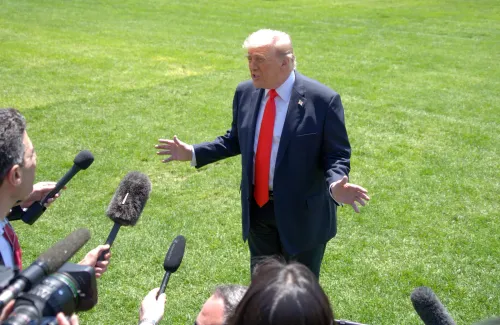
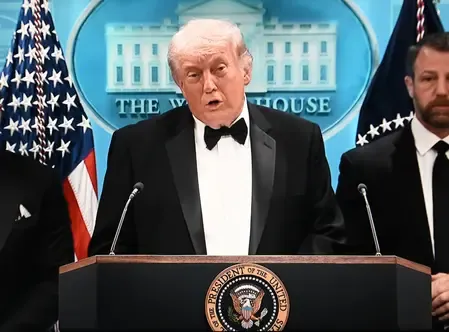
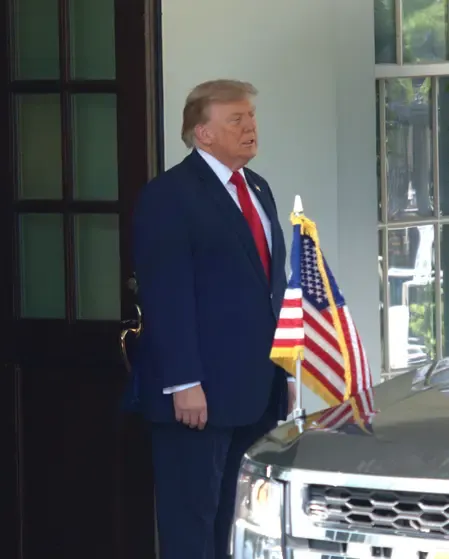
US President Donald Trump on 9 October 2026 formally called for the immediate restoration of a Christopher Columbus statue in Columbus, Ohio, escalating his administration's campaign to protect and reinstate historical monuments across the United States. The demand was made during a Columbus Day celebration held in the East Room of the White House.
What Trump Said
'But today, I'm officially calling for the statue to be returned immediately to where it belongs,' Trump declared. 'We demand that Christopher Columbus be put back into the heart of Columbus, Ohio. We want it back in Columbus,' he added.
The President did not specify whether his administration intends to pursue legal or administrative measures to compel the statue's return. His remarks were part of a broader address in which he praised Columbus, celebrated Italian American contributions to the United States, and condemned the removal of monuments during protests in recent years.
Administration's Monument Restoration Efforts
Trump said his administration had already taken concrete steps to restore Columbus's standing in American public life. He noted that a statue of Columbus had been placed near the Eisenhower Executive Office Building, directly across from the White House, and said the installation had drawn positive reactions from the public.
The President also announced plans to install an additional Columbus statue in the White House Rose Garden, with one 19th-century statue reportedly brought from Italy and another — crafted by an artisan involved in White House construction — set to receive a prominent placement.
Trump credited Interior Secretary Doug Burgum with overseeing restoration work on 82 monuments, fountains, and statues across Washington, including renovations to the fountain at Columbus Circle.
Baltimore Incident and Italian American Community
Trump recalled the destruction of a Columbus statue in Baltimore in July 2020, when protesters pulled down the monument near the city's Little Italy neighbourhood and threw its remains into Baltimore Harbour. He praised Italian Americans who organised divers and equipment to recover the fragments, noting that the community had subsequently raised more than $100,000 towards rebuilding the statue.
The President argued that the demolition of Columbus monuments had deeply offended Italian Americans and said his administration was committed to reversing what he described as an attack on their heritage.
Broader Monument Protection Policy
Trump also referenced vandalism to several federal landmarks, citing damage to stonework and graffiti on historic structures. He argued that stronger enforcement of laws protecting federal monuments had curbed further destruction.
Recalling unrest during his first term, Trump said he had invoked an existing statute carrying severe penalties for damaging federal monuments, claiming the warning deterred protesters who were reportedly preparing to topple a statue honouring former President Andrew Jackson.
The President further criticised campaigns targeting monuments associated with George Washington, Abraham Lincoln, and Thomas Jefferson, vowing that his administration would continue defending historical figures whose contributions shaped the United States.
With monument restoration now a recurring theme of the Trump administration's cultural agenda, the Columbus, Ohio statue demand signals that pressure on local governments over historical markers is likely to intensify.
Point of View
Rather than a concrete policy push. Local governments, including Columbus, Ohio, have consistently held that monument decisions fall within their jurisdiction; without a federal hook, the demand has no binding force. What the episode does reveal is that monument politics — far from fading — remains a live wedge issue that the administration is willing to amplify at ceremonial moments.
NationPress
10 Oct 2026
Frequently Asked Questions
What Columbus statue is Trump demanding be returned to Columbus, Ohio?
Trump is calling for the return of a Christopher Columbus statue to Columbus, Ohio — the city named after the Italian explorer — following its removal during protests in recent years. He made the demand at a Columbus Day celebration in the White House East Room on 9 October 2026.
Has Trump said how he will force the statue's return?
No. The President did not specify whether his administration would take legal or administrative action to compel the statue's return. The demand currently appears to be a public call rather than a formal policy directive.
What other Columbus monuments has the Trump administration installed?
The administration placed a Columbus statue near the Eisenhower Executive Office Building across from the White House and announced plans for another in the White House Rose Garden. A 19th-century statue from Italy and a second created by a White House craftsman are set to receive prominent placements.
What happened to the Columbus statue in Baltimore in 2020?
In July 2020, protesters pulled down a Columbus statue near Baltimore's Little Italy neighbourhood and threw its remains into Baltimore Harbour. Trump highlighted how Italian Americans organised recovery efforts and raised more than $100,000 to rebuild the monument.
How many monuments has the Trump administration worked to restore?
Interior Secretary Doug Burgum has overseen restoration work on 82 monuments, fountains, and statues across Washington, according to Trump. This includes the renovation of the fountain at Columbus Circle in the capital.