Trump Hails Columbus as Founder of America's Exceptional Legacy
Synopsis
On Columbus Day 2026, the White House quoted President Trump crediting Christopher Columbus's 1492 voyage with ultimately creating 'the most exceptional nation in the history of the world,' reinforcing the administration's American exceptionalism stance amid ongoing cultural debates over the holiday.
Key Takeaways
The White House posted a Columbus Day quote from President Donald J.
Trump on October 10, 2026 .
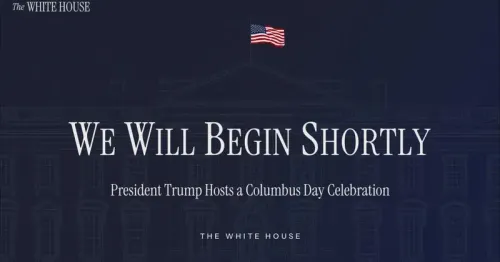
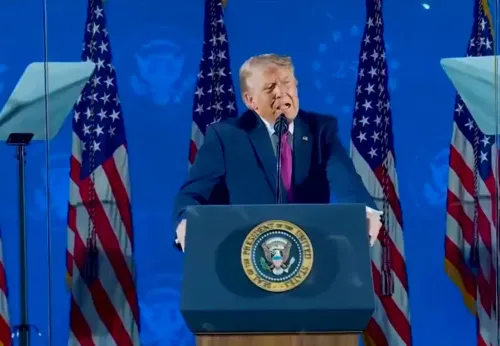
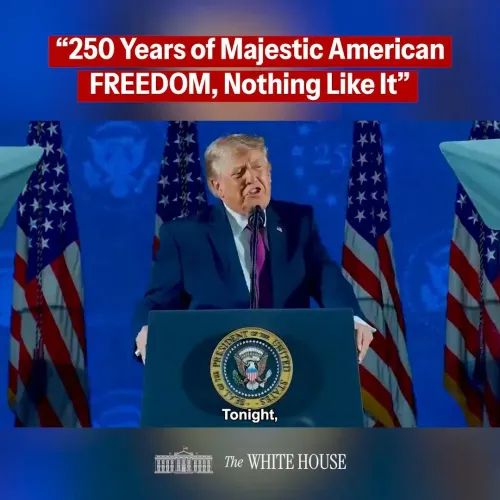
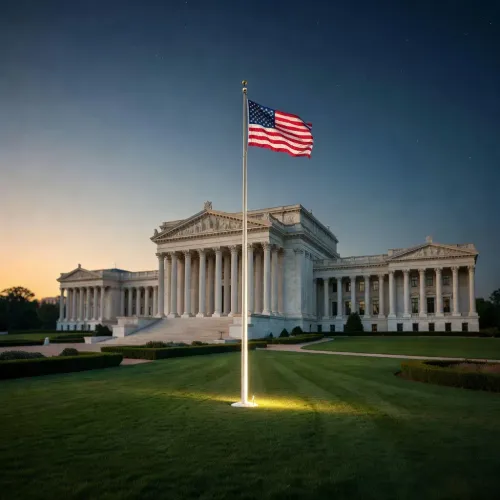
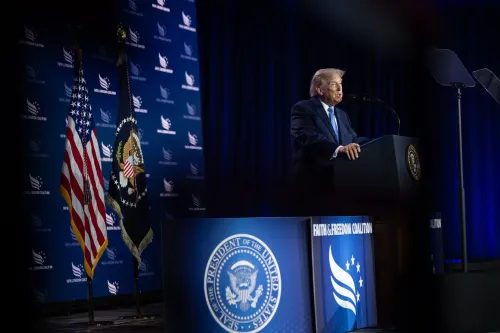
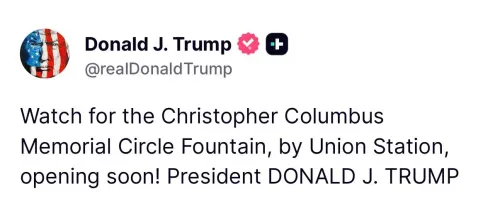
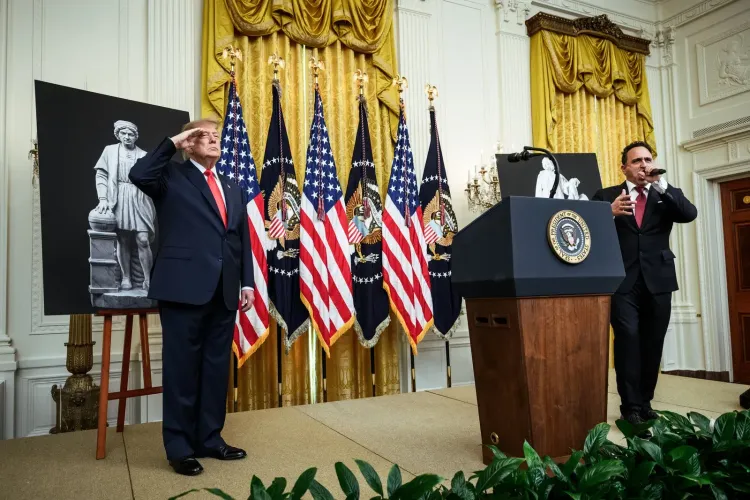
Trump credited Christopher Columbus's 1492 voyage with leading to the creation of the United States, calling it 'the most exceptional nation in the history of the world.' The post included three images , indicating a formal, curated White House commemoration.
Columbus Day is a federally observed US holiday on the second Monday of October, but is increasingly contested, with many jurisdictions replacing it with Indigenous Peoples' Day .
The statement reflects the Trump administration's continued embrace of American exceptionalism as a core political and cultural identity marker.
On the occasion of Columbus Day 2026, the White House invoked one of history's most debated voyages to make a sweeping claim about American greatness — quoting President Donald J. Trump directly as he framed Christopher Columbus's 1492 expedition as the founding act of the world's most exceptional nation.
The official White House account on X shared the quote: 'In 1492, Christopher Columbus undertook one of the boldest voyages in the history of our planet... He push onward and discovered the New World, eventually leading to the creation of the most exceptional nation in the history of the world.' The post was accompanied by three images, signalling a deliberate, curated commemoration rather than a passing remark.
Columbus Day and the 'American Exceptionalism' Argument
Trump's framing leans squarely into the doctrine of American exceptionalism — the idea that the United States is uniquely positioned in history by virtue of its founding ideals and global influence. By anchoring that exceptionalism directly to Columbus's 1492 voyage, the statement draws a straight line from European exploration of the Americas to the present-day United States, a rhetorical move that has long been central to a particular strand of American patriotic identity.
Columbus Day itself — observed federally on the second Monday of October — has become one of the more contested public holidays in the United States. Supporters see it as a celebration of exploration, discovery, and Italian-American heritage. Critics argue it glosses over the violent displacement of Indigenous peoples that followed European contact. Several American cities and states have replaced it with Indigenous Peoples' Day.
Why the White House Statement Lands Differently in 2026
The Trump administration's decision to issue a high-profile Columbus Day statement — complete with the 'most exceptional nation in the history of the world' framing — is a direct cultural and political signal. It positions the White House firmly against the movement to reframe or retire Columbus Day, and doubles down on a triumphalist reading of American history at a moment when that reading remains sharply contested in domestic politics.
For global audiences, including India, the statement is a window into how the current American executive communicates national identity — bold, superlative, and unapologetically confident in its framing of US historical destiny.
History, as Columbus himself might attest, rarely travels in a straight line — but the White House is betting that this particular narrative still has wind in its sails.
Point of View
The Trump administration signals its resistance to revisionist readings of US history and aligns with a voter base that sees such reframings as cultural overreach. For observers tracking the administration's domestic messaging, this sits within a consistent pattern of deploying historical symbolism to reinforce national identity politics. The global resonance is limited but real: how Washington narrates its own origins shapes the soft-power image it projects abroad.
NationPress
10 Oct 2026
Frequently Asked Questions
What did Trump say about Columbus Day 2026?
President Trump said Christopher Columbus's 1492 voyage was 'one of the boldest voyages in the history of our planet' and credited it with leading to the creation of 'the most exceptional nation in the history of the world,' referring to the United States.
Why is Columbus Day controversial in the US?
Columbus Day is contested because while it celebrates European exploration and Italian-American heritage, critics argue it ignores the violent displacement and suffering of Indigenous peoples that followed Columbus's arrival in the Americas. Many US cities now observe Indigenous Peoples' Day instead.
When is Columbus Day observed in the United States?
Columbus Day is a federal holiday observed on the second Monday of October each year in the United States.
What is American exceptionalism?
American exceptionalism is the belief that the United States holds a unique and superior place in world history due to its founding ideals, democratic institutions, and global influence. It is frequently invoked in US political rhetoric, particularly by conservative leaders.
Has the White House officially celebrated Columbus Day before?
Yes, US presidents have issued Columbus Day proclamations for decades. The Trump administration has been notably emphatic in its Columbus Day messaging, using it to reinforce themes of American greatness and historical pride.