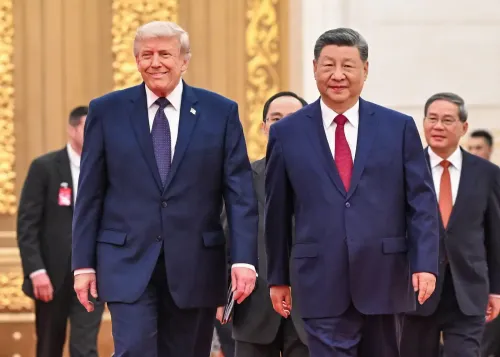
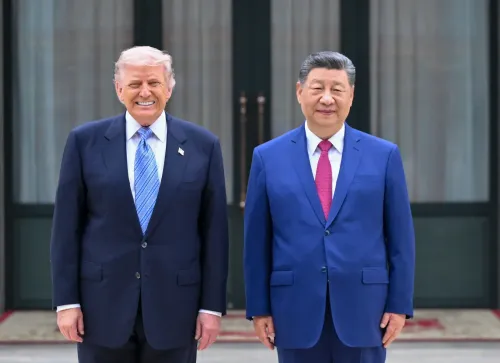
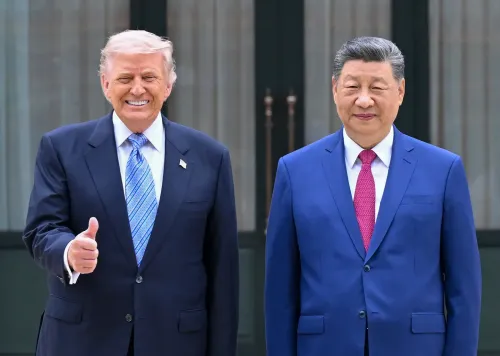
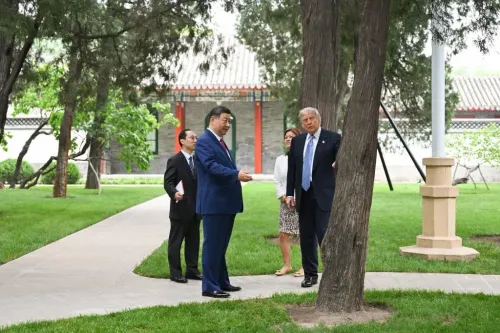
Trump Hosts China's President in White House Arrival Ceremony
Synopsis
President Trump hosted Chinese President Xi Jinping in a formal White House arrival ceremony, a high-protocol diplomatic event that historically precedes substantive US-China negotiations on trade, technology, and security. The visit marks the highest level of bilateral engagement between the world's two largest economies.
Key Takeaways
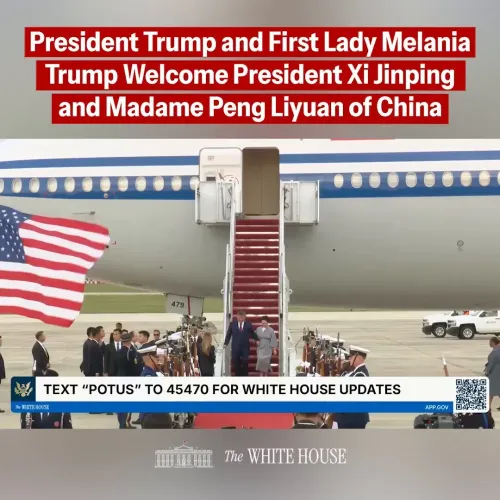
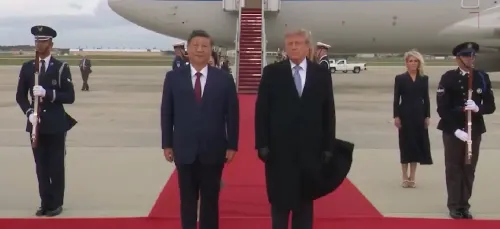
President Trump hosted President Xi Jinping of China in a formal arrival ceremony at the White House .
Arrival ceremonies are reserved for the highest tier of diplomatic engagement and signal substantive talks ahead.
Trump previously hosted Xi at Mar-a-Lago in 2017 , a meeting that preceded years of tariff negotiations.
The US-China Phase One trade agreement was signed in January 2020 following bilateral leader-level engagement.
US-China leader summits have been held regularly since 2013 at G20 and APEC forums to manage bilateral tensions.
Joint statements, trade frameworks, or security channel announcements are typically the key deliverables to watch after such ceremonies.
A formal arrival ceremony at the White House signalled the highest level of diplomatic engagement between the world's two largest economies, as President Donald Trump welcomed President Xi Jinping of China in a state visit protocol that historically precedes substantive closed-door negotiations on trade, technology, and security.
What an Arrival Ceremony Actually Means
Arrival ceremonies on the South Lawn of the White House are not pageantry for its own sake. They are a calibrated diplomatic signal — a public declaration that two leaders are prepared to engage at the highest level before the cameras give way to the negotiating table. For the United States and China, that signal carries particular weight given the sustained strategic competition between the two nations across trade, technology supply chains, and regional security.
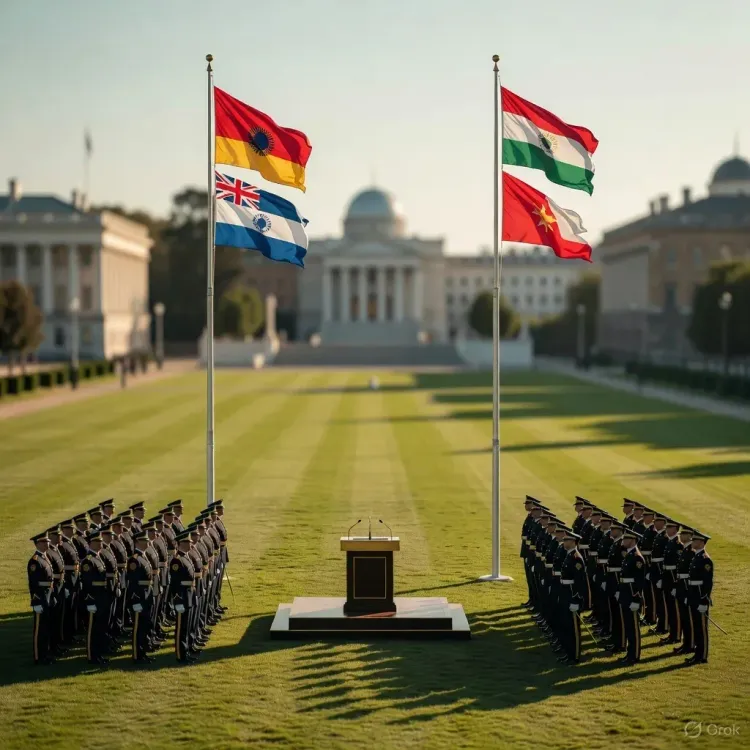
The formal choreography — military honours, bilateral flags, a reviewing of troops — is designed to communicate parity and seriousness of purpose. When Trump last hosted Xi Jinping at Mar-a-Lago in 2017, that meeting set the stage for years of tariff negotiations that culminated in the Phase One trade agreement signed in January 2020. Arrival ceremonies, in other words, are where the tone of an entire diplomatic chapter gets written.
The Pattern Behind US-China Leader Summits
Since 2013, US and Chinese leaders have met repeatedly — at G20 summits, APEC forums, and bilateral settings — to manage a relationship defined as much by competition as by interdependence. Each summit has carried an agenda shaped by whatever fault line was sharpest at the time: tariffs, semiconductor export controls, Taiwan, or South China Sea navigation rights.
The arrival ceremony format itself is reserved for visits of the greatest diplomatic weight. Its use here places this meeting in the same tier as formal state visits, distinct from the sideline pull-asides that characterise multilateral summits. That distinction matters: it implies an agenda, prepared positions, and the expectation of deliverables — whether a joint statement, a framework agreement, or at minimum a managed de-escalation on a contested issue.
What Follows the Ceremony
The real substance of any state visit emerges in what comes after the flags and the fanfare. Diplomatic observers will be watching closely for any joint statements, working-group announcements, or policy signals that emerge from the bilateral talks expected to follow the ceremony. Trade terms, technology transfer restrictions, and military-to-military communication channels have all featured on the agenda in previous rounds of US-China leader engagement.
A visit of this visibility sets expectations on both sides — and the world will be parsing every word of whatever statement, or silence, follows.
Point of View
And its use reflects a deliberate choice to elevate the bilateral relationship above routine summit-sideline contact. For India, a US-China leader summit of this visibility is a moment of careful observation: any reset in trade terms or technology-transfer rules between the two largest economies carries downstream consequences for Indian exporters, supply chains, and the broader Indo-Pacific strategic calculus. The ceremony also fits a longer pattern in which high-tension US-China competition is periodically punctuated by high-visibility engagement — signalling that both sides see managed dialogue as preferable to unchecked rivalry, even as structural competition deepens.
NationPress
24 Sept 2026
Frequently Asked Questions
What is a White House arrival ceremony for a foreign leader?
A White House arrival ceremony is a formal diplomatic protocol event — typically held on the South Lawn — that includes military honours, bilateral flags, and a troop review. It is reserved for heads of state and signals the highest level of diplomatic engagement between two countries.
Has Trump met Xi Jinping before?
Yes. Trump hosted Xi Jinping at Mar-a-Lago in 2017 shortly after taking office, and the two leaders also met at G20 and APEC summits during Trump's first term. Their bilateral engagement culminated in the Phase One trade agreement signed in January 2020 .
What issues are typically discussed at US-China leader summits?
US-China leader summits have historically covered trade tariffs, technology export controls, Taiwan, South China Sea navigation, and military-to-military communication channels. The specific agenda for any given summit depends on the most pressing bilateral fault lines at the time.
What is the significance of a US-China summit for India?
A high-level US-China summit can affect India through shifts in global trade terms, technology supply chain rules, and Indo-Pacific security dynamics. Any agreement or framework that emerges between Washington and Beijing has the potential to reshape the economic and strategic environment in which India operates.
What happens after a White House arrival ceremony?
The arrival ceremony is followed by closed-door bilateral talks between the two leaders and their delegations. The visit typically concludes with a joint statement, a press conference, or specific policy announcements — such as trade frameworks or agreements to establish working groups on key issues.