Trump Hosts Philippines President in White House Welcome Ceremony
Synopsis
President Trump held a formal welcome ceremony at the White House for the President of the Philippines on November 18, 2026, spotlighting the decades-old US-Philippines Mutual Defense Treaty and signalling continued US commitment to its Indo-Pacific alliances.
Key Takeaways
President Trump hosted the President of the Philippines in a White House welcome ceremony on November 18, 2026 .
The visit draws on the US-Philippines Mutual Defense Treaty of 1951 , one of Washington's oldest formal alliance frameworks in Asia.
The ceremony signals continued US commitment to its Indo-Pacific security architecture amid ongoing tensions in the South China Sea .
White House state visits of this kind have historically preceded announcements on defense, trade, or basing cooperation .
The summit is closely watched by regional powers including China, Japan , and India as a marker of US alliance health in Southeast Asia.
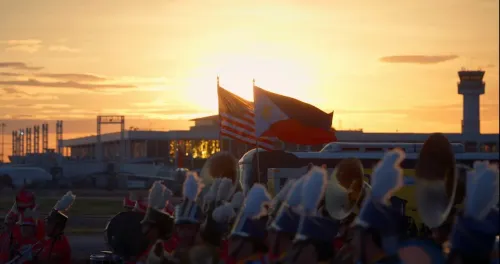
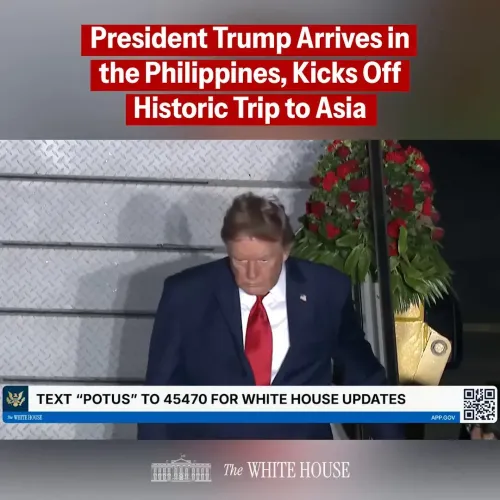
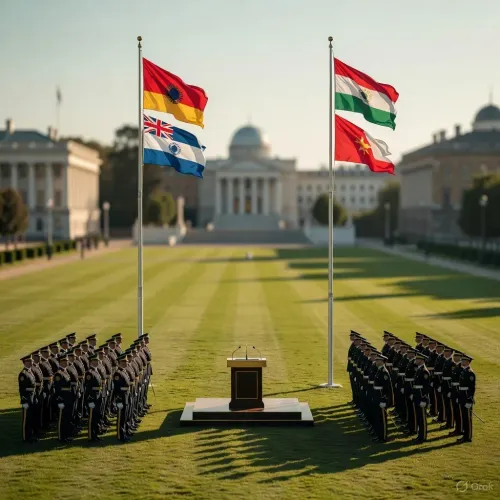
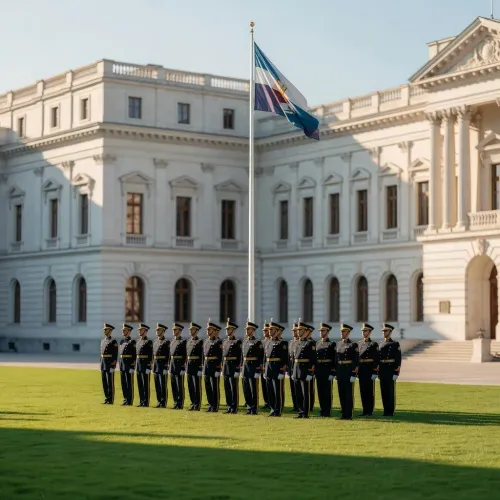
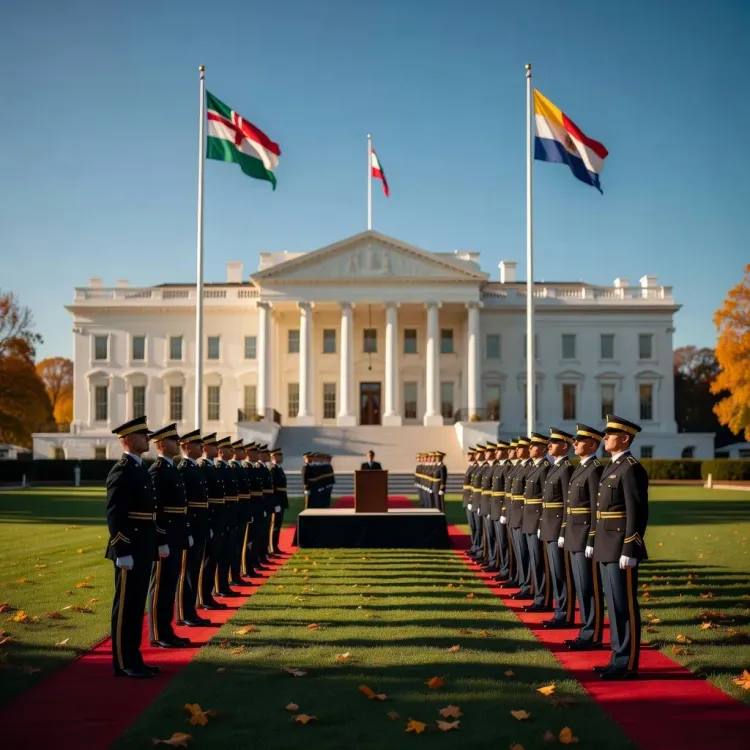
A formal welcome ceremony at the White House marked the arrival of the President of the Philippines as President Donald Trump received his Southeast Asian counterpart on Wednesday, November 18, 2026 — a high-visibility diplomatic moment that placed one of America's oldest treaty alliances squarely in the spotlight.
A 1951 treaty, alive and on display
The welcome ceremony is not mere protocol. The US-Philippines Mutual Defense Treaty of 1951 — now more than seven decades old — forms the bedrock of one of Washington's most consequential alliances in the Indo-Pacific. A formal White House reception of this kind carries unmistakable signal value: it telegraphs to allies and rivals alike that the partnership remains operational at the highest level.
Southeast Asian security architecture has grown increasingly contested in recent years, with the South China Sea remaining a persistent flashpoint. The Philippines sits at the geographic heart of that tension, making every high-level US-Philippines engagement a moment watched closely from Beijing to Tokyo to New Delhi.
What White House welcome ceremonies actually do
Beyond the pageantry, White House welcome ceremonies for treaty allies typically serve as the opening act for substantive talks — on defense posture, trade corridors, and, increasingly, technology and supply-chain cooperation. Historically, such visits have preceded announcements on basing access, joint military exercises, or bilateral investment frameworks.
Whether this visit produces follow-on announcements on defense cooperation or trade agreements will determine how much diplomatic weight it ultimately carries — but the optics alone send a message that Washington is investing in its Southeast Asian partnerships.
Indo-Pacific calculus and India's stake
For India, a US-Philippines summit carries quiet but real relevance. As a fellow member of the Quad framework alongside the US, Japan, and Australia, India watches the broader Indo-Pacific alliance network as a barometer of collective resolve. A reinvigorated US-Philippines axis strengthens the overall architecture that India depends on to balance regional pressures — making this ceremony in Washington DC a small but meaningful data point in a much larger strategic equation.
The kicker, as always with these ceremonial openings, is what comes next — the joint statement, the press conference, the fine print. The welcome mat has been rolled out. Now the world watches for what walks through the door.
Point of View
Making a high-profile White House visit a useful reset mechanism. For Washington, reinforcing the Philippines partnership strengthens the southern flank of its Indo-Pacific posture at a moment when great-power competition demands visible alliance cohesion. The real test, however, lies in whether this ceremonial moment translates into tangible security or economic deliverables.
NationPress
18 Nov 2026
Frequently Asked Questions
Why did Trump hold a welcome ceremony for the Philippines president?
The ceremony underscores the longstanding US-Philippines alliance rooted in the 1951 Mutual Defense Treaty, and signals continued American commitment to its Indo-Pacific security partnerships.
What is the US-Philippines Mutual Defense Treaty?
Signed in 1951, the Mutual Defense Treaty obliges both the United States and the Philippines to come to each other's aid in the event of an armed attack, forming the cornerstone of their bilateral security relationship.
What could come out of the Trump-Philippines summit?
High-level US-Philippines visits have historically been followed by announcements on joint military exercises, basing access arrangements, or bilateral trade and investment frameworks.
Why does this US-Philippines meeting matter for India?
India, as a Quad partner of the United States, watches US alliances in the Indo-Pacific as indicators of collective strategic resolve, since a stronger US-Philippines axis reinforces the broader security architecture that India factors into its own regional calculations.
Where was the welcome ceremony held?
The formal welcome ceremony took place at the White House in Washington DC on November 18, 2026.