CM Samrat Choudhary hails Nitish Setu as Bihar's infra leap
Synopsis
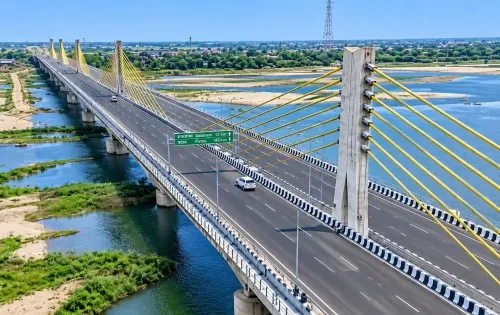
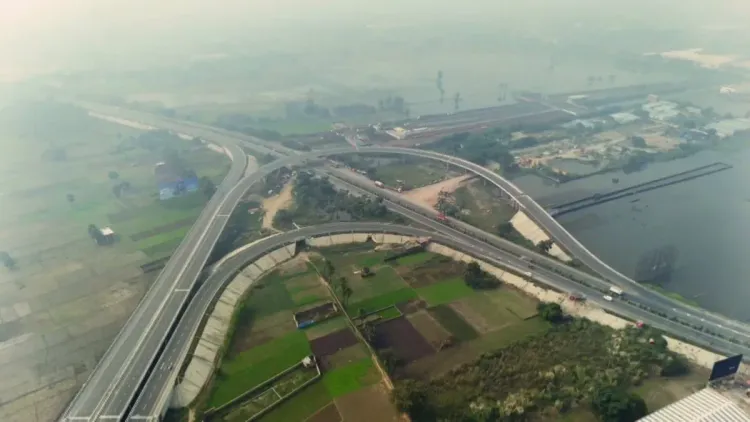
Bihar Chief Minister Samrat Choudhary spotlighted the six-lane 'Nitish Setu' bridge linking Kacchi Dargah to Bidupur, calling it a landmark in the NDA government's push to modernise connectivity between Patna, Vaishali, and surrounding districts.
Key Takeaways
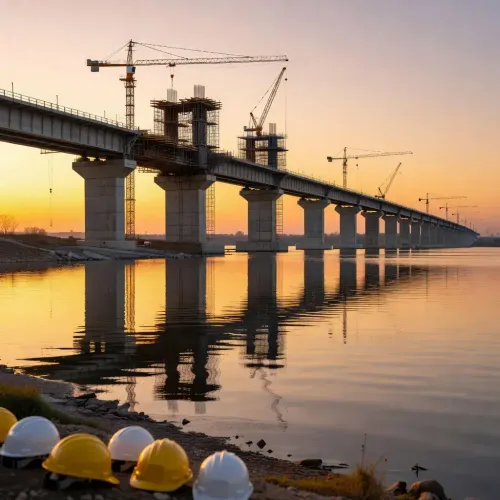
Nitish Setu is a six-lane Ganga bridge connecting Kacchi Dargah (Patna) to Bidupur (Vaishali), named after former Chief Minister Nitish Kumar .
Bihar CM Samrat Choudhary promoted the project on 18 November 2026 , calling it a defining example of modern infrastructure under the NDA.
The bridge is expected to ease commuter movement and boost trade, employment, and economic activity across Patna, Vaishali , and neighbouring districts.
Bihar has pursued multiple Ganga bridge projects since 2005 as a core strategy to cut travel times and unlock economic potential.
The NDA government frames the project as part of its broader pledge to build a 'developed and prosperous Bihar.'
A six-lane bridge across the Ganga is rewriting the map between Patna and Vaishali — and Bihar Chief Minister Samrat Choudhary wants every resident to know who made it possible. On Wednesday, 18 November 2026, Choudhary took to X to champion the Kacchi Dargah–Bidupur six-lane Ganga bridge, named 'Nitish Setu', calling it a defining symbol of modern infrastructure under the NDA government.
In his post, Choudhary wrote: 'Bihar ke vikas ko nayi raftaar, behtar connectivity se badal rahi pradesh ki tasveer!' — 'Bihar's development is gaining new momentum; better connectivity is transforming the state's image!' He described Nitish Setu as 'an important example of Bihar's modern infrastructure' and said the bridge would ease movement between Patna, Vaishali, and surrounding districts while accelerating trade, employment, and economic activity.
What Nitish Setu connects — and why that crossing matters
The bridge links Kacchi Dargah on Patna's northern fringe to Bidupur in Vaishali district, spanning one of the busiest but least well-served stretches of the Ganga in central Bihar. The six-lane design signals an ambition well beyond routine repair — it is built for the kind of freight and commuter volumes that drive industrial corridors. For daily travellers who have long endured congested older crossings, this span promises a materially shorter and faster journey.
The bridge is named after Nitish Kumar, Bihar's dominant political figure since 2005 and the chief minister under whose long tenure the state's bridge-building programme accelerated significantly. That naming is itself a political statement: it places the NDA's infrastructure record in direct continuity with Kumar's legacy, even as Choudhary leads the government today.
Bihar's bridge-building arc since 2005
Bihar's topography has always made the Ganga both a lifeline and a barrier. Successive governments post-2005 made multiple Ganga bridge projects central to their governance narrative — arguing that reducing travel times between north and south Bihar was inseparable from reducing poverty and improving market access. Nitish Setu fits squarely into that two-decade arc.
The NDA frames better road connectivity not just as engineering but as economic policy: shorter supply chains, wider labour markets, and faster movement of agricultural produce to mandis. Choudhary's post underlines this directly, citing trade and employment alongside commuter convenience as the bridge's core dividends.
Choudhary's signal to voters and investors alike
Highlighting flagship infrastructure on social media is a deliberate governing-and-campaigning move. By anchoring the post to the hashtags #NitishSetu and #NDASarkar, Choudhary simultaneously credits Kumar's legacy, reinforces alliance solidarity, and plants the NDA's development credential ahead of the next electoral cycle. The message to investors is equally clear: Bihar is building at scale, and the government wants that visible.
Bihar's transformation story has long been aspirational more than realised — but each concrete span across the Ganga makes the aspiration a little harder to dismiss.
Point of View
The BJP-JD(U) alliance publicly reinforces its coalition bond ahead of future electoral tests. The post also slots into a broader NDA narrative that positions infrastructure spend as the most visible proof of governance competence, a strategy that has steadily shifted Bihar's political conversation from caste arithmetic toward development deliverables. For Bihar, where the Ganga has historically separated opportunity as much as geography, each new crossing is a tangible counter to decades of 'BIMARU' stigma. Whether the bridge's economic dividends match the political investment will depend on how quickly downstream road and market connectivity is built to feed traffic onto the new span.
NationPress
18 Nov 2026
Frequently Asked Questions
What is Nitish Setu in Bihar?
Nitish Setu is a six-lane Ganga bridge connecting Kacchi Dargah in Patna to Bidupur in Vaishali district, named after long-serving Bihar Chief Minister Nitish Kumar and promoted as a flagship infrastructure project of the NDA government.
Who is Samrat Choudhary and what did he say about Nitish Setu?
Samrat Choudhary is the Chief Minister of Bihar and a senior BJP leader. On 18 November 2026 he posted on X calling Nitish Setu an important example of Bihar's modern infrastructure that will improve connectivity and boost trade, employment, and economic activity.
Which districts does the Kacchi Dargah–Bidupur bridge connect?
The bridge connects Kacchi Dargah on the northern edge of Patna to Bidupur in Vaishali district, improving inter-district movement for residents of Patna, Vaishali, and surrounding areas.
Why has Bihar been building Ganga bridges since 2005?
Successive Bihar governments since 2005 made multiple Ganga bridge projects a priority to replace older crossings, cut travel times between north and south Bihar, and support economic growth by improving connectivity for commuters, traders, and agricultural supply chains.
What is the significance of naming the bridge after Nitish Kumar?
Naming the bridge 'Nitish Setu' after Chief Minister Nitish Kumar honours his long tenure during which Bihar's infrastructure programme accelerated; it also signals NDA alliance solidarity between the BJP and JD(U) and frames the government's development record as a shared achievement.