Israel parliament elects anti-Netanyahu speaker Matan Kahana by 66-52

Synopsis
Israel's parliament has voted to install an anti-Netanyahu speaker by 66 to 52, handing the opposition bloc control of the Knesset agenda. With Eisenkot facing a 6 December deadline to form a government — and deep fault lines over Arab party participation — the next three weeks will determine whether Netanyahu's political comeback is possible at all.
Key Takeaways
Matan Kahana (Yashar party) was elected Knesset speaker on Tuesday night , defeating Likud's Ofir Katz by 66 votes to 52 .
Kahana replaces Amir Ohana , a close Netanyahu ally, handing the opposition control of the legislative agenda.
The anti-Netanyahu bloc won 67 of 120 Knesset seats in the 27 October election , including 19 seats held by Arab parties.
Gadi Eisenkot has until 6 December to form a government, with a possible two-week extension.
Liran Avisar Ben Horin will chair the Finance Committee, becoming the first woman to hold the post.
The new speaker is expected to advance plans to repeal legislation from Netanyahu's judicial overhaul .
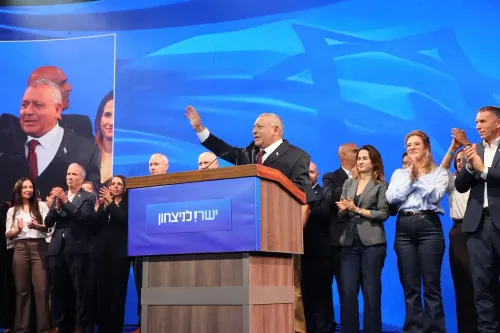
Israel's parliament, the Knesset, elected Matan Kahana of Gadi Eisenkot's Yashar party as its new speaker on Tuesday night, handing Prime Minister Benjamin Netanyahu's opponents control over the legislative agenda as coalition-formation talks remain ongoing in Jerusalem. Kahana defeated Ofir Katz of Netanyahu's Likud party by 66 votes to 52, replacing Netanyahu ally Amir Ohana in the role.
The Vote and Its Significance
Live footage from the chamber showed anti-Netanyahu lawmakers breaking into applause, hugging and shaking hands after the result was declared. Kahana's election was backed in part by Arab parties, whose 19 seats were critical to assembling the 66-vote majority. The speakership gives the opposition bloc direct control over the parliamentary agenda — a leverage point that could be used to roll back legislation passed as part of Netanyahu's controversial judicial overhaul before a new government takes office.
Eisenkot's Coalition Challenge
Former military chief Eisenkot has been tasked with forming a government and faces a deadline of 6 December, with a possible extension of up to two weeks at the president's discretion. While his bloc won 67 of the Knesset's 120 seats in the 27 October election, some prospective coalition partners — most notably right-wing politician Avigdor Lieberman — have stated opposition to governing with Arab party support, complicating negotiations considerably.
Key Committee Appointments
Eisenkot's allies have also agreed on candidates to lead key parliamentary committees. Avigdor Lieberman is set to chair the Foreign Affairs and Defense Committee, while Liran Avisar Ben Horin, a lawmaker from former Prime Minister Naftali Bennett's party, will head the Finance Committee — making her the first woman to hold that post. The appointments signal the opposition bloc's intent to consolidate institutional control ahead of any new government taking shape.
Background: October Election and Parliamentary Swearing-In
Netanyahu's right-wing bloc lost its Knesset majority in the 27 October election, securing just 53 seats against 67 for parties opposed to him. The newly elected parliament was sworn in on 10 November, with President Isaac Herzog presiding over the inaugural session. At that point, Eisenkot's Yashar party had already secured signatures from more than 61 lawmakers in favour of replacing Ohana — a signal that Tuesday's speaker vote was effectively a foregone conclusion once the new Knesset convened. This is the latest in a series of institutional confrontations between Netanyahu and his opponents that have shaped Israeli politics for much of the past three years.
What Comes Next
With the speakership secured, the anti-Netanyahu bloc is expected to move quickly on legislation to repeal elements of the judicial overhaul. Whether Eisenkot can convert his parliamentary majority into a stable coalition government — particularly given the fault lines over Arab party participation — will be the defining political question in Israel over the coming weeks.
Point of View
The 19 Arab seats that made this majority possible remain a live fault line: Lieberman's refusal to countenance Arab party involvement in government could unravel Eisenkot's coalition before it is born. If that happens, Netanyahu — who has navigated exactly this kind of bloc fragmentation before — could yet return. The coming weeks will test whether Israel's anti-Netanyahu majority is a durable governing coalition or a temporary parliamentary arithmetic that collapses under its own contradictions.
NationPress
18 Nov 2026
Frequently Asked Questions
Who is the new Knesset speaker and how was he elected?
Matan Kahana, a lawmaker from Gadi Eisenkot's Yashar party, was elected speaker of Israel's Knesset on Tuesday night, defeating Ofir Katz of Netanyahu's Likud party by 66 votes to 52. His election was backed by Arab parties and replaces outgoing speaker Amir Ohana, a Netanyahu ally.
What does the speaker election mean for Netanyahu?
The election hands Netanyahu's opponents control of the parliamentary agenda, including the ability to advance legislation repealing parts of his government's judicial overhaul. It is a significant institutional setback for Netanyahu, whose right-wing bloc lost its Knesset majority in the 27 October election.
When does Eisenkot have to form a government?
Gadi Eisenkot has until 6 December to form a government, with a possible extension of up to two weeks that can be granted by President Isaac Herzog. Coalition talks are complicated by disagreements over the role of Arab parties in any future government.
Why is Arab party participation a complicating factor?
While the anti-Netanyahu bloc holds 67 of 120 Knesset seats, 19 of those belong to Arab parties. Key prospective coalition partner Avigdor Lieberman has opposed forming a government that relies on Arab party support, creating a structural tension that Eisenkot must resolve to secure a viable majority.
What is the significance of the Finance Committee appointment?
Liran Avisar Ben Horin, a lawmaker from former Prime Minister Naftali Bennett's party, will chair the Finance Committee — making her the first woman to hold that post in the Knesset's history. The committee appointments signal the opposition bloc's intent to consolidate control across key parliamentary institutions.