Israel election 2026: Netanyahu's Likud bloc wins 53 seats, hung Knesset looms
Synopsis
Israel's 26th Knesset election has delivered a hung parliament — Netanyahu's Likud bloc won 53 seats but shed 15 from the outgoing coalition, while the Eisenkot-led opposition secured 48. With Arab parties holding 19 seats and government formation expected to stretch beyond two months, the result is the most fragile Israeli political outcome since the post-October 7 era began.
Key Takeaways
Netanyahu's Likud-led bloc won 53 seats in the 26th Knesset , down from 68 seats in the outgoing parliament.
The opposition bloc led by Gadi Eisenkot's Yashar party secured 48 seats ; Arab factions won 19 seats .
No bloc is close to the 61-seat majority required to form a government.
Final voter turnout was 77.9% , reportedly the highest in decades.
Official results are to be submitted to President Isaac Herzog on 4 November 2026 ; the Knesset is sworn in on 10 November 2026 .
Government formation talks are expected to last beyond two months , with another election not ruled out.
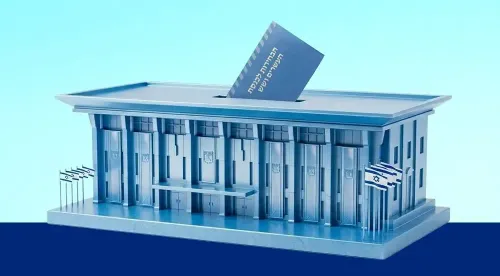
Israel's 26th Knesset elections have produced a hung parliament, with the Central Elections Committee (CEC) releasing final results on Friday, 31 October 2026 showing no political bloc securing the 61 seats required for a majority. Prime Minister Benjamin Netanyahu's Likud-led bloc won 53 seats, the opposition bloc led by Gadi Eisenkot's Yashar party secured 48 seats, and Arab factions claimed the remaining 19 seats.
A Sharp Fall from 2022
The result marks a significant erosion of Netanyahu's coalition strength. His constituent parties had held 68 seats in the outgoing Knesset — meaning the Likud-led bloc shed 15 seats in this cycle. The opposition bloc, however, also falls well short of a majority, leaving both camps locked in a difficult government-formation contest.
Notably, the Tuesday poll was Israel's first national election since the 7 October 2023 Hamas attack on Israel — a watershed event that reshaped voter priorities and reordered the political landscape dramatically from the 2022 elections.
Record Voter Turnout
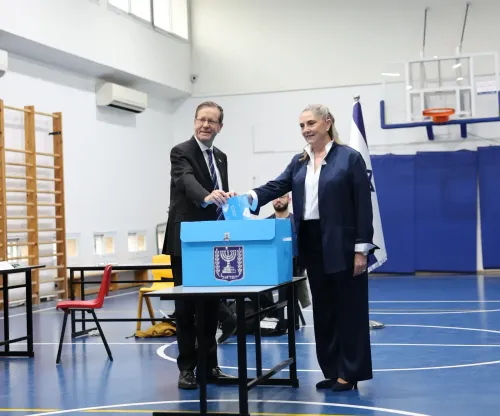
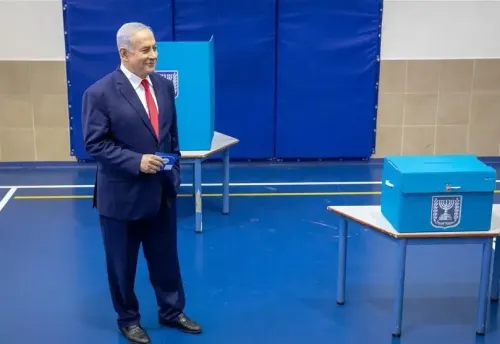
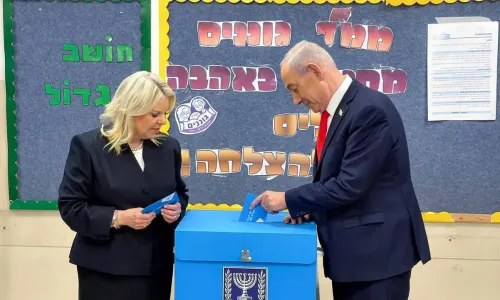
Final voter turnout reached 77.9% of eligible voters, reportedly the highest figure in decades, reflecting the heightened public stakes after more than three years of conflict and political turbulence. The high participation underscored how deeply the security situation and its political fallout had galvanised the Israeli electorate.
What Happens Next
The official results are scheduled to be submitted to Israeli President Isaac Herzog on 4 November 2026. Herzog will then consult individually with each party leader, who will recommend their preferred candidate for prime minister. The newly elected Knesset is set to be sworn in on 10 November 2026.
Government formation is expected to be protracted. According to reports, coalition negotiations could extend beyond two months, with neither bloc in a position to independently assemble a working majority. Herzog, in remarks earlier this week, urged all leaders to approach the process with flexibility and warned against sliding into yet another round of elections. 'We must do everything we can, certainly after yesterday, to avoid another round of elections. So I expect everyone who comes here to come with an open mind,' he said.
Netanyahu and Eisenkot Both Claim Mandate
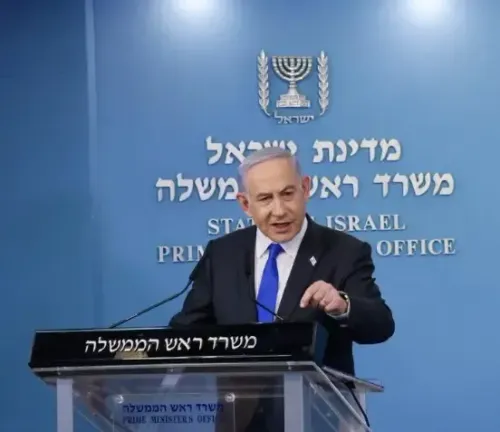
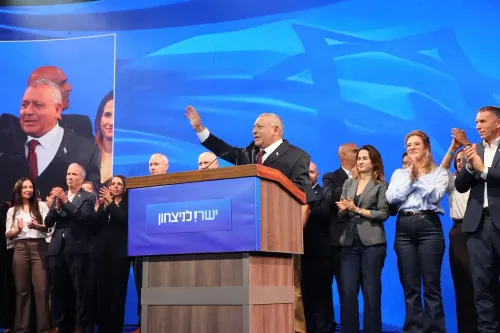
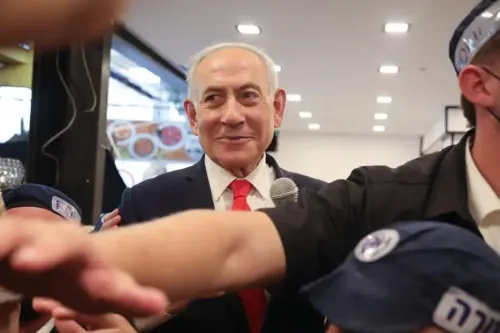
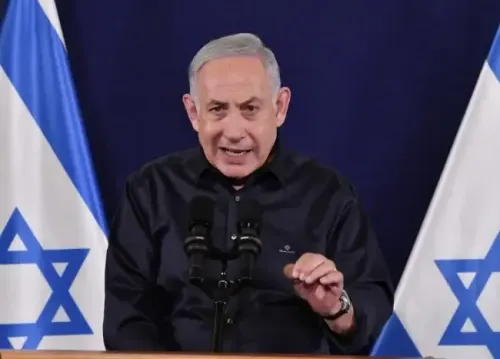
Both principal figures have declared their intention to lead the next government. Addressing supporters at Likud election headquarters in Jerusalem after polls closed, Netanyahu asserted that the right wing commanded a 'great majority' among Israel's 'Zionist public' and called for the formation of a 'strong right-wing government.' He also publicly criticised parties willing to cooperate with Arab factions, calling such an arrangement a 'shame.'
Eisenkot, for his part, has insisted the opposition bloc has a path to governance, though the arithmetic remains formidable. The 19 Arab seats occupy a pivotal swing position — their alignment or abstention could determine whether any bloc can reach the 61-seat threshold, yet Netanyahu has explicitly ruled out partnering with Arab parties, complicating the calculus further.
Path to Government Remains Unclear
With no natural majority coalition in sight, analysts warn that Israel could face the prospect of a sixth election in recent years if talks collapse. The country has cycled through political deadlock repeatedly since 2019, and this result — coming against the backdrop of an ongoing conflict and unresolved hostage negotiations — adds fresh urgency to an already fragile political environment. How quickly a stable government can be assembled will have direct consequences for security policy, the judiciary, and the country's international relationships.
Point of View
And he now needs Arab-party-adjacent arithmetic to govern, precisely the arrangement he has publicly condemned as a 'shame.' The 77.9% turnout signals deep public investment in the outcome, yet the result mirrors Israel's paralysis of 2019–2021, when four inconclusive elections in two years produced gridlock rather than mandate. The pivotal variable is the 19 Arab seats — their position will determine whether any government is possible at all, or whether Israel heads toward a sixth election in seven years. International stakeholders — especially Washington and the Gulf — will be watching closely, as a prolonged vacuum delays any movement on the hostage file and post-conflict Gaza policy.
NationPress
30 Oct 2026
Frequently Asked Questions
What were the final results of Israel's 2026 election?
The Central Elections Committee confirmed that Prime Minister Benjamin Netanyahu's Likud-led bloc won 53 seats, the opposition bloc led by Gadi Eisenkot's Yashar party secured 48 seats, and Arab parties took the remaining 19 seats in the 120-member Knesset. No bloc came close to the 61-seat majority needed to form a government.
Why is forming a government so difficult after this election?
Neither the Netanyahu-led right-wing bloc nor the Eisenkot-led opposition bloc holds the 61 seats required for a parliamentary majority, leaving Israel with a hung parliament. Reports indicate coalition negotiations could extend beyond two months, raising the prospect of yet another election if talks collapse.
When will the new Israeli government be formed?
The official results are due to be submitted to President Isaac Herzog on 4 November 2026, after which he will consult party leaders and task a candidate with forming a government. The new Knesset is set to be sworn in on 10 November 2026, though the coalition negotiations themselves could take well over two months.
What is the significance of the Arab parties' 19 seats?
With 19 seats, Arab factions hold a potential swing role in determining who can reach the 61-seat threshold. However, Netanyahu has publicly ruled out any cooperation with Arab parties, calling such an arrangement a 'shame,' which severely narrows his coalition options.
How does this election differ from previous Israeli elections?
This was Israel's first national election since the 7 October 2023 Hamas attack, meaning security, hostage negotiations, and post-conflict governance dominated voter concerns in a way absent from the 2022 election. The record 77.9% voter turnout reflects how high the stakes felt to the Israeli public.