India reaffirms commitment to strengthen ties with Israel amid Knesset elections

Synopsis
As Israel voted in its first election since the 7 October 2023 Hamas attack, India wasted no time signalling continuity — MEA spokesperson Randhir Jaiswal publicly reaffirmed New Delhi's commitment to strengthening ties with Tel Aviv. Partial Knesset results show Netanyahu's Likud bloc ahead with 54 seats, but with a tight race still unfolding, India's diplomatic posture will need to adapt to whoever forms the next government.
Key Takeaways
India's MEA spokesperson Randhir Jaiswal reaffirmed New Delhi's commitment to strengthening ties with Israel on 27 October 2026 .
Israelis voted to elect the 26th Knesset — the first election since the 7 October 2023 Hamas attack .
Partial results with 84.5% of ballots counted showed Netanyahu's Likud-led bloc leading with 54 seats .
The opposition bloc led by Gadi Eisenkot's Yashar party was projected at 49 seats ; the Joint List and Ra'am factions dropped to a combined 17 seats .
Security remained the dominant issue for voters, shaped by the aftermath of the Nova festival attack and ongoing regional conflict.
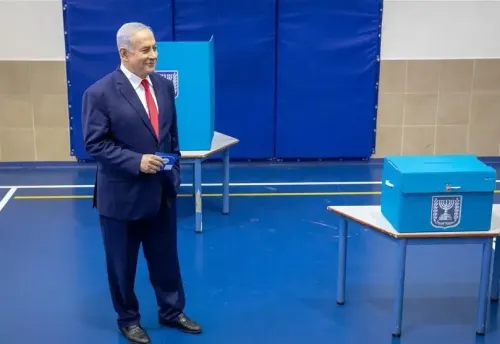
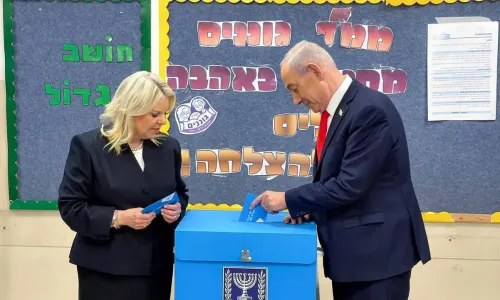
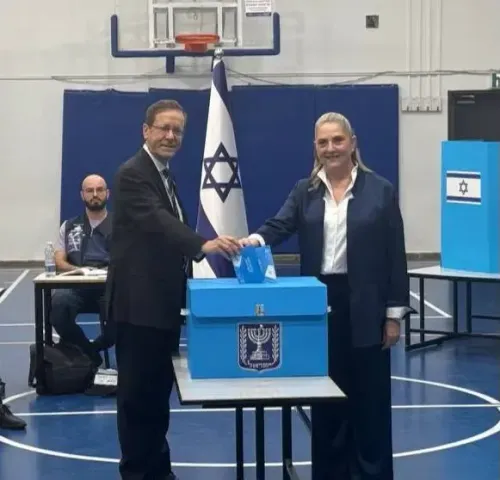
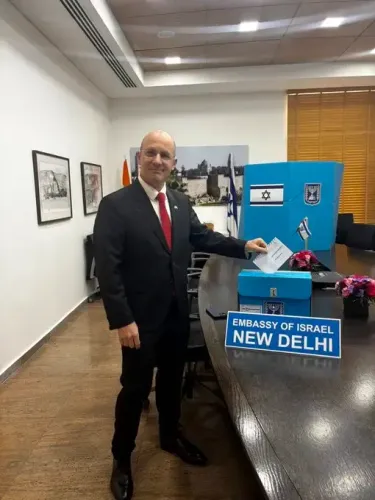
India on Wednesday, 27 October 2026 reaffirmed its commitment to deepening bilateral relations with Israel, as Israelis cast ballots to elect members of the 26th Knesset — the country's parliament — in a vote widely regarded as one of the most consequential since the 7 October 2023 Hamas attack.
India's Official Position
Ministry of External Affairs (MEA) spokesperson Randhir Jaiswal, addressing the bi-weekly media briefing in New Delhi, stated: 'Yes election is being conducted in Israel. I have seen many of your colleagues reporting from there. We have a good relationship with Israel. We will strengthen this relationship in the coming days...' The remarks signal continuity in New Delhi's strategic partnership with Tel Aviv, which has grown significantly over the past decade across defence, technology, and agriculture.
Netanyahu's Bloc Leads Partial Count
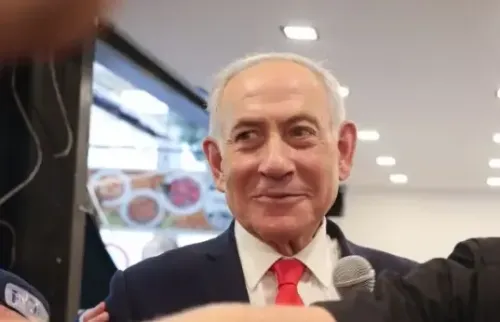
With 84.5 per cent of ballot boxes counted by Wednesday afternoon, partial results from the Central Elections Committee showed incumbent Prime Minister Benjamin Netanyahu's Likud-led bloc leading with 54 seats, according to local media reports. The opposition bloc, led by Gadi Eisenkot's Yashar party, was projected to secure 49 seats. The predominantly Arab Joint List and Ra'am factions saw their combined tally drop to 17 seats, the Times of Israel reported. The final outcome remained uncertain as counting continued.
Voter Sentiment on the Ground
Voices from Israeli citizens reflected a deeply divided electorate united by one overriding concern: security. One citizen, expressing hope for national reconciliation, said: 'After the results, I think it's very close, everybody is in the same place, and I'm hoping for peace among us. I want us to be together…' Another voter, speaking at the Nova festival site — where, according to her, 378 people were killed during the October 2023 attack — called for a leader capable of understanding the security threats facing Israel. 'We definitely need a leader that will understand the enemy and understand their mentality, and will lead Israel to safety,' she said, expressing a preference for Netanyahu's return to power.
Why This Election Matters
Tuesday's vote was the first Israeli electoral contest since the 7 October 2023 Hamas attack — a watershed moment that reshaped Israeli domestic politics, shifted voter priorities, and fractured coalition possibilities. Notably, the election took place against a dramatically altered regional security landscape, with ongoing military operations having dominated the national conversation since 2022 elections. The high Arab voter turnout, which some Israeli observers described as unexpected, added a fresh dimension to seat projections and coalition arithmetic. This is the 26th Knesset election, underscoring Israel's history of electoral volatility and frequent political realignment.
India-Israel Ties: The Backdrop
India and Israel formally established full diplomatic relations in 1992, and ties have expanded substantially since Prime Minister Narendra Modi's landmark visit to Israel in 2017 — the first by an Indian prime minister. Defence cooperation, agricultural technology transfers, and counter-terrorism intelligence sharing form the core of the relationship. New Delhi's Wednesday reaffirmation signals that regardless of who leads the next Israeli government, India intends to maintain and grow the partnership. The next government's composition will determine whether bilateral momentum accelerates or requires fresh diplomatic calibration.
Point of View
But by choosing to comment as votes were still being counted, the MEA is effectively signalling that the partnership transcends whichever government emerges. What mainstream coverage underplays is the strategic logic: with Israel's defence and technology sectors remaining critical to India's own modernisation priorities, New Delhi can ill afford a reset gap regardless of coalition outcomes. The tight result and the Arab bloc's reduced tally will complicate Netanyahu's coalition arithmetic; India's diplomats will be watching closely to see whether a narrow right-wing majority or a centrist coalition becomes their next interlocutor in Tel Aviv.
NationPress
28 Oct 2026
Frequently Asked Questions
What did India say about the Israel Knesset election?
India reaffirmed its commitment to strengthening bilateral ties with Israel as the 26th Knesset election took place on 27 October 2026. MEA spokesperson Randhir Jaiswal stated that India has a good relationship with Israel and intends to deepen it in the coming days.
Who is leading in the Israel Knesset 2026 election results?
With 84.5% of ballots counted, Prime Minister Benjamin Netanyahu's Likud-led bloc was leading with 54 seats, according to partial results from the Central Elections Committee. The opposition bloc led by Gadi Eisenkot's Yashar party was projected to secure 49 seats.
Why is the 26th Knesset election significant?
It is the first Israeli election since the 7 October 2023 Hamas attack, which fundamentally reshaped voter priorities and political alliances. Security dominated the electoral debate, and the outcome will determine Israel's government at a critical juncture in regional geopolitics.
How strong are India-Israel relations?
India and Israel established full diplomatic ties in 1992, with the relationship expanding substantially after Prime Minister Narendra Modi's 2017 visit — the first by an Indian prime minister. The partnership covers defence cooperation, agricultural technology, and counter-terrorism intelligence sharing.
What happened to the Arab parties in the Knesset election?
The predominantly Arab Joint List and Ra'am factions saw their combined seat tally drop to 17 seats, according to partial results reported by the Times of Israel. Some Israeli voters noted the high Arab turnout as an unexpected development that added uncertainty to the final seat count.