Israel elections 2026: 7.3 million voters to elect 120-seat Knesset on Tuesday

Synopsis
Israel's fifth election in seven years is anything but routine — 7.3 million voters head to the polls with no bloc holding a clear majority, raising the real possibility of a minority government, a unity administration, or yet another election within 90 days. With three years of conflict shaping voter sentiment, Tuesday's Knesset vote could redraw Israel's political and security landscape in ways that resonate far beyond the region.
Key Takeaways
Israel holds parliamentary elections on Tuesday, 27 October 2026 , with 7.3 million eligible voters participating.
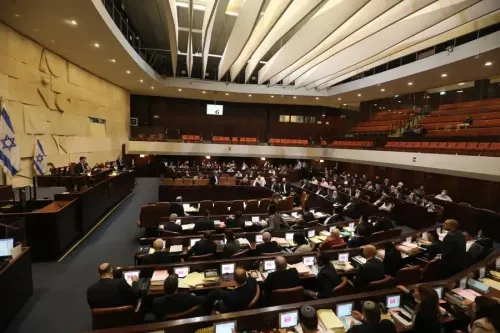
Voters elect representatives to the 120-seat Knesset under a proportional representation system.
The Israeli President awards the first coalition-formation mandate to the leading party, which has 28 days to secure a majority.
If two attempts fail, a fresh election is triggered within 90 days , a scenario that has occurred before.
Pre-election polls show no clear majority for either the Netanyahu-led bloc or the opposition, making multiple outcomes possible.
National security and post-war governance are the dominant voter concerns, according to residents speaking ahead of the vote.
Israel heads to the polls on Tuesday, 27 October 2026, with 7.3 million eligible voters set to elect representatives to the country's 120-seat Knesset. The vote is being closely watched amid an unresolved security situation and deepening political polarisation, with no party currently commanding a clear majority in pre-election surveys.
How the Israeli Electoral System Works
Israel operates a proportional representation system in which voters cast ballots for parties rather than individual candidates. The share of votes a party receives directly determines the number of seats it wins in the 120-member parliament. Each seat translates to one representative sent to the Knesset, either as part of a governing coalition or as part of the opposition.
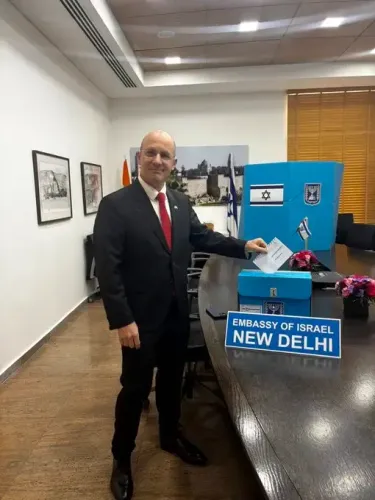
Michelle Sirota, spokesperson for the Embassy of Israel in India, described the election as a reflection of the country's democratic culture. 'Our elections are happening tomorrow, on the 27th of October. We have 7.3 million eligible voters who are able to vote. We hopefully will have a very high percentage of voters. This is a very vibrant democracy. People on the streets care about the future of Israel and what it is going to look like, and they're going to truly understand and choose how the next four years in Israel are going to look,' she said.
Government Formation: What Happens After the Vote
Once results are tallied, the Israeli President will determine which party receives the first mandate to form a government. That party will have 28 days to negotiate with other parties, secure coalition support, and build a working parliamentary majority of at least 61 seats.
Sirota outlined the fallback mechanism: if the first party fails, the mandate passes to the next largest party. Should that also prove unsuccessful, a fresh election is triggered within 90 days. 'I'm really hoping it doesn't get to that,' she added.
Scenarios on the Table
Opinion polls indicate no bloc currently holds a clear path to a majority, making the outcome genuinely uncertain. Senior Israeli journalist Yaron Decel identified three plausible outcomes: a fresh round of elections, a national unity government in which rival blocs cooperate, or a minority government formed by the opposition bloc opposing incumbent Prime Minister Benjamin Netanyahu.
'The opposition would try to form a minority government that does not have 61 out of 120 seats but can still secure a majority in parliament to begin governing, because they really want to replace the government,' Decel noted. A minority government in Israel is constitutionally permissible but operationally fragile, historically prone to collapse within months of formation.
Voters Speak: Security and Unity Top Concerns
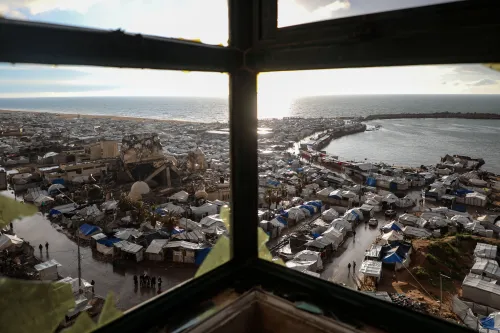
Israeli citizens who spoke ahead of polling day pointed to national security as the dominant concern. 'I think that after three years of war, we all want some peace,' said one resident. Another called for post-election solidarity regardless of outcome: 'No matter what the results are, we have to stay together and remain united... the whole world has to stand with Israel because protecting Israel means protecting the world.'
Context and What to Watch
Israel has held five parliamentary elections since 2019, reflecting the country's structural difficulty in assembling stable coalition governments. The latest vote comes against the backdrop of an ongoing conflict, putting national security and post-war governance at the centre of the campaign. Results are expected to begin emerging on the night of 27 October, with coalition negotiations likely to extend over several weeks. The outcome could reshape Israel's foreign policy posture and domestic security priorities at a critical juncture.
Point of View
The very issue voters say they care most about. The world should watch not just the results but the coalition arithmetic that follows: a fragile government in Jerusalem has historically accelerated rather than resolved regional tensions.
NationPress
26 Oct 2026
Frequently Asked Questions
When are the Israel elections in 2026?
Israel's parliamentary elections are being held on Tuesday, 27 October 2026 . A total of 7.3 million eligible voters are casting ballots to choose representatives for the 120-seat Knesset.
How does Israel's coalition government formation work?
After votes are counted, the Israeli President selects a party leader — typically the head of the largest party — and grants them 28 days to negotiate a coalition with at least 61 seats. If they fail, the mandate passes to the next largest party. Should that also fail, a fresh election is held within 90 days.
What are the possible outcomes of the 2026 Israeli elections?
According to senior Israeli journalist Yaron Dekel, three scenarios are plausible given the current polling: another round of elections, a national unity government in which rival blocs cooperate, or a minority opposition government that attempts to govern without a full 61-seat majority.
What issues are Israeli voters most concerned about?
National security and post-conflict governance are the top concerns, according to voters who spoke ahead of polling day. After what residents described as 'three years of war,' many said they are prioritising stability and peace in their voting decisions.
Why has Israel held so many elections in recent years?
Israel has held five parliamentary elections since 2019, reflecting persistent difficulty in assembling stable governing coalitions under its proportional representation system. No single party commands an outright majority, forcing complex multi-party negotiations that have repeatedly collapsed.