Israel Enacts Controversial Death Penalty Law Targeting Palestinians
Synopsis
In a significant move, Israel's Knesset has passed a law establishing hanging as the default penalty for Palestinians convicted of deadly attacks, raising human rights concerns and international outcry. This legislation marks a pivotal moment in Israel's legal landscape, aligning with far-right political demands.
Key Takeaways
The Knesset has enacted a controversial law imposing hanging as the default punishment for Palestinians.
This law has sparked international condemnation and concerns over human rights.
It creates a differential legal framework that critics argue targets Palestinians disproportionately.
Executions must occur within 90 days, with limited grounds for delay.
Opposition parties are preparing to challenge the law in court.
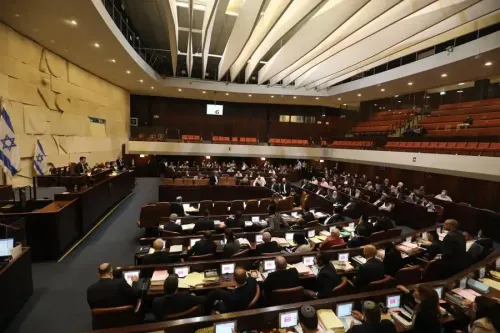
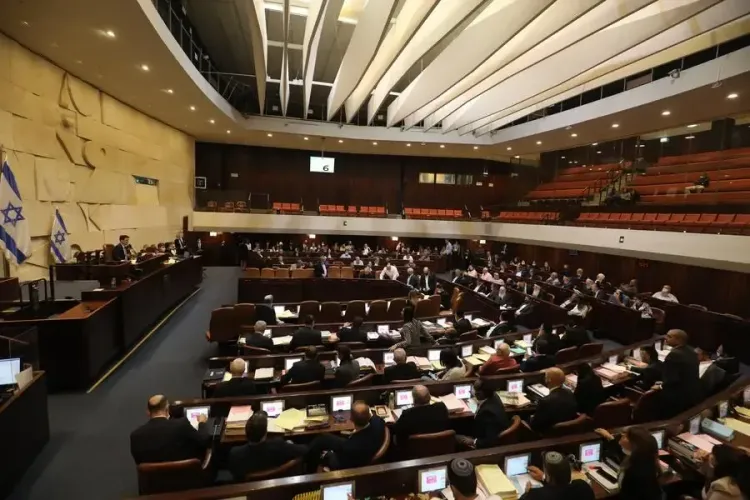
Tel Aviv, March 31 (NationPress) - The Knesset has enacted a contentious law that establishes death by hanging as the standard punishment for Palestinians convicted in military courts of executing lethal assaults, fulfilling a significant demand from Prime Minister Benjamin Netanyahu's far-right coalition partners.
This legislation, ratified on Monday (local time), has sparked intense global condemnation, with detractors labeling it as both discriminatory and unconstitutional. Opponents contend that the law introduces a biased legal system based on identity and poses grave human rights issues.
According to the new statute, the death penalty would only be applicable to Israelis convicted of murder if the crime was committed with the intent to "terminate Israel's existence". Critics highlight that this provision effectively guarantees that the punishment will predominantly affect Palestinians while sparing Jewish Israelis accused of similar offenses.
The law stipulates that executions must occur within 90 days of sentencing, allowing only limited grounds for postponement and offering no avenues for clemency.
Courts do still have the option to impose life imprisonment instead, but only under unspecified "special circumstances".
Israel had abolished the death penalty for murder in 1954, with the only execution following a civilian trial being that of Adolf Eichmann in 1962, a major figure in the Holocaust.
Although military courts in the occupied West Bank were already empowered to issue death sentences to Palestinian offenders, such a penalty had never been enforced.
The legislation received strong support from National Security Minister Itamar Ben-Gvir, who notably drew attention to the vote by sporting lapel pins shaped like a noose.
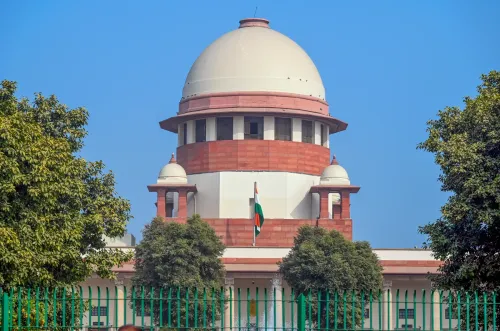
Following the bill's passage, several opposition parties, including Yair Lapid's Yesh Atid, the Arab-majority Hadash–Ta'al, and the leftist Democrats party, along with numerous human rights organizations, announced their intent to challenge the law in the High Court of Justice.
Democrats MK Gilad Kariv, a vocal opponent of the law and a member of the Knesset National Security Committee, stated, "This is an immoral law that contradicts the fundamental values of the State of Israel as a Jewish and democratic nation, as well as the principles of international law that Israel has committed to uphold," as quoted by the Times of Israel.
Point of View
This law highlights a crucial moment in Israel's legal and political landscape. While supporters argue it enhances security and deterrence, opponents raise vital concerns regarding discrimination and the erosion of democratic values. The implications of this law resonate far beyond Israel's borders, touching on fundamental human rights issues.
NationPress
19 Sept 2026
Frequently Asked Questions
What does the new law entail?
The newly passed law makes death by hanging the default punishment for Palestinians convicted of deadly attacks in military courts.
Why has this law faced criticism?
Critics argue it is discriminatory, unconstitutional, and raises serious human rights concerns, creating a biased legal framework based on identity.
How does this law differ for Israelis convicted of murder?
The death penalty for Israelis is only applicable if the murder was intended to 'end Israel's existence', which critics say disproportionately affects Palestinians.
What are the implications for executions under this law?
Executions must be carried out within 90 days of sentencing, with very limited grounds for delay and no provision for clemency.
What actions are opposition parties taking?
Various opposition parties and human rights organizations plan to challenge the law in the High Court of Justice.