Israel election 2026: Netanyahu's Likud bloc leads with 57 seats, demands 'strong right-wing' govt
Synopsis
Israel's first election since the October 7, 2023 Hamas attack has swung toward Netanyahu — with his Likud-led bloc projecting 57 seats against 47 for the opposition, and Netanyahu already demanding a 'strong, national, right-wing government.' The result, if it holds, would end years of political deadlock and mark a decisive rightward shift in Israeli politics.
Key Takeaways
Benjamin Netanyahu 's Likud -led bloc leads with a projected 57 seats vs 47 for the opposition, with 41.9% of votes counted.
Neither bloc had initially been projected to reach the 61-seat majority threshold in the Knesset ; overnight polls shifted in Netanyahu's favour.
The opposition is led by Gadi Eisenkot , former chief of staff of the Israel Defence Forces .
Arab factions Joint List and Ra'am together hold a projected 16 seats .
Netanyahu called for a 'strong, national, right-wing government' and rejected any coalition relying on Arab parties.
This is Israel's first national election since the October 7, 2023 Hamas-led attack.
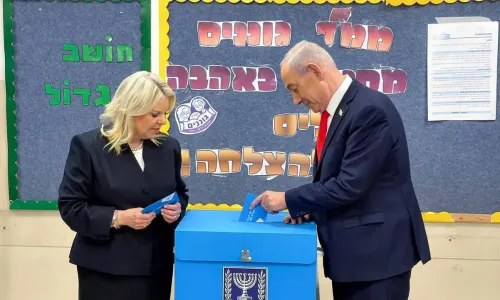
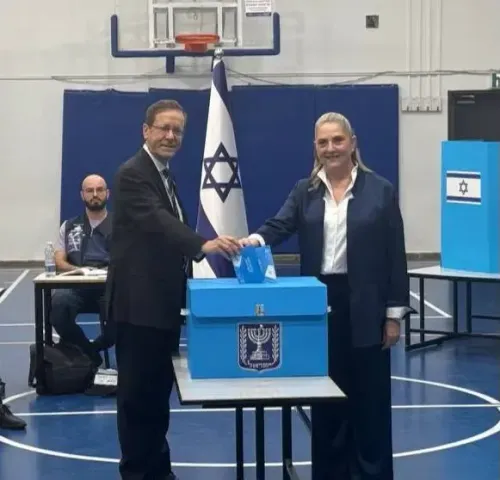
Incumbent Prime Minister Benjamin Netanyahu's Likud-led bloc surged ahead in Israel's election results by Wednesday morning, securing a projected 57 seats against 47 for the anti-Netanyahu opposition camp, with 41.9 per cent of ballot boxes counted, according to partial results released by the Central Elections Committee. The predominantly Arab Joint List and Ra'am factions together accounted for the remaining 16 seats, according to reports.
Exit Polls and Early Leads
Exit polls released by Israeli media outlets Channels 11, 12, and 13 on Tuesday night initially suggested no clear winner, with neither Netanyahu's bloc nor the opposition projected to secure the 61 seats required for a majority in the Knesset, Israel's parliament. However, an updated overnight exit poll showed Netanyahu's bloc drawing level with — and ultimately gaining an edge over — the opposition bloc led by Gadi Eisenkot, a former chief of staff of the Israel Defence Forces (IDF).
By Wednesday morning, multiple polls indicated Netanyahu's coalition with a clear and growing lead, shifting the narrative from a hung outcome toward a potential right-wing majority government.
Netanyahu's Victory Address
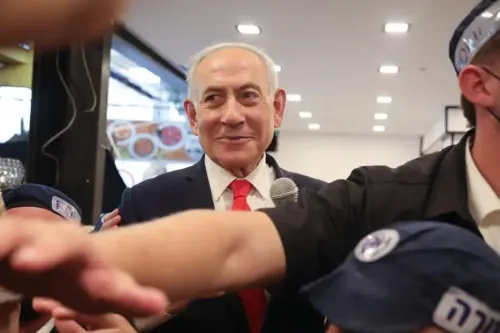
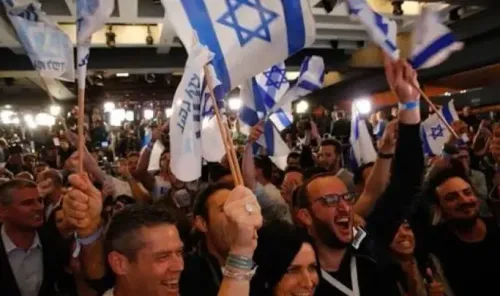
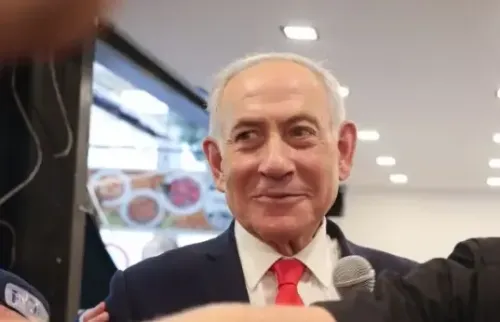
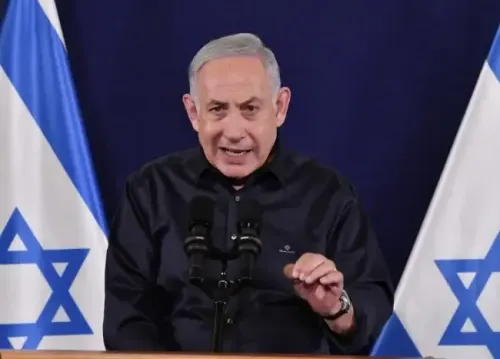
Addressing supporters at the Likud election headquarters in Jerusalem, Netanyahu directly criticised media outlets he accused of misrepresenting his party's prospects during the campaign. 'Do you remember how the propaganda channels engineered public consciousness? Likud on 18 seats, 19 seats. They knew the whole time that it was a lie. They were trying to demoralise you from coming to the ballot box. That is what went on here. Well, the first thing that has become clear, unequivocally, is that Likud is the biggest party in Israel. There is no disputing it,' he said, as quoted in reports.
He continued: 'And the second thing that has become clear… is that the right-wing bloc has a clear, decisive majority among the Zionist public, among the Jewish public and all those who support the Jewish state. That is what has become clear. A decisive majority. And therefore I said, and I say again, that we must form a strong, national, right-wing government. That is what must be done.'
Coalition Arithmetic and Arab Parties
Netanyahu notably sharpened his rhetoric against any arrangement involving Arab political factions, calling such a coalition a 'shame.' He questioned how parties could discuss loyalty to those who serve in the armed forces while cooperating with factions he described as attacking IDF soldiers. He further described certain Arab parties as opposing Israel's very existence, characterising them as outfits that 'regard Hamas as a charitable organisation' and label Israeli soldiers 'war criminals.'
The remarks signal Netanyahu's clear intent to build a purely right-wing coalition, excluding any reliance on Arab-backed support — a politically significant line in a country where Arab-Israeli citizens form a substantial share of the electorate.
Context: First Election Since October 7
These elections marked the first electoral contest since the October 7, 2023 Hamas-led attack on Israel — a watershed event that reshaped domestic politics, national security priorities, and voter sentiment heading into the polls. Netanyahu also claimed that Iran had been significantly weakened since the conflict that followed, and that Israel had emerged from the period in a stronger strategic position. This comes amid an ongoing military campaign in Gaza and shifting regional alignments that have defined much of the political debate in the lead-up to the vote.
With counting still under way and coalition talks yet to begin, the final composition of the next Israeli government remains to be determined — but Netanyahu's assertive tone suggests he intends to move quickly.
Point of View
If it consolidates, would end years of Israeli political paralysis — but it is also a product of the October 7 shadow, which effectively froze dissent and rewarded incumbency on security grounds. The troubling thread is Netanyahu's explicit framing of Arab-allied parties as existential threats, a rhetoric that deepens Israel's internal democratic fault lines precisely when national cohesion is most needed. The 61-seat threshold was not crossed in exit polls, meaning coalition negotiations could still upend the outcome; a narrow Likud mandate is not the same as a stable governing majority. What mainstream coverage underplays is the structural question: can a right-wing government without Arab political participation claim to represent the full spectrum of Israeli society?
NationPress
28 Oct 2026
Frequently Asked Questions
Who is leading Israel's 2026 election results?
Prime Minister Benjamin Netanyahu's Likud-led bloc is leading with a projected 57 seats against 47 for the opposition camp, based on partial results from the Central Elections Committee with 41.9% of ballot boxes counted. The situation remained fluid, with final results still awaited.
Did Netanyahu win a majority in the Knesset?
As of partial results, Netanyahu's bloc had not definitively crossed the 61-seat majority threshold required to govern outright. However, updated overnight polls showed his bloc gaining a clear edge over the opposition, and Netanyahu has called for coalition talks to form a right-wing government.
Who is leading the opposition against Netanyahu?
The anti-Netanyahu opposition bloc is led by Gadi Eisenkot, a former chief of staff of the Israel Defence Forces. The bloc was projected at 47 seats in partial results, placing it behind the Likud-led coalition.
Why is this election significant for Israel?
This is the first Israeli election since the October 7, 2023 Hamas-led attack, making national security, the ongoing Gaza conflict, and Israel's regional posture central issues for voters. The political landscape has shifted significantly since the 2022 elections.
What kind of government is Netanyahu seeking to form?
Netanyahu has called for a 'strong, national, right-wing government' and explicitly ruled out any coalition relying on Arab political parties, which he criticised sharply in his address to supporters at Likud headquarters in Jerusalem.