Israel election 2026: Netanyahu bloc trails at 53 seats, 500,000 votes still uncounted
Synopsis
With 85.6% of regular votes counted, Netanyahu's right-wing bloc trails the opposition 53 to 67 — but half a million double-envelope ballots from military bases and hospitals remain uncounted. The final result, due Friday, could reshape coalition math. Both Netanyahu and Eisenkot have ruled out Arab party support, leaving Israel at a familiar impasse: a fifth election since 2019 cannot be ruled out.
Key Takeaways
After 85.6% of votes counted, the opposition holds 67 seats against Netanyahu's bloc at 53 in the 120-member Knesset .
Roughly 500,000 double-envelope ballots from military bases and hospitals are still to be counted, with results expected by Friday .
Likud is the largest single party with 26 seats ; Eisenkot's Yashar party follows with 21 .
Arab parties hold 19 seats and have proposed a Jewish-Arab coalition , but both Netanyahu and Eisenkot have rejected their participation.
Israeli President Isaac Herzog has urged all parties to avoid a sixth election, warning of prolonged political uncertainty.
Possible outcomes include coalition negotiations, a unity government, or fresh polls — Israel's proportional 3.25% threshold system adds further volatility.
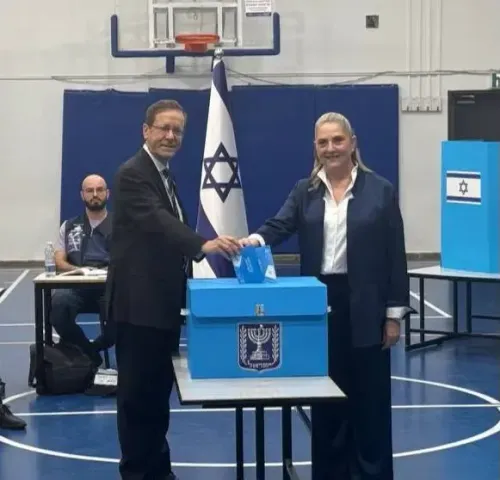
Parties opposing Israeli Prime Minister Benjamin Netanyahu have secured 67 seats in the 120-member Knesset after 85.6% of votes were tallied in Tuesday's election, according to updated official results from Israel's Central Elections Committee. The count covers most votes cast at regular polling stations, leaving roughly half a million ballots — submitted in double envelopes at military bases, hospitals, and other designated institutions — still to be processed, with a final count expected by Friday.
Current Seat Distribution
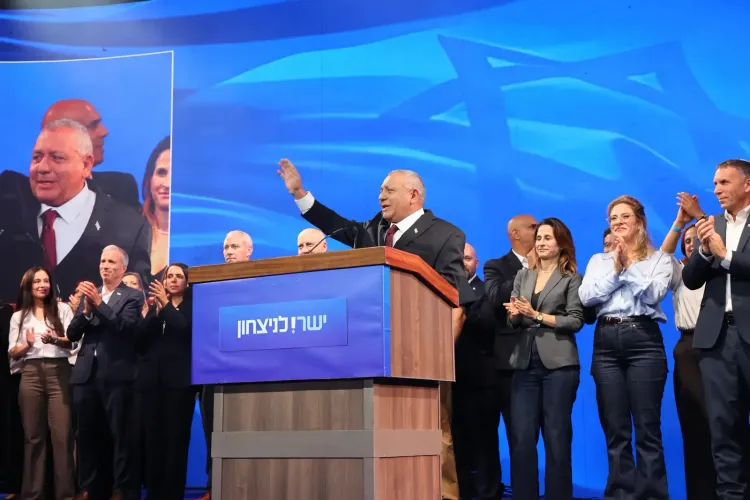
As the count stood after 85.6% of regular votes were tallied, Netanyahu's right-wing bloc held 53 seats against the opposition's 67. Former military chief Gadi Eisenkot's bloc accounted for 48 of those opposition seats, while Arab parties contributed 19.
Netanyahu's Likud remained the largest single party with 26 seats, followed by Eisenkot's Yashar party with 21. The Joint List, an alliance of Arab-majority parties, and the centre-right Together won 12 seats each, while the Arab-majority Ra'am party secured seven.
The Arab Party Deadlock
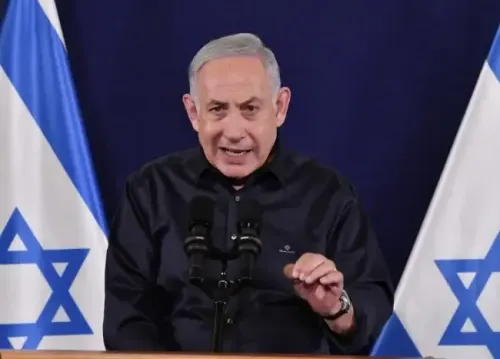
Arab parties have called for an unprecedented Jewish-Arab coalition with Eisenkot's bloc, positioning themselves as the potential kingmakers in an otherwise gridlocked parliament. However, Eisenkot has repeatedly ruled out governing with Arab parties or relying on their parliamentary support ahead of the election. Netanyahu has similarly rejected their inclusion in any government he might lead.
Notably, this mutual rejection of Arab participation leaves Israel's political arithmetic in a precarious state — neither major bloc can comfortably form a majority government without confronting the question of Arab party support.
President Herzog Warns Against Fresh Polls
Israeli President Isaac Herzog said on Wednesday that every effort must be made to avoid a fresh round of elections, after preliminary results showed neither main bloc had secured an outright parliamentary majority. His remarks reflect growing concern that Israel — which has held five elections since 2019 — could be heading toward yet another cycle of political paralysis.
Scenarios Analysts Are Watching
Analysts have identified several possible outcomes: prolonged coalition negotiations, a broad unity government bridging left and right, or — if talks collapse — a return to the polls. Israel's proportional electoral system, which requires parties to clear a 3.25% national vote threshold to enter the Knesset, means that the remaining 500,000 double-envelope votes could materially shift seat tallies and alter which coalitions are arithmetically viable.
The final picture will not be clear until the complete count is certified by Friday, after which formal coalition consultations are expected to begin in earnest.
Point of View
A deadlock hardened by the mutual rejection of Arab parties, and a political class that has cycled through five elections since 2019 without resolving its underlying fractures. The 500,000 uncounted ballots are not merely procedural — they carry real coalition implications in a system where a single seat can determine who forms government. What mainstream coverage underplays is the historic significance of Arab parties holding 19 seats and actively seeking partnership: their exclusion by both blocs is a political choice, not an inevitability, and it may ultimately be the choice that forces a sixth election on an exhausted electorate.
NationPress
29 Oct 2026
Frequently Asked Questions
What are the current results of the Israel election?
After 85.6% of regular votes were counted, the opposition bloc holds 67 seats and Netanyahu's right-wing bloc holds 53 in the 120-member Knesset. Roughly 500,000 double-envelope ballots remain uncounted, with a final tally expected by Friday.
How many seats does Netanyahu's Likud party have?
Likud is currently the largest single party with 26 seats, though Netanyahu's broader right-wing bloc trails the opposition at 53 seats to 67. The uncounted ballots could still shift the final distribution.
What role could Arab parties play in forming a government?
Arab parties collectively hold 19 seats and have proposed an unprecedented Jewish-Arab coalition with former military chief Gadi Eisenkot's bloc. However, Eisenkot has ruled out relying on their support, and Netanyahu has also rejected their participation, leaving the political arithmetic unresolved.
What happens if no coalition can be formed?
If coalition negotiations fail, Israel could face a fresh round of elections — its sixth since 2019. President Isaac Herzog has publicly urged parties to avoid that outcome, calling for every effort to form a stable government.
When will the final Israel election results be declared?
The Central Elections Committee expects to complete the count of approximately 500,000 remaining double-envelope ballots — cast at military bases, hospitals, and other institutions — by Friday, after which formal coalition consultations are expected to begin.