Trump scraps Biden EV mandate, backs consumer choice at Michigan auto rally
Synopsis
Trump's Michigan visit was less a rally and more a policy statement: Biden's EV mandate is gone, CAFE standards are terminated, and a 25% import tariff is the new enforcement tool. With GM already lifting truck output 20% and committing $9 billion to US factories, the administration is betting combustion-era jobs can be preserved — even as global rivals accelerate electrification.
Key Takeaways
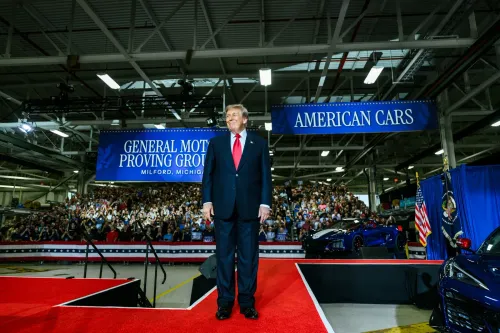
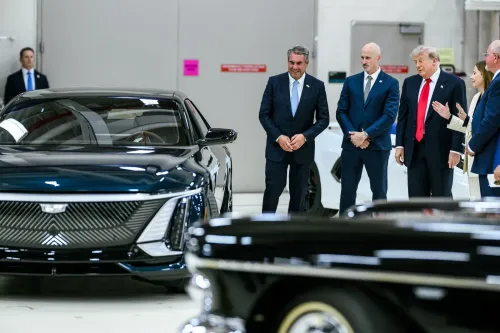
President Trump visited the General Motors Milford Proving Ground in Michigan on Monday to reaffirm his rollback of Biden-era EV policies.
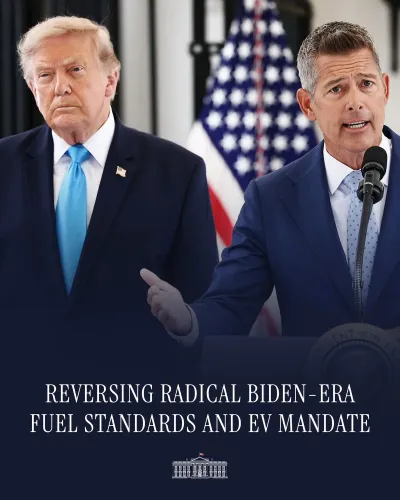
Trump confirmed termination of Biden's EV mandate and CAFE fuel-efficiency standards , calling them threats to the US auto industry.
Imported vehicles face a 25% tariff ; domestically built vehicles are exempt, with a loan-interest tax deduction also tied to US-made cars.
General Motors increased truck and SUV output by 20% in 2026 and invested $9 billion over two years in US factory reshoring.
The policy shift has implications for global automakers and suppliers, including those operating in India , who align investment with US emissions and battery-demand signals.
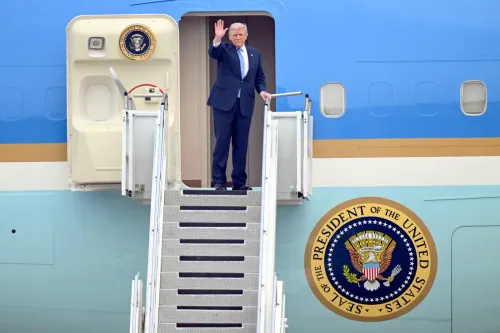
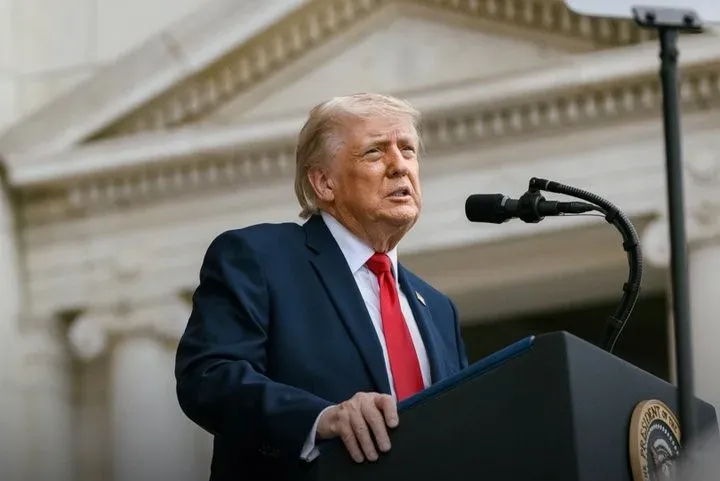
US President Donald Trump on Monday renewed his assault on electric vehicle policy during a visit to the General Motors Milford Proving Ground in Michigan, declaring that American consumers must be free to choose between electric and internal-combustion vehicles. The appearance underscored the administration's sweeping rollback of clean-vehicle rules put in place under former President Joe Biden.
What Trump Announced
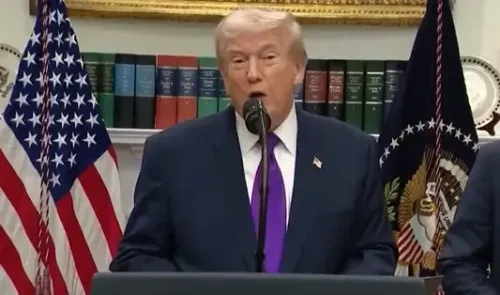
Trump reiterated that on his first day in office he had revoked Biden-era electric vehicle mandates and tightened fuel-efficiency standards. He also confirmed the termination of Corporate Average Fuel Economy (CAFE) standards introduced by the previous administration. 'I terminated Biden's disastrous CAFE Fuel Standards,' Trump said. 'That was a short road to bankruptcy for every single car company in this country, and a total disaster that would have killed the internal combustion engine.'
The president additionally promoted a tax deduction on interest paid for automobile loans, stipulating it would apply only to vehicles manufactured inside the United States.
The Jobs Argument
A central thread of Trump's address was employment. He argued that electric vehicles require significantly fewer workers to assemble than their combustion counterparts — a pointed concern for Michigan, a state whose economy is deeply tied to auto manufacturing. In a remark directed at General Motors CEO Mary Barra, who was present at the event, Trump said: 'I don't want to say this in front of Mary, because she'll change your mind, but it takes far fewer people to build an electric car.'
He was careful to add that consumers who want an electric vehicle can still buy one, framing the policy as expanding choice rather than eliminating it.
Tariffs as the Enforcement Lever
Trump paired the policy rollback with a 25 per cent tariff on imported automobiles and trucks, while vehicles assembled domestically face no such levy. He praised General Motors for responding to the incentive structure, noting the company had raised truck and sport utility vehicle output by 20 per cent in 2026 and committed $9 billion over two years to reshoring factory operations. 'They're coming back home because, frankly, when they build here, there's no tariff,' Trump said.
What the Biden Policy Actually Said
The Biden administration's emissions and fuel-efficiency rules did not explicitly mandate that every new vehicle sold be electric. Rather, they were structured to progressively raise the share of electric and low-emission models in the market. Critics of the rollback argue that dismantling these standards weakens the United States' long-term competitiveness in a global industry rapidly shifting toward electrification.
Global and Indian Market Implications
The policy reversal carries consequences well beyond American borders. Automakers and component suppliers worldwide — including firms with significant operations in India — calibrate investment decisions around US emissions frameworks, battery demand forecasts, and market-access conditions. A sustained US retreat from electrification targets could slow battery supply-chain investments globally, while simultaneously shielding legacy combustion-vehicle manufacturers from near-term transition costs.
With the administration showing no sign of reversing course, the debate over the future of the American auto industry — and its ripple effects on global manufacturing — is set to intensify.
Point of View
Not just regulatory mandates — and rolling back CAFE standards does not change those underlying forces. GM's $9 billion reshoring commitment is real, but it predates the tariff regime and reflects supply-chain diversification as much as any policy loyalty. The deeper risk is that a prolonged US regulatory retreat cedes standard-setting power to the EU and China, leaving American manufacturers to adapt to foreign frameworks anyway — on less favourable terms.
NationPress
26 Oct 2026
Frequently Asked Questions
What did Trump announce about electric vehicles at the Michigan GM event?
Trump reaffirmed that his administration had revoked Biden's EV mandate and terminated Corporate Average Fuel Economy (CAFE) standards, arguing both would have devastated the US auto industry and cost manufacturing jobs. He framed the move as restoring consumer choice between electric and combustion vehicles.
What are CAFE standards and why did Trump scrap them?
CAFE — Corporate Average Fuel Economy — standards set minimum fuel-efficiency targets that automakers must meet across their vehicle fleets. Trump terminated the Biden-era version, claiming it would have forced manufacturers toward electric vehicles and driven car companies toward bankruptcy.
How do the new US auto tariffs work?
The Trump administration has imposed a 25% tariff on imported automobiles and trucks. Vehicles assembled inside the United States are exempt, effectively creating a financial incentive for manufacturers to produce domestically rather than import finished vehicles.
How has General Motors responded to Trump's auto policy?
According to Trump's remarks at the event, General Motors increased truck and SUV production by 20% in 2026 and invested $9 billion over two years in reshoring US factory operations. GM CEO Mary Barra was present at the Milford Proving Ground event.
Why does US electric vehicle policy matter for India?
Global automakers and component suppliers — including those with significant Indian operations — base investment decisions on US emissions rules, battery demand projections, and access to the American market. A sustained US rollback of electrification targets could affect battery supply-chain investment and reshape competitive dynamics for Indian auto-sector players.