Trump Meets NATO Secretary General at the White House

Synopsis
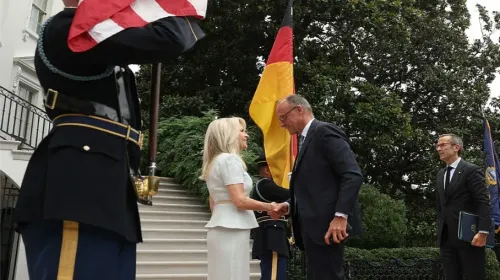
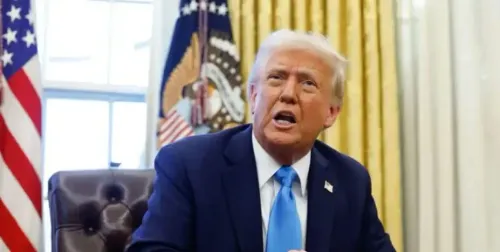
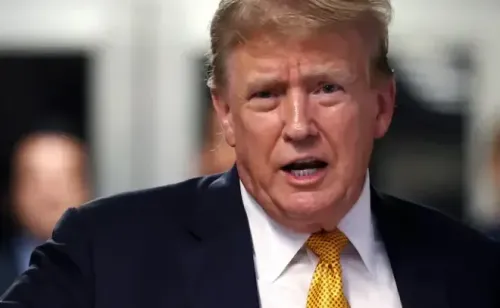
President Trump met the NATO Secretary General at the White House on 24 June 2026. The meeting continues direct US engagement with the alliance on burden-sharing and collective defence, set against the backdrop of Russia's war on Ukraine and European efforts to raise military spending toward the 2 per cent GDP target.
Key Takeaways
President Trump participated in a direct meeting with the NATO Secretary General on 24 June 2026 .
NATO is a 32-member transatlantic alliance founded in 1949 , with the United States as its largest contributor.
Alliance members formally committed to a 2 per cent of GDP defence spending target at the 2014 Wales Summit .
Trump's first term ( 2017-2021 ) saw sustained pressure on European allies to raise defence budgets, a posture that continues in his current term.
Russia's war on Ukraine provides the immediate strategic backdrop for all current NATO deliberations.
Follow-on announcements on 2025-2026 spending targets and US force posture in Europe are the key items to watch.
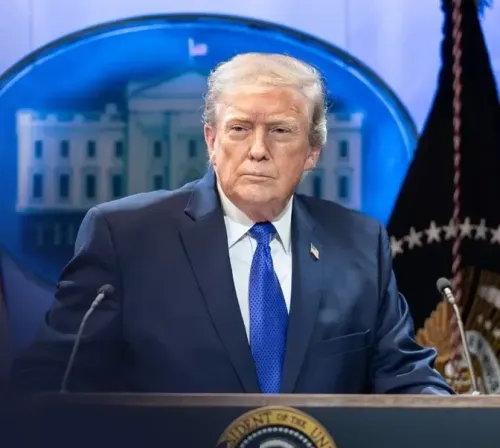
The White House announced on Wednesday, 24 June 2026 that President Donald Trump participated in a meeting with the Secretary General of NATO, signalling continued direct engagement between Washington and the transatlantic alliance's leadership on matters of collective defence.
Context
The meeting comes at a pivotal moment for the North Atlantic Treaty Organization, the 32-member military alliance founded in 1949 that underpins Western collective security. Russia's ongoing war on Ukraine has sharpened focus on European defence readiness and the credibility of alliance commitments, making high-level US-NATO consultations particularly consequential.
The White House confirmed the President's direct participation, underscoring that the engagement was conducted at the highest executive level rather than through deputies or staff channels.
Policy Backdrop
Throughout his political career, President Trump has made NATO burden-sharing a signature foreign-policy theme. During his first term from 2017 to 2021, he repeatedly pressed European allies to meet the 2 per cent of GDP defence spending benchmark that alliance members formally committed to at the 2014 Wales Summit.
That pressure yielded measurable results: several European allies accelerated their defence budget increases in subsequent years. The broader pattern of direct presidential engagement with NATO leadership — combining rhetorical pressure with sustained institutional participation — has continued into his current term.
The United States remains the alliance's largest single contributor, providing the greatest share of NATO's combined military capabilities and funding. Any shift in Washington's posture or expectations carries outsized weight for alliance planning and cohesion.
Stakeholders and Impact
The most immediate stakeholders are NATO's 32 member states, whose defence budgets, force commitments, and strategic postures are shaped in part by signals from Washington. European governments in particular are watching for indications of US force posture in Europe and American appetite for continued Article 5 commitments.
US defence forces deployed across Europe also have a direct stake in the strategic direction set by such meetings. For India and other Indo-Pacific partners, the tone of transatlantic relations has downstream implications for global security architecture and multilateral burden-sharing conversations.
Domestically in the United States, the meeting reinforces the administration's framing of alliance management as an ongoing negotiation rather than a fixed commitment — a posture that resonates with a significant segment of the American electorate.
What's Next
Observers will watch closely for any follow-on statements, joint communiqués, or announcements tied to 2025-2026 NATO spending targets and alliance force posture reviews. A formal NATO summit or ministerial meeting could provide the next structured venue for translating bilateral consultations into alliance-wide policy.
The trajectory of Russia's war on Ukraine will continue to set the strategic backdrop against which all NATO deliberations are measured, making the frequency and substance of US-Secretary General meetings a key indicator of alliance cohesion heading into the second half of 2026.
Point of View
The meeting carries more strategic weight than routine diplomatic courtesy. For Trump, NATO engagement serves a dual domestic and foreign-policy purpose: demonstrating alliance management credentials while sustaining the burden-sharing narrative that defines his foreign-policy brand. The broader arc points toward a transatlantic relationship that is functional but transactional — a dynamic that will shape alliance cohesion well into the latter half of this decade.
NationPress
25 Jun 2026
Frequently Asked Questions
Why did Trump meet the NATO Secretary General in June 2026?
The White House confirmed President Trump participated in a meeting with the NATO Secretary General on 24 June 2026, continuing direct US engagement on collective defence and burden-sharing, though specific agenda items were not disclosed.
What is NATO and how many members does it have?
NATO, the North Atlantic Treaty Organization, is a transatlantic military alliance founded in 1949. It currently has 32 member states and is underpinned by the collective defence principle known as Article 5.
What is the NATO 2 per cent GDP defence spending target?
At the 2014 Wales Summit, NATO allies formally committed to moving toward spending at least 2 per cent of their GDP on defence. President Trump has repeatedly pressed European allies to meet this benchmark.
How has Trump's approach to NATO differed from previous US presidents?
Trump has been more explicitly transactional, questioning automatic US commitments under Article 5 and making burden-sharing a central demand. However, the US has continued institutional participation in the alliance throughout both his terms.
What should India watch for from US-NATO meetings in 2026?
India and Indo-Pacific partners should monitor any shifts in US force posture in Europe, changes to alliance spending targets, and the overall tone of transatlantic cohesion, as these developments shape global security architecture and multilateral burden-sharing expectations.